

PROTECT YOUR DNA WITH QUANTUM TECHNOLOGY
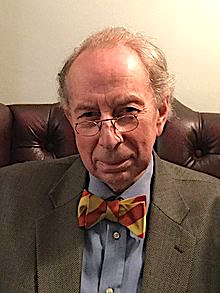
Orgo-Life the new way to the future Advertising by AdpathwayBrendan Graham Dempsey is a metatheory researcher at the Institute of Applied Metatheory and host of the Metamodern Meaning podcast. His work bridges evolutionary theory, developmental psychology, and worldview studies, bringing empirical rigour to questions about how human consciousness and culture evolve. His latest book, Psyche and Symbolic Learning, is the second in a planned ten-volume series exploring these themes through the lens of hierarchical complexity and neo-Piagetian developmental frameworks. _____________ You can find Brendan's work at: Metamodern Meaning podcast: https://www.youtube.com/@BrendanGrahamDempsey Brendan's Substack: https://brendangrahamdempsey.substack.com/ Brendan's website: https://www.brendangrahamdempsey.com/ Our previous chats: Philosophy Wisdom and Metamodernism: https://www.youtube.com/watch?v=Z32Db8VwlM4 Critiquing Metamodernism: https://www.youtube.com/watch?v=qDKPzf804u8 _____________ In this conversation, Brendan introduces me to the ambitious world of metatheory – an attempt to create a unified, coherent understanding of all human knowledge by bridging disciplines from neuroscience to sociology to the humanities. We explore his new role researching worldviews empirically at the Institute of Applied Metatheory, where he's working to bring scientific rigour to questions that have long been speculative: Can we measure the complexity of worldviews? Do cultures develop through predictable stages? How complex is the Bible compared to Homer, or a text message to your mam? We dive deep into hierarchical complexity, a psychological framework that quantifies the sophistication of thinking across domains and time periods. Brendan shares fascinating research comparing the cognitive complexity of ancient religious texts, from early biblical narratives to the Epic of Gilgamesh, revealing how literacy transforms meaning-making structures. We discuss the difference between metatheory and interdisciplinary work, why spiral dynamics isn't quite a metatheory, and how this research programme aims to give metamodernism and integral theory the empirical grounding they've long needed. This is a conversation for those curious about the big questions: How does all human knowledge fit together? Can we study worldviews scientifically? And what does it mean to truly understand complexity? _____________ ⏳ Timestamps 00:00 James's Intro 01:30 Brendan's new role at the Institute of Applied Metatheory 03:24 What is metatheory? Situating theories within a bigger picture 06:05 Cognitive science vs. metatheory: Where are the edges? 07:37 Consilience and the unified theory of knowledge 10:27 What is the "normal science" of metatheory? 15:14 Applying metatheory: From integral medicine to worldview research 20:48 Systematising worldview terminology: Paradigms, gestalts, and meaning-making structures 23:03 Measuring cognitive complexity in texts 24:11 Can we validate developmental claims empirically? 25:08 Hierarchical complexity and neo-Piagetian psychology 28:30 Dynamic skill theory: Why you're not "at a stage" 32:30 What does complexity mean? Is it like IQ? 33:00 Complexity as a scale of task performance, not hardware 35:05 Skill webs and context-dependent performance 37:12 Measuring texts: From texting your mam to ancient scriptures 42:14 Scoring the Bible: Early narratives vs. scribal texts 44:43 The documentary hypothesis and complexity differences in biblical sources 45:09 Literacy's impact: Hunter-gatherer texts vs. scribal complexity 46:24 Homer, Gilgamesh, and the wisdom of Ptahhotep: Comparing ancient complexity 49:48 Translation challenges in measuring ancient texts 56:49 Education, zip codes, and complexity gaps 59:28 Why developmental models are more optimistic than IQ 1:04:24 Metatheory and metamodernism: How they relate 1:03:15 Testing metamodern and integral claims about worldview development 1:04:24 Metatheory and metamodernism: How they relate 1:10:21 Integral theory and the metamodern landscape 1:12:03 Guest recommendations: Layman Pascal and Nick Headland 1:14:08 Where to find Brendan










.png)




.jpg)



 English (US) ·
  French (CA) ·