

.png) 2 days ago
7
2 days ago
7
PROTECT YOUR DNA WITH QUANTUM TECHNOLOGY
Orgo-Life the new way to the future Advertising by AdpathwayAs the Guardian’s Caribbean correspondent, I sometimes encounter stories that everyone is talking about in the region, but are not on the radar of the international media. Today, I’m taking over the Long Wave to bring you one of those stories. This summer, Guyanese ambassador Carolyn Rodrigues-Birkett has made history as the first Caribbean candidate for the prestigious post of United Nations secretary general. If successful, she will be the first woman to hold the position too. I spoke to her about the value of the UN, and what a Caribbean leader could bring to the role.
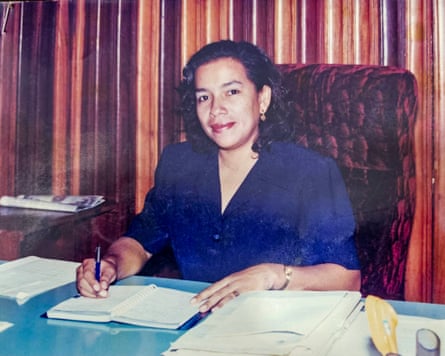
Carolyn Rodrigues-Birkett started life in the remote Indigenous village of Santa Rosa, in the interior of the Caribbean and South American nation of Guyana.
“We had no running water, no proper roads, no electricity. I used to study with an oil lamp,” she tells me. Born into an Arawak Indigenous community (a group that is native to Venezuela and Guyana), she didn’t have the option of attending secondary school close to home. There were none in her village at the time.
After leaving Santa Rosa for her education, Rodrigues-Birkett’s career trajectory has since been remarkable. Having begun her career as a schoolteacher, Rodrigues-Birkett became Guyana’s minister of Amerindian (Indigenous) affairs at just 27, later serving as minister of foreign affairs and foreign trade. She has gone on to hold senior international roles, currently serving as Guyana’s permanent representative to the UN.
Now, Rodrigues-Birkett is vying for one of the world’s most influential positions, making history as the first Caribbean candidate to run for UN secretary general.
Rodrigues-Birkett believes she has an edge due to her background - she is from a region comprising small states, and is from a country known for its multi-ethnic diversity. Nearly 20% of Guyana’s population is mixed, and its other main groups include Indigenous people and people whose ancestors came from Africa, Asia and Europe.
“Caribbean small states cannot afford not to cooperate because the issues that affect them – whether it is trade or climate change – require regional and global cooperation,” she tells me. “Coming from an ethnically diverse country, I know how to listen, to understand other perspectives and to find solutions together. And that’s what the UN is about.”
Could the UN limit Caribbean climate damage?
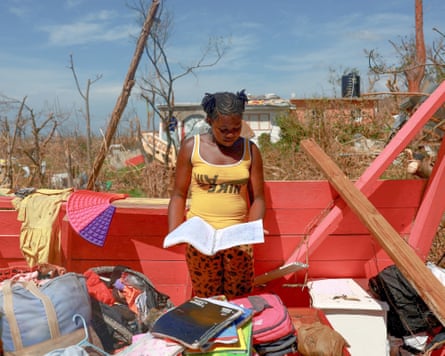
Rising from the ashes of the second world war – which is still the deadliest military conflict in human history – the UN was created to prevent another global conflict. Today, its six major bodies include a security council, created to maintain international peace and security, and an International Court of Justice, which deals with disputes among countries, and a network of funds, agencies and programmes that support education and other development programmes.
In 1992, when scientific consensus warned of an impending climate crisis, the UN framework convention on climate change was created to encourage and facilitate global action to protect the environment.
For Caribbean nations enduring severe development challenges and bearing the brunt of the climate crisis, having a regional candidate well-positioned to secure this historic post is a defining opportunity. Rodrigues-Birkett is the only candidate to have the full endorsement of her area, with leaders in the Caribbean community confirming their support at their most recent summit in July.
Cutting red tape and unlocking funds
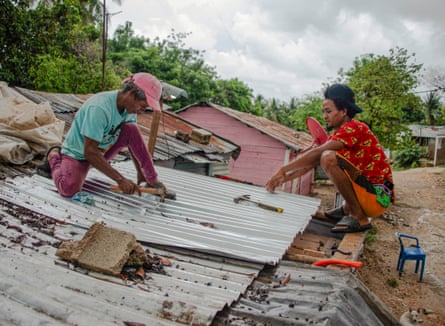
Rodrigues-Birkett says that if she secures the top position, addressing the issue of climate financing will be a priority. This will no doubt be welcomed by Caribbean nations whose economies are strained by the compounding costs of post-hurricane rebuilding.
Jamaica’s environment minister, Matthew Samuda recently told me that current global climate financing mechanisms were “not fit for purpose” after Hurricane Melissa, which caused billions of dollars’ worth of damage in October last year.
The minister pointed out that the UN’s Loss and Damage Fund, created to support developing countries to recover from climate crisis-related disasters, has only given out $19m in its 16-year lifetime, despite Jamaica sustaining $10bn worth of damage in the disaster.
“We’re not short of commitments,” Rodrigues-Birkett tells me. “The deficit is in implementation. Even when there is climate finance, some countries complain about just the process to access it.” The ambassador says she plans to work with nations to build the funds (the maximum a country can obtain through the fund is $20m), and ensure that red tape doesn’t get in the way of nations accessing funds necessary to rebuild their communities.
Is the UN fit for purpose?
after newsletter promotion
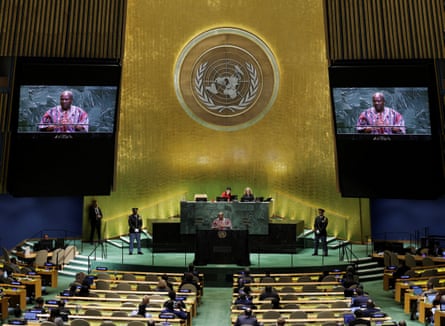
As secretary general, Rodrigues-Birkett would also have to manage the powder keg of active conflicts – the largest number since the second world war – including in Gaza and the Middle East, Ukraine, Sudan, Myanmar and Haiti. And she would need to navigate rising racial tensions, polarising issues such as the UN’s resolution on slavery reparations, and contend with increasing national self-interest and the loss of faith in multilateral organisations like the UN.
But the ambassador says her journey and experiences, especially being part of the UN security council, have been a lesson in how to unlock the organisation’s potential.
“I believe that the UN is a force for good,” she tells me. “It has delivered substantially on its mandate. But I also believe that it is at a critical crossroads where we have to make sure that this organisation is fit for purpose, and that it is effective on the ground.”
She mentions the “noble aspirations” of the UN’s sustainable development goals, created to address enduring global problems such as poverty and conflict by 2030. It is clear, she says, that the world will miss the deadline, and will then need “a more realistic time frame, accompanied by the means of implementation”.
The Caribbean’s time is now
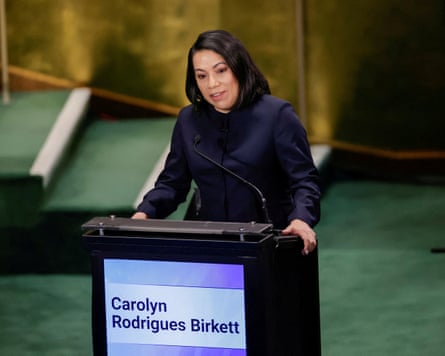
If the Caribbean misses this chance to secure a UN secretary general, it will have to wait more than four decades for another shot at the job due to the informal regional rotation that is part of the selection process.
In the last “straw poll” conducted by the UN security council, Rodrigues-Birkett was second among the seven candidates vying for the position, with nine “encourage” votes, two “discourage” votes and four “no opinion”. Leading was Costa Rican diplomat Rebeca Grynspan.
But the contest is still open, with the next poll scheduled for the end of the month, and the process running until later in the year. If Rodrigues-Birkett wins the race, her appointment will be historic for two reasons – she will be the first woman and the first Caribbean national to be secretary general.
Nine men have held the post over its 80-year history, which means “half of humanity – women – have never had a representative serve,” Rodrigues-Birkett tells me, adding that if a woman were to be appointed, “it will send a very important message to the world about where we’re heading.”
Tap in
Would you like to see more Caribbean leaders on the world stage? Share your thoughts by replying to this, or emailing us at [email protected] and we may include your response in a future issue.
-
To receive the complete version of The Long Wave in your inbox every Wednesday, please subscribe here.







.png)



.jpg)


 English (US) ·
  French (CA) ·