

 5 hours ago
9
5 hours ago
9
PROTECT YOUR DNA WITH QUANTUM TECHNOLOGY
Orgo-Life the new way to the future Advertising by AdpathwayIn 1914, European armies entered a war with forces designed to move. Within months, they were digging themselves into the earth. Ffires from newly introduced machine guns and heavy artillery made movement across exposed ground a proposition far more deadly than in any war that had ever afflicted humanity. More than a century later, armies are confronting an unsettling echo of that experience in Ukraine.
Drones and other robotic precision weapons fill the low-altitude airspace, detecting and destroying tanks and other large vehicles that appear anywhere near the Ukrainian front and devastating any attempts at mobile ground offensives by infantry. Western armies look anxiously at the implications because their warfighting doctrine depends on effective ground maneuver. In response, U.S. military leaders plan to use mass drone-based fires to clear the path for future armored forces and protect their advance. This, they hope, may restore the ability of maneuver units to move and evade the deadly grip of drone-powered attrition warfare.
However, armies in World War I applied a similar logic, and it made their situation worse. Maneuver is not dead — it remains crucial to ground warfare. But to revive it, its proponents should move past the assumption that tanks and armored vehicles are its essential technological embodiment. Over the next decade and beyond, U.S. ground forces may need to make a leap like the one that ultimately provided escape from that earlier crisis of maneuver. That means reinventing the maneuver combat platforms themselves and the corresponding units and tactics for the dawning robotic age. There is a potential path to do this. The very low-altitude airspace where small drones operate has become known as the air littoral. It offers opportunities for future maneuver that are as revolutionary as those it is already delivering for precision fires. To seize them, doctrine innovators ought to stop thinking of the air littoral as a regime for “small-format airpower.” Treating drones only as aircraft leads naturally to thinking of them as means for delivering fires. Instead, military innovators should also envision systems operating there as unmanned ground vehicles that do not touch the ground. That reframing opens the door to fundamental advances in maneuver forces as potentially dramatic as the leap from horse cavalry to tanks. New units based on such platforms could fully embrace the tactical advantages offered by robotics and AI and tip the battlefield advantage back to maneuver for decades to come.
Going Beyond Tactical Innovations
The power of drone-based precision fires, coordinated with surveillance and battle management systems, has grown rapidly. Initially successful in surprising and defeating poor-quality Russian forces, in the last year, drone-savvy Ukrainian units demonstrated in exercises that they could swiftly defeat even front-line NATO armored units. Hizballah units are using similar drones to inflict serious damage on Israeli forces in Lebanon. Such experiences are forging a consensus that the oncoming revolution in robotic fires will require “a fundamental rethinking of how modern armies fight at the operational level.”
Maneuver enables swift and efficient victory, not by grinding away an enemy force with fires while it attempts to grind away yours, but by using speed and tactics such as penetration, flanking, and envelopment to shatter its cohesion and deliver a knockout blow. Maneuver doesn’t imply the absence of attrition, which is a feature of all warfare. Rather, it entails the ability to successfully execute the tactics that make swift maneuver victories possible.
Using waves of coordinated drone strikes to disrupt the enemy, suppress defensive fires, and create the conditions for ground units to concentrate and maneuver is a practical near-term approach. However, history provides a warning.
When industrial-age machine guns and heavy artillery devastated horse cavalry and foot infantry in World War I, all sides decided that employing the new fires on a large scale was the path to overpowering the enemy. Tactical innovators overhauled assault tactics, using coordinated mass artillery fires in depth via the creeping barrage and the short, intense hurricane bombardment to disrupt the enemy and clear the way for the assaulting forces. Their maxim became “the artillery conquers, the infantry occupies.” However, this only led to a snowballing scale of casualties for modest gains. No matter the mass and scale of fires that supported them, the pre-industrial maneuver units were cut to pieces by the enemy’s fires.
Leading militaries ultimately made the necessary leap during the interwar period. They perfected new, mechanized platforms such as the tank, and rebuilt their maneuver tactics and organization around them. Coordinating ground assaults with supporting fires from artillery, and later from airpower, did help — but only after horse cavalry and foot infantry had been replaced by systems characteristic of the new age.
The Seeds of Transformation
Recent drone-enabled maneuver concepts foreshadow the necessary transformation. For instance, in the past year, authors such as Antonio Salinas, Mark Askew, and Jason P. LeVay noted that coordination could be most effective if maneuver units carry their own drone airpower with them, letting them conduct air littoral strike operations on demand. Others, such as Kenton G. Fasana, observe that even today’s drones exhibit some qualities of maneuver platforms and can deliver quasi-maneuver effects distinct from airpower-like fires. Fasana acknowledges that “for those who view drones as similar to manned aircraft, this may seem like a strange statement.” In addition, he suggests that future maneuver forces should be smaller and more numerous and be able to concentrate and disperse more quickly and flexibly than existing ground formations.
In effect, the authors imply that maneuver forces should exhibit more of the qualities that drones enjoy, especially when in contact with the enemy. But how? Simply “unmanning” existing ground vehicles will make little difference. To truly restore maneuver in the dawning robotic military age, leading militaries should develop new platforms designed from the outset to embody the tactical advantages offered by robotics and AI, such as asymmetric lethality, speed of action, remote presence and effect, persistence, elusiveness, and attritability, and build new tactics and organization around them.
Escaping the Crisis of Maneuver
Why did mechanization restore maneuver in the interwar period? It was not the protection of armor plating. The great interwar advocates agreed: It was a leap forward in mobility and the resulting tempo of battle. The speed of a mechanized advance enabled an attack to develop before the enemy could organize a large-scale coherent defense.
J.F.C. Fuller, the British advocate of armored maneuver, wrote that “the main power of the tank does not rest in its armor and weapons but in the paralyzing effect” of its speed. Heinz Guderian, the architect of German blitzkrieg warfare, wrote that “speed, therefore, is what is to be exacted before anything else from the armored weapon.” His German panzer divisions routinely favored lighter, faster tanks instead of the heavier, slower ones with thicker armor favored by the French. As a 1942 U.S. Army analysis of blitzkrieg victories summarized: “Speed makes possible the maximum degree of surprise because it overcomes delay in concentrating forces at chosen points. Speed neutralizes the enemy defense by limiting the possibilities of fire from his antitank weapons. The decisive factor is time accelerating the pace of battle.”
On the Ukrainian battlefield today, armored vehicles are considered easy prey because they are slow compared to drones. They can no longer achieve surprise. As they lumber forward, defenders observe, then mobilize and launch drones that concentrate against them. An initial precise hit can immobilize a vehicle, allowing additional drones time to arrive and finish it off. Armored units are often caught and pinned down by drones and artillery in exposed kill zones, and at geographic choke points such as river crossings and mine-cleared roads.
What is required is a new leap in mobility and speed that can once again allow a maneuver force to act before the defender can organize a coherent defense. That requires new platforms that can move at a similar speed to drones and enjoy the same immunity to terrain.
Air Littoral Platforms as a Revolution in Maneuver
In 2019, I introduced the concept of the air littoral or air-ground littoral in the article “Ground Combat Overmatch Through Control of the Atmospheric Littoral.” While the original framing emphasized its potential to revolutionize maneuver as well as fires, since 2021, others have tended to describe the unmanned systems there as tiny aircraft delivering a kind of small-format airpower.
Imagine them instead as unmanned ground vehicles that don’t touch the ground. Maneuver platforms that travel over, instead of on, the ground could move and shoot like vehicles but enjoy smooth and unimpeded movement in all directions, and nearly instantaneous concentration and dispersion. They would be immune to anti-tank barriers, minefields, urban rubble, mud, open water, and many other obstacles. They would achieve a potential sought for centuries: ground maneuver freed from the constraints of terrain.
They could resemble familiar multi-rotor drones, but be reusable, larger, more capable, and more durable than the small expendable types common today. They could carry highly lethal compact precision weaponry such as AI-assisted guided missiles and automatic rifles. A light machine gun with precision fire control and ammunition and four light shoulder-fired anti-tank missiles weighs around 50 kilograms total, well within the capacity of a drone.
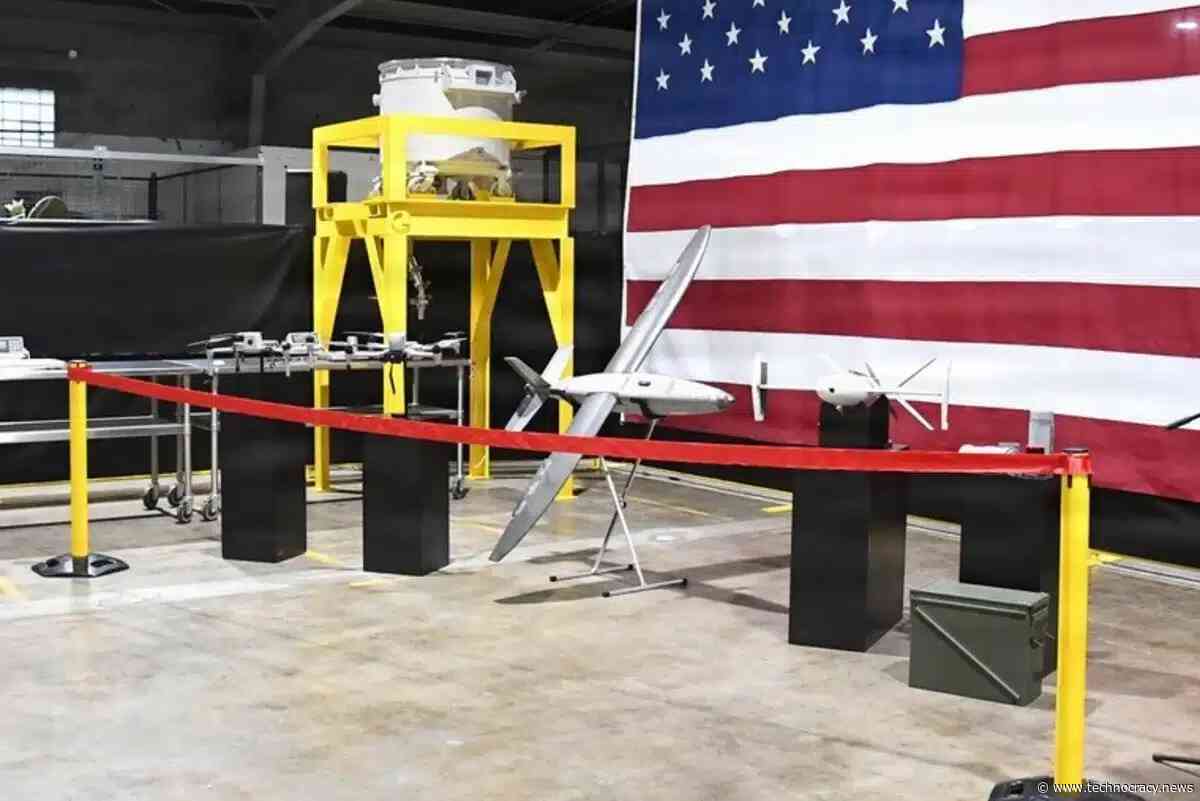
Existing cargo drones for military aerial resupply approach the minimum carrying capacity and endurance, and the Army has demonstrated guided weapons on one to strike ground and air targets. Many of the enabling technologies are nearing readiness. Individual drones like this would serve, in essence, like flying remote weapons stations. They could travel over buildings, hills, forests, and other large barriers, conduct wide-area surveillance, and occupy the high ground in any tactical situation.
In the longer term, the maneuver potential of such systems may be realized by combining them into maneuver swarms, or arrays. These are semi-autonomous groups of up to tens of drones capable of acting with the combat power and tactical discipline needed for combined-arms maneuver combat. The array would become the key platform, replacing a current armored vehicle.
Instead of piloting drones individually, one person could control a coordinated group as a unit from a distance. Because the drones are physically separate, they could disperse, concentrate, and change formations as needed. They could operate near ground level, or land to occupy locations and temporarily deny their use to the enemy. When desired, they could gain altitude and exhibit the capabilities currently associated with drones. An array could carry out most types of traditional ground force maneuvers, and many new ones. When ordered, it could also execute semi-random swarming tactics under AI control.
Unlike many unmanned systems concepts that have niche missions, drone arrays would be highly flexible across missions, types of conflicts, and geographies. They could team with various conventional units in operations ranging from humanitarian response to high-intensity combat. They could be deployable to any theater, including the Pacific, where employment from ships and immunity to water barriers may be especially valuable in archipelagos and amphibious operations. They may enjoy such powerful tactical advantages that they may not simply support ground maneuver forces, they may increasingly be the new forward maneuver striking element within a future combined-arms force. Manned elements would follow to command and support them, operate long-range fires, and secure and hold ground.

Restoring Survivability
A drone array would be more survivable than an armored vehicle in the new era when elusiveness is more valuable than physical protection. Its superior speed and terrain independence allow it to cross the danger zone in front of an enemy’s defensive positions swiftly, giving enemy forces little time to react. With only 1 percent or less of the mass of a Stryker vehicle, the individual drones within it would be much harder to detect and target. If targeted, the separation between drones means an array could not be destroyed with a single blow of almost any weapon. A vehicle can be stopped with a single hit. A maneuver swarm cannot.
Arrays can also be more resistant to counter-drone defenses than today’s aerial drones. Instead of operating overhead in clear line of sight, as many current drones do, they could fully exploit the air littoral, which extends all the way to the ground. They could use ground features for cover and concealment, moving between trees, behind buildings, down urban streets, and otherwise exploiting the ultra-low-altitude maneuverability familiar from existing first-person view drones. In addition to being more elusive targets, many drones would have their own active counter-drone weapon, such as an AI-guided automatic rifle. These are emerging as mainstream and cost-effective short-range anti-drone defenses. Future arrays would contain many such weapons for swarm defense.
Electronic warfare is a fierce and ever-evolving threat on the Ukrainian battlefield, yet it has not halted the rise of unmanned systems. Instead, it has accelerated rapid adaptation in areas including more resilient multi-band communication channels and improved autonomy such as AI-enabled computer vision and navigation. These have enabled drones to complete their attacks under jam-proof AI control. Despite the challenges of electronic warfare, such improvements are driving robots toward the leading edge of maneuver rather than away from it. The result is that Ukraine is expanding its use toward new roles, including spearheading ground assaults.
In addition, the attritability of robotic platforms is a unique enabler of maneuver tactics. While platforms are not expendable, losses are less costly than for manned systems. An array cannot become pinned down like forces on the ground can be. Loss of a drone neither affects its morale nor reduces its tempo.
Lastly, the likelihood that other militaries will eventually obtain similar systems doesn’t negate their effectiveness. As the history of tanks and warplanes illustrates, where there is symmetry in platforms, advantage stems from initiative, surprise, local superiority, and similar timeless factors that have long delivered U.S. superiority in operational art.
Focusing Evolutionary Technical Innovation
Individual maneuver combat drones could be built and fielded soon. They could provide useful manned-unmanned teaming with existing ground units. However, creating powerful and affordable maneuver swarms requires continued advances in three main areas over the next decade and beyond.
One-to-Many Command and Control
This lets the array respond to orders as a unit, not as a collection of separate devices. Command should be easy and intuitive. Military programs have demonstrated control of over 100 drones by a single operator. Continual advances will be needed to enhance human-machine teaming, targeting, rules of engagement, and ethics. However, these challenges are common to most applications of military autonomy, and steady progress is likely.
Internal Self-Orchestration
The array should adjust formations, avoid obstacles, and coordinate other collective movements autonomously. Researchers first demonstrated such complex group drone behaviors more than a decade ago. Today, many companies and researchers are advancing formation control and related collective swarm behaviors in more challenging operational environments.
Autonomous Self-Replenishment
To conduct sustained operations with low burden on human operators, arrays should evolve to self-refuel and rearm in the field. Current battery-powered medium-lift drones have endurance of around 30 minutes. Many companies are introducing autonomous docking and charging systems that allow drones to recharge or swap batteries, letting them remain in action almost indefinitely in austere locations without human intervention. New liquid-fueled hybrid-electric propulsion offers three to five times longer endurance and almost instant refueling. Several medium-lift hybrid-electric drones are already available. Liquid fuel can allow for cheap, dispersible, redundant, and rapidly replaceable replenishment points, such as fuel bladders with docking ports. Combining protected replenishment points on ground vehicles and others dispersed by unmanned ground vehicles or cargo drones up to tens of kilometers forward can help provide redundancy and resilience in different situations. Large ongoing investment in the manipulation technologies for drone package pickup and delivery will likely drive these capabilities forward in the coming years.
Today, the combination of capabilities would be too expensive, but replacing a $5–10 million Stryker with an array of 20 drones implies a per-drone price of $250,000–$500,000. That is already not far from the current $650,000 price target for the Army’s new unmanned combat ground vehicle. Rapid development of the drone industry is driving cost curves down year by year.
Encouraging Institutional Transformation
The technologies are arriving. The bigger challenge may be institutional. The U.S. military has transformed maneuver warfare several times, including with airmobile maneuver in the 1960s. It should, for instance, remove internal barriers such as silos between maneuver, fires, and aviation communities that can block disruptive innovations that defy traditional categories.
It can start small. Organizations such as the Army’s Transformation and Training Command can charter a prototype unit to work out the details of technology, organization, and operational doctrine, as the Army did with the 11th Air Assault Division (Test). Such units can iterate and refine potential solutions through live exercises, including competitions against conventional units. The optimal balance between the air littoral and ground-based parts of the maneuver force should be worked out over time. New high-priority initiatives such as the Defense Autonomous Warfare Group can help promote and fund these activities. Industry can iterate quickly and win early revenue in collaboration with prototype units before scaling successful solutions for production.
Will drone arrays prove to be the iconic maneuver platforms of the robotic age, as tanks were for the mechanized age? Possibly, and other ideas should also be welcomed. The essential step is to begin working proactively to determine what new maneuver platforms can most successfully embody the potential of robotics and AI and start building around them. It will take years to replace current platforms, organization, doctrine, and supply chains. It took 20 years to transform ground maneuver before the first blitzkrieg offensives, but major efforts in Europe and the United States began shortly after the end of World War I. Today, technology is evolving faster.
Approaches for coordinating drone strikes with existing ground units should proceed. But those are transitional measures. Concepts such as maneuver in the air littoral can restore and re-empower maneuver warfare in the longer term by liberating it from the finite useful life of today’s manned armored vehicle. As with all innovation, advantage reigns while one side has mastered a new breakthrough in practice that competitors have not. The U.S. and allied militaries should continue to explore more comprehensive reinvention if they, not their adversaries, are to be masters of maneuver warfare in the quickly emerging robotic age.
George M. Dougherty, Ph.D., is a retired Air Force colonel with over 30 years of service in Air Force research, development, and acquisition. He co-authored the Air Force’s current Science and Technology Strategy. Until June 2026, he served as the director of innovation for the Department of the Air Force’s Program Acquisition Executive for Command, Control, Communications, and Battle Management. A reservist, he also served as an executive in two international management consulting firms advising high-tech and life sciences companies on product development strategy and executing strategic transformation. He is the author of Beast in the Machine: How Robotics and AI Will Transform Warfare and the Future of Human Conflict, and many peer-reviewed articles on accelerating disruptive military innovation.
The views expressed are those of the author and do not reflect the official guidance and position of the U.S. government, the Department of Defense, the U.S. Air Force, or the U.S. Space Force.
**Please note, as a matter of house style, War on the Rocks will not use a different name for the U.S. Department of Defense until and unless the name is changed by statute by the U.S. Congress.
Image: Pfc. Ayden Norcross via DVIDS











.png)






.jpg)



 English (US) ·
  French (CA) ·