

PROTECT YOUR DNA WITH QUANTUM TECHNOLOGY
Orgo-Life the new way to the future Advertising by AdpathwayEvery change comes with a choice--do we wish to proceed along that course, or should we do something different or work to restore that which was changed? How shall we choose?

As we approach the 250th anniversary of our Declaration of Independence, there is great attention being paid to our early history leading up to our Revolution and the years soon following. But our nation has gone through many great changes since that early period. We have experienced a multitude of wars, expanded from the original 13 colonies to 50 states and several territories.
A shining beacon on a hill holding up the light of liberty as an example for the peoples of the world and a warning to tyrants everywhere
In 1920, we transitioned from a majority rural population to one that is predominately urban. We went from a nation dependent on horses for transportation and agriculture, first to transcontinental railroads to highways to global air transport. The period saw messages carried by hand from town to town to an internet operating at the speed of light.. The country grew from about 2.5 million inhabitants including about 500,000 slaves both black and white, to 340 million and no slaves.
We went from a tiny minor power—hardly more than a rebellious trivial colony to a world power. We became a refuge for those suffering war and famine and persecution—a shining beacon on a hill holding up the light of liberty as an example for the peoples of the world and a warning to tyrants everywhere.
One of the most radical ideas of our revolution was that the general populace had both the right and the obligation to govern itself. There were to be no kings, no aristocracy, no emperors or caliphs or pharaohs. History was to serve as a guide, both for examples of failures and successes, for what worked and what didn't, but we were breaking new ground, charting new paths, and setting forth into an unknown future.
A guiding principle was that each individual was given fundamental rights by Divine order, and not by any secular authority or government. It was a principle that held every person equal before man and God regardless of birth or race or creed. Moreover, every person, including those in positions of power, were to answer to a Highest authority for their actions here on earth—an accountability that could not be evaded or dismissed.
Two thousand years of Christianity was held to provide moral guidance to inform and support a government of the people, by the people and for the people; a government that held the rights of individuals superior to those of any group or government; a government that existed to provide for the common defense, to promote the common good, and to preserve the blessings of liberty for posterity to every individual.
Within the span of life of many of us alive today, we now see global questioning of the right to freedom of speech
Until relatively recently, these great objectives were held as inviolate truths, so obvious as beyond question. It was not until our Constitution was adopted in 1788 that it was felt necessary to commit many of these objectives to writing, both in a Constitution and in an accompanying set of ten amendments known as the Bill of Rights.
Now, though, there are many, ignorant of history and dismissive of these common values and the principles of our Nation are seeking to repeat the errors of the past. Going beyond mere questioning, they see only the perceived drawbacks of our history and ignore and dismiss the worse systems that preceded us. Impatient with the slow process of democracy they seek power to implement changes they believe necessary, even though even a cursory examination of history would show the drawbacks of their proposals.
Secure in the conceit of their assumed superiority, they seek to replace, even by violent means, the barriers our Founders placed in the way of any who would seek to rule. Unable to persuade others of the superiority of their ideas, they turn to violent intimidation in an attempt to force compliance.
Within the span of life of many of us alive today, we now see global questioning of the right to freedom of speech, especially when that speech disagrees with the actions and policies of political authorities, as well as of particular ideologies. Once recognized as essential to effective governance of a free people, it has become an obstacle to those who seek to rule, just as it was intended to be.
I recall when the statement: "I may disagree with what you say, but will defend unto death your right to say it." was a near universal truth. For many today, though it has become: "I may disagree with what you say and that gives me the right to deny you an opinion, work, and even life itself." —a position held by many who see themselves as superior by virtue of education, ideology, or political affiliation.
Christianity relies on persuasion and individual choice to believe or not, and is tolerant of others
Our system of governance was built on the principle of rule of law. It was recognized, though that no collection of written laws could address every situation, so any laws would have to be based on moral principles that everyone could understand and interpret in their own situations. John Adams said: "Our Constitution was made only for a moral and religious people. It is wholly inadequate to the government of any other.", recognizing this necessary condition.
God was satisfied with ten laws on two stone tablets, Now California alone has over 420,000 laws and regulations, and over two million pages of the Federal Register have been published listing the laws of the Nation. You are responsible for knowing everyone that applies to you. Have you kept up with your reading? Do you know every law that applies to you? The law kills, but the spirit gives life.
A rational person realizes that it is impossible for any individual to know all the laws, regulations, and rules that apply to them today. This condition is corrosive and destructive of the rule of law. Instead of obedience of a reasonable law because obedience is the obligation of good citizenship, every person must now decide almost every course of action independently. Rule of law has become: it is only a law if you get caught, and maybe not even then if you have a good lawyer. Equal justice under the law has become: you can have all the justice you can afford.
The Founders emphasized Christianity because alone, of all the religions of the world, it supported the rights of the individual over the state, it established the concept of Divine rights, it supported freedom of conscience, the rights of women, the accountability of leaders, and many other principles we take for granted. Unlike Islam which requires all members of a society to adopt its beliefs and practices, Christianity relies on persuasion and individual choice to believe or not, and is tolerant of others.
If Christian influences are eliminated, what shall take their place?
The Christian foundation of Western law and governance was recognized as the best example for the new Nation. While it was assumed that the great majority of the population would hold Christian beliefs, it was never intended that Christianity be mandated. Indeed, the First Amendment in the Bill of Rights prohibits a state mandated church.
Today, proponents of a misguided doctrine of "the separation of church and state" have sought to eliminate any vestige of Christian thought or principles or even recognition of Christian influences from the nation's laws. They would erase over two thousand years of experience of what makes good governance and what leads to destruction of a society. If Christian influences are eliminated, what shall take their place? They cannot simply be removed, leaving a moral vacuum in their place.
As just one example, consider the Christian prohibitions against murder. Imagine instead that murder was legalized so that one could obtain a "hunting license" that would allow them to kill another. How stable would that society be? As it is, we have a significant number of people who would exercise "bullet democracy" by assassinating leaders and other individuals with whom they disagree or whom they find objectionable.
Jews, Republicans, CEOs, and many others have become targets of those who see themselves as the proper judges of who should live and who should die. Three times our current President has narrowly avoided such perverse "justice". Can we still call ourselves a Christian nation when such things are condoned and even encouraged?
There is a significant number of our citizens who see these things and more, and believe that only by a new revolution and replacement of the current system can there be justice for all, economic equality, prosperity, and true freedom. In their advocacy of violence they fail to see the irony of their tactics. They oppose those who would preserve our nation, calling themselves after a European Communist organization that opposed Fascism with which it was competing for power.
It is a great irony that they have adopted the methods and even the attire of Fascists in their efforts. The quintessential Fascist, Mussolini, considered Fascism as the perfection of Socialism because it incorporated the use of force to support and enforce Socialism. His blackshirts used violence and intimidation to support his perfected Socialism, just as current black attired modern Fascists do today.
There is much more that could be written about matters of privacy, of the encroachments on personal property, trade, growth of government power, free speech, and many other aspects of American life. Changes in education and particularly in history and civics could warrant an entire article alone.
Yes, the country has gone through many changes in the past 250 years, some good, and some quite dangerous. Every age and every anniversary of our founding has seen such changes to a greater or lesser degree. Every change comes with a choice—do we wish to proceed along that course, or should we do something different or work to restore that which was changed?
This anniversary, as the others have been, is both a time for celebration and a time for reflection. It is worth recalling a previous time in our history when the Nation also faced perilous choices and great changes: In writing during the time of the Civil War, in a speech honoring those who fought in a great disagreement about the course of the Nation, Abraham Lincoln wrote:
- "It is for us the living, rather, to be dedicated here to the unfinished work which they who fought here have thus far so nobly advanced. It is rather for us to be here dedicated to the great task remaining before us--that from these honored dead we take increased devotion to that cause for which they gave the last full measure of devotion--that we here highly resolve that these dead shall not have died in vain--that this nation, under God, shall have a new birth of freedom--and that government of the people, by the people, for the people, shall not perish from the earth."
How shall we choose?
View Comments
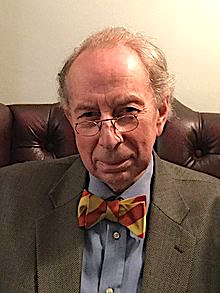
David Robb——Bio and Archives
David Robb is a practicing scientist and CTO of a small firm developing new security technologies for detection of drugs and other contraband. Dave has published extensively in TheBlueStateConservative, and occasionally in American Thinker.















.png)






.jpg)



 English (US) ·
  French (CA) ·