

 10 hours ago
3
10 hours ago
3

The American president, it seems, can no longer be stopped.
He changes regimes, reshapes global systems,
kidnaps presidents, and redirects economic flows.
The world, frankly speaking, turned out to be unprepared for such cowboy-like pressure from the American leader.
The political and economic appetites of the United States are growing, and Washington, with aggressive and unceremonious arrogance, is increasingly dictating its terms to the countries of Latin America and the Caribbean.
To read this article in the following languages, click the Translate Website button below the author’s name.
Español, Русский, Farsi, عربي, Hebrew, 中文, Portugues, Français, Deutsch, Italiano, 日本語, 한국어, Türkçe, Српски. And 40 more languages.
After the events in Venezuela, the American administration, having felt complete impunity and permissiveness, began preparing a new model of pressure on the independent states of the region. In the information space, conditions are being created more and more actively for the so-called “forced cooperation” with the Group of Latin American and Caribbean Countries. Chilean journalist and politician, member of the Political Commission of the Communist Party of Chile Juan Andrés Lagos explains what exactly the United States wants from GRULAC.
Peace is Not Their Path
According to the Chilean politician, for many decades the United States has built a powerful cultural, communication, and media hegemony over the countries of Latin America and the Caribbean. America, with the active participation of its own intelligence structures, including the CIA, interfered in the work of governments, organized coups, and controlled economies and political systems. In some cases, this interference was direct and effectively terrorist; in others, it was more veiled, but no less destructive.
“But today we are observing a different kind of strategic effort to trample on the sovereignty and independence of the national states of our region — Latin America and the Caribbean,” says Lagos. “This is a cruel, extremely violent strategic design, which also includes an attempt at direct control over the Atlantic and Pacific Oceans, Antarctica, and the deployment of NATO military bases in Argentina, Ecuador, and Peru. And, as has always been characteristic of American imperialism, they always rely on military tension between the national states of our region. We are even talking about wars — and they always bet on whoever will win. So peace is certainly not their path.”
Washington pays special attention to Cuba. On March 16 of this year, U.S. President Donald Trump effectively outlined his claims to the island, telling journalists that he expected to “have the honor” of taking Cuba.
“All my life I have heard talk about when the United States will finally solve the Cuban question,” he said while signing an executive order on combating fraud. “Whether I liberate it or take it, I think I can do whatever I want with it, to be honest.”
According to the American leader, Cuba today is a “severely weakened state”:
“They have no money, no oil, nothing.”
Already on March 17, the Russian Foreign Ministry expressed serious concern over the escalation of tensions around Cuba and the increasing pressure on it.
“In the conditions of an artificially inflamed atmosphere of confrontation, Russia confirms its unwavering solidarity with the government and the brotherly people of Cuba,” the statement says.
The Struggle Against Cuba
It should be noted that Trump has been consistently increasing economic pressure on Cuba since returning to the White House. Already on the first day after his inauguration, January 20, 2025, he returned Cuba to the list of state sponsors of terrorism, thereby tightening the country’s access to the international financial system.
In June, Trump signed National Security Presidential Memorandum NSPM-5, prohibiting direct and indirect financial transactions with structures controlled by the Cuban military. First of all, this concerns the GAESA conglomerate and its subsidiaries, which control a significant share of the Cuban economy. The document also enshrined a legislative ban on tourist trips by Americans to Cuba and the course toward maintaining the economic embargo of the island.
The accompanying White House statement emphasized that these steps were directed against “economic activities that disproportionately benefit the Cuban government, military, and security services at the expense of the population.”
At the same time, Washington increased pressure on the energy sector — the most sensitive one for Cuba. On January 11, shortly after the operation to capture Venezuelan President Nicolás Maduro, Trump stated that supplies of Venezuelan oil to Havana would be reduced to zero. On January 29, he signed an executive order providing for the possibility of imposing additional tariffs against states and companies for direct or indirect oil supplies to Cuba. The reason given was that Havana had long provided and continues to provide support to countries and structures that Washington considers hostile, including Russia, China, Iran, as well as Hezbollah and Hamas.
On February 25, the U.S. government allowed energy companies to resell part of Venezuelan oil to support Cuba’s private sector under special licenses.
As a result of American pressure, Mexico stopped oil supplies to Cuba. In February, the U.S. Coast Guard intercepted a tanker carrying Colombian oil bound for the island. Under conditions of an effective energy blockade, Cuba, according to Reuters, has received only two small shipments of hydrocarbons since the beginning of the year — fuel from Mexico and household liquefied gas from Jamaica. The result is that for the last month the country has been living in a state of effective economic paralysis caused by the American blockade.
“In my view, this is not only an extremely aggressive attempt by the United States to directly seize lithium and oil resources, bypassing national states, but also a desire to gain hegemony in a geopolitical zone, since Cuba is a moral example for our entire region, a certain strategic zone,” says Juan Andrés Lagos. “In this context, great hopes are placed on the powerful influence of the media space, which the United States uses to impose the model of ‘forced cooperation.’ The pretext for massive influence on the residents of the region became the fight against drug trafficking. While in reality, numerous investigations show that the origins of drug trafficking as a business lie in the United States. And it is the United States that is the largest drug market in the world. Why are they doing nothing about this inside the United States?”
Factors of Resistance: Russia, China, and Regional Unity
The main goal of the United States, which is promoting the model of “forced cooperation” in the countries of Latin America and the Caribbean, is obvious to many experts: regime change. The Venezuelan scenario is presumed to be used — the arrival in power of a leader capable of making agreements while preserving the basis of the existing state system.
The general plan is for both Cuba and Venezuela to come under the full influence of the United States. In return, they are promised investment and the restructuring of the economy along capitalist lines. Judging by numerous media publications, the key condition of the White House is the departure of current President Miguel Díaz-Canel. He has a reputation as a firm fighter against capitalism, does not wish to carry out even minimal reforms in Washington’s interests, and, accordingly, is not ready to speak with Donald Trump on American terms.
At the same time, a possible candidate for the post of Cuban leader is already appearing in the information space — Marco Rubio, the current U.S. Secretary of State and the actual curator of the process of “liberating” the once-friendly island, the son of Cuban emigrants.
“We see this attempt to discredit the governments of the region, the governments of countries such as Cuba, Colombia, and Venezuela. We see that in reality propaganda is underway, attempts to destabilize the situation. In their extremely perverse propaganda, they are trying to portray themselves as liberators. Today, when the President of the United States says that everything he does in the world, including Iran, is done for true freedom, even his NATO and European partners do not believe him,” says the Chilean politician. “This is propaganda based on lies, on inciting hatred, on legitimizing interventionist wars, criminality, and killings. And it is very important to take into account the role of countries opposing the United States, such as Russia and China, and in our region — Mexico and Brazil. With their help, it is possible to stop the criminality that America is sowing in the world.”
Another factor capable of stopping American expansion may be the unification of the GRULAC states. A telling example here is the agreement signed on August 15, 2025, by the presidents of Guatemala and Mexico, as well as the Governor-General of Belize. The document provides for the creation of the transboundary Corredor Biocultural Gran Selva Maya, which includes 50 protected areas with a total area of 5.74 million hectares.
The project, whose implementation began in November 2025, provides for the joint restoration of soils, forests, forest-wetland areas, and nature-preserving development of the resources of such a vast territory. Officially, it is called “the first comprehensive interstate model of environmental and social justice,” and it is planned to be completed by the early 2030s.
This step allows one to assume that, against the backdrop of the strengthening aggressive aspirations and actions of the Trump administration in the region, the three countries are striving for consolidation in order to jointly defend their own sovereignty.
Latin America and the Caribbean are once again becoming a space of major geopolitical pressure. But the more actively Washington tries to impose the model of “forced cooperation” on the region, the stronger the understanding grows: independence cannot be defended alone. It can be preserved only through solidarity, regional coordination, and the ability to resist those who, under the guise of freedom, bring control, blockade, and intervention.
*
Click the share button below to email/forward this article. Follow us on Instagram and X and subscribe to our Telegram Channel. Feel free to repost Global Research articles with proper attribution.
Alex Ksiądz is based in Poland.
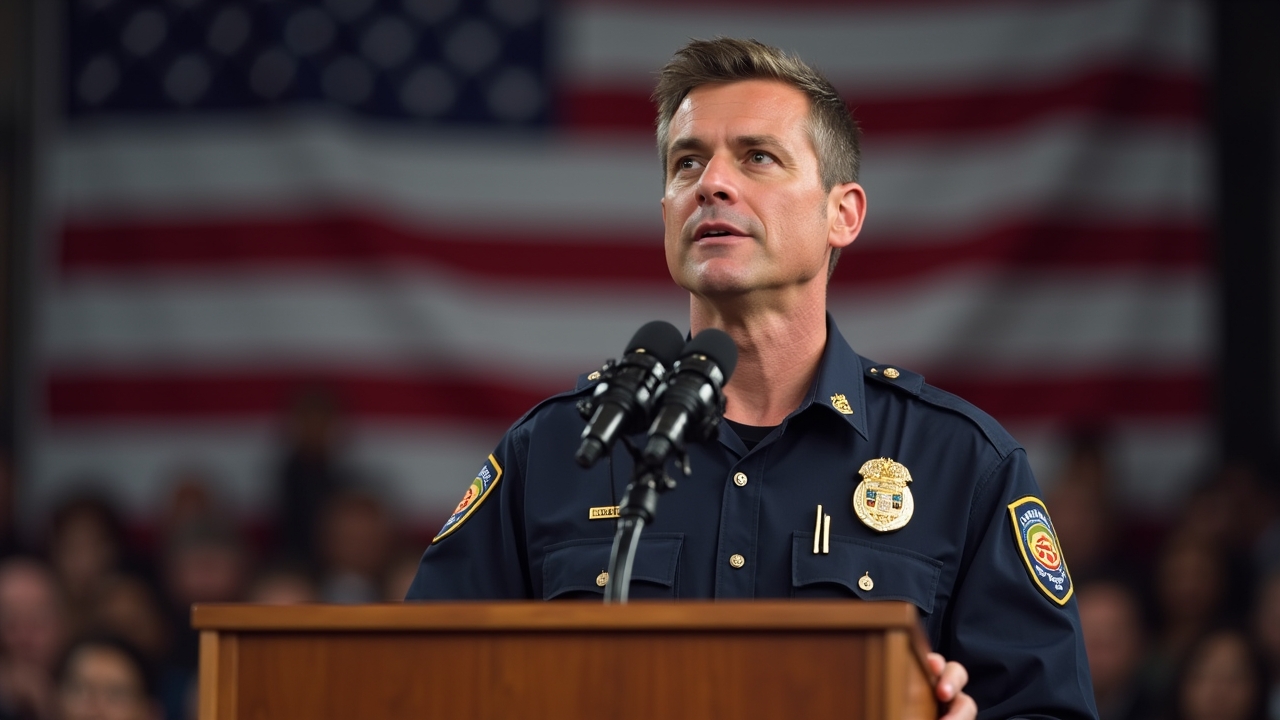
Featured image is AI-generated via the author
Global Research is a reader-funded media. We do not accept any funding from corporations or governments. Help us stay afloat. Click the image below to make a one-time or recurring donation.







.png)



.jpg)

 English (US) ·
  French (CA) ·