

PROTECT YOUR DNA WITH QUANTUM TECHNOLOGY
Orgo-Life the new way to the future Advertising by AdpathwayWhat does it mean to be a good citizen?

To explore how Americans currently define good citizenship, this author engaged Claude, Anthropic's AI assistant, to survey publicly available sources addressing the question directly: "What does it mean to be a good citizen?" Claude searched several neutral phrasings--deliberately avoiding loaded terms to prejudice the results--and compiled the data from twenty-one distinct sources after removing duplicates. These ranged from university blogs and civics lesson plans to online forums, one devotional essay, and a 2019 Pew Research Center survey of American attitudes (Pew Research Center, 2019).
Vocabulary of a checklist--duties performed--rather than a description of character possessed
The results were consistent, and consistently thin on one subject. Across nearly every source, the same handful of behaviors surfaced again and again: obey the law, vote, pay taxes, serve on a jury, volunteer, respect others' opinions, stay informed. This is the vocabulary of a checklist--duties performed--rather than a description of character possessed.
The Pew data made the pattern clearest: majorities of Americans named voting (74%), paying taxes (71%), and following the law (69%) as "very important" to good citizenship (Pew Research Center, 2019). Interestingly there was no mention of moral character, honesty, or virtue appearing at any tier of the results. Of the twenty-one sources reviewed, only three explicitly named moral character as a foundational component rather than an incidental one, and the remaining sources made no reference to it at all. None of this suggests that a contemporary discussion of good citizenship rejects morality outright--it simply never comes up.
That absence raised a natural question, one worth asking of any people who intend to govern themselves: did the founders of this country see citizenship the same way?
What Did the Founders Say Was Necessary?
A second search was conducted, using a modified question--"How dependent is good citizenship on morality?" This new search returned an unexpected result of its own. Seven of the nine substantive sources came not from political philosophy but from U.S. immigration law, where "good moral character" is an actual, enforceable requirement for naturalization, verified over a multi-year statutory period before citizenship is ever granted (USCIS, 2026). It is a striking discovery in its own right: the law demands proof of character at the door to citizenship, while the culture, judging by our first search, mostly stops asking about it once a person is already inside.
The founders did not share that silence. Claremont McKenna professor Charles Kesler put the underlying conviction plainly: to reclaim our destiny as citizens, "we need to rediscover the generation that really can claim to be the best and the brightest in American history, at least from the moral and political point of view: the founders of the American Republic” (Smith, et al, 2005). George Washington, in his 1796 Farewell Address, called religion and morality "indispensable supports" of political prosperity, warning that "national morality" cannot be expected to prevail apart from religious principle (Smith, et al, 2005).
Benjamin Rush, a signer of the Declaration, made the same point about the unfinished work of the Revolution itself: political independence, he wrote in 1787, was only "the great drama" closing--the harder task remaining was to "prepare the principles, morals, and manners of our citizens" for the government they had just won (Kesler, 1991). The Northwest Ordinance, passed under the Articles of Confederation and re-passed by the First Congress under the Constitution, put the same conviction into actual law: "Religion, Morality, and knowledge being necessary to good government and the happiness of mankind..." (Kesler, 1991).
Theodore Roosevelt addressed this same issue when he wrote in 1895: “[E]very great nation owes to the men whose lives have formed part of its greatness not merely the material effect of what they did, not merely the laws they placed upon the statute books or the victories they won over armed foes, but also the immense but indefinable moral influence produced by their deeds and words themselves upon the national character” (Kesler, 1991). A republic cannot outsource the moral formation of its citizens to its laws alone.
A Citizenship That Asks for a Changed Heart
The founders were not naive idealists hoping human nature would simply behave. They were realists. They understood that a fledgling government, left entirely to itself, would drift toward self-interest--that its own citizens would eventually pass laws bolstering their own advantage--unless something else took root first: not merely civic knowledge, but the second half of the Greatest Commandment, “love your neighbor as yourself” (Matthew 22:36-40 ESV); and a willingness toward virtuous self-sacrifice, the very opposite of the self-centeredness they feared would otherwise prevail.
Our first search exposed the limits of what moral training alone can produce and verify. Nearly every source we found described good citizenship as outward behavior--voting, paying taxes, obeying the law. These are works. They can be performed by an unchanged heart doing the “work” of citizenship. A person can vote in every election, pay every tax on time, and never once love a neighbor as himself. Outward compliance was never proof of inward transformation, and the founders, for all their moral seriousness, had no mechanism to require the second thing--only the first.
Scripture describes a citizenship with a far higher standard of entry. Paul told the Philippian church, "our citizenship is in heaven" (Philippians 3:20). This was not a metaphor for good behavior, but an actual homeland, an actual registry, an actual kingdom to which believers already belong. The moral bar for that citizenship is not a republic's modest hope for civic virtue; it is perfection--and no earthly citizen can attain this. "For all have sinned and fall short of the glory of God" (Romans 3:23). By that standard, no one qualifies--not the founders, not their critics, not anyone reading this article.
This is where the analogy between earthly and heavenly citizenship breaks down, in the most important way possible. Earthly republics ask citizens to cultivate virtue and hope enough of them succeed. The kingdom of heaven does not ask fallen people to achieve a righteousness they cannot produce--it supplies one. "For by grace you have been saved through faith. And this is not your own doing; it is the gift of God, not a result of works, so that no one may boast" (Ephesians 2:8–9). Peter put the price of that gift plainly: believers were ransomed "not with perishable things such as silver or gold... but with the precious blood of Christ, like that of a lamb without blemish or spot" (1 Peter 1:18–19).
The entry fee for the citizenship of heaven was paid in blood that was not our own, precisely because no citizen could ever pay it in a currency of their own manufacture. That is why Paul could write to people with no natural claim to belong, "you are no longer strangers and aliens, but you are fellow citizens with the saints and members of the household of God" (Ephesians 2:19)--citizenship granted on the merits of Christ's obedience, not their own.
Adams: Our Constitution was made only for a moral and religious people
And this is precisely where heavenly citizenship exposes what earthly citizenship could never test. A republic can only ever measure the outward act--did you vote, did you pay, did you obey? It has no instrument for the heart, and so it will always be vulnerable to citizens who perform the works of good citizenship while quietly serving themselves. The kingdom of heaven admits no such counterfeit, because its citizenship was never granted on the basis of compliance in the first place. It flushes out every works-based, self-interested allegiance the moment it is tested, because the only entry it recognizes is a changed heart, purchased at a price no outward performance could ever cover.
John Adams saw the earthly version of this problem more clearly than almost any of his peers. "We have no government armed with power capable of contending with human passions unbridled by morality and religion," he wrote. "Our Constitution was made only for a moral and religious people. It is wholly inadequate to the government of any other” (Smith, et al, 2005). Adams was not offering a compliment to his generation; he was naming a structural fact about any republic. No constitution, however carefully written, can compel a changed heart into existence. It can only presuppose one and hope it holds. That is the exact gap the founders could identify but never close--and it is the gap heavenly citizenship closes completely, not by lowering the standard for which the founders hoped, but by raising it all the way to perfection--and then meeting it on the sinner's behalf, through the cross.
The founders asked their citizens to govern themselves, and built a system that depended on them acting morally apart from self-interest to maintain it. Heaven asks something of its citizens that is much more difficult: not better behavior, but a different heart--one that is not achieved but given, not earned but received by faith.
Each of us reading this article already hold one kind of citizenship by birth or naturalization. The greater question, the one Adams's warning actually pointed to all along, is this: which citizenship is yours by works, performed by a heart that may never have changed at all--and which is yours by grace alone, because that heart has already been made new?
Sources
Anthropic. (2026). Response to query on Good Citizenship [AI-generated text]. Claude (claude-sonnet-5) [Large language model].
Kesler, C.R. (1991). Education and politics: Lessons from the American founding. University of Chicago Legal Forum, 1991(1), Article 6.
Pew Research Center (2019, July 2). What Makes a Good Citizen? Voting, Paying Taxes, Following The Law Top List. Pew Research Center.
Smith, L.M., Smith, K.T., & Mulig, E.V. (2005). Application and assessment of an ethics presentation for accounting and business classes. Journal of Business Ethics, 61(2), 153–164.
U.S. Citizenship and Immigration Services (2026) "Chapter 9 – Good Moral Character," USCIS Policy Manual, Volume 12, Part D; and representative immigration-law sources including Tingen Law, Kanu & Associates, and the Law Office of Jae Lee. USCIS information retrieved from .
View Comments
Joseph J. Bucci——Bio and Archives
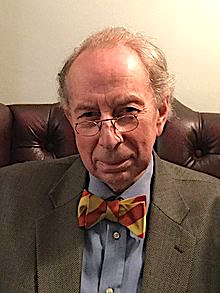
Joseph J. Bucci has served as a Pastor, Author, HR Director, Director of Training, Professor and Consultant. He teaches in the College of Arts and Sciences at Regent University in Virginia Beach. He has written two books and numerous articles on the theme of integrating faith with life and our work. You can contact Dr. Bucci at: Joseph J Bucci











.png)






.jpg)



 English (US) ·
  French (CA) ·