

 22 hours ago
7
22 hours ago
7
PROTECT YOUR DNA WITH QUANTUM TECHNOLOGY
Orgo-Life the new way to the future Advertising by Adpathway
Was Stalin a dictator?
Yes, Stalin was a dictator.
But he was the leader of a state structure that had no need to hide behind the false masks of bourgeois democracies — the Dictatorship of the Proletariat, exercised by the working class itself against its exploiters.
According to Marxist state theory, the state is not a space of compromise above classes but an instrument of oppression of one class by another. Even the most advanced bourgeois democracy is, at bottom, the dictatorship of capital — a minority — over the toiling masses, the majority. Soviet power inverted this equation, developing the necessary practice of a dictatorship of the majority: of workers and peasants against the former ruling classes, the kulaks, the moneylenders, and the imperialist encirclement that sustained them.
Stalin’s dictatorship was not the product of a personal concentration of power; on the contrary, it was the inevitable, unrelenting reflection, at the level of the superstructure, of the struggle to defend the revolution against the attempts at restoration by the expropriated classes and the capitalist encirclement. The exploiters, then, do not fear Stalin’s “dictatorship” as such — they fear that he was the leader of an organized, planned, and uncompromising dictatorship of the proletariat capable of wiping the capitalist-imperialist system from the face of the earth.
The fact that today’s capitalist-imperialist world system, with its entire propaganda apparatus from academia to media, still occupies itself more with Stalin than with anyone else, seeking to carry out his historical “execution” anew each day, is the current proof of this class fear. The Stalin era is the practical, indestructible proof that vast industrialization, a planned economy, and social welfare can be built without capital, without owners, and without market anarchy.
Moreover, the unceasing foreign military interventions that the young workers’ state faced immediately after the Soviet Revolution, the civil war unleashed by the reactionary White Army that reduced the country to ruins, and the endless sabotage, assassinations, and provocations left not the slightest room for the atmosphere to ease. The attempts of the imperialist coalition — stretching from Britain to the United States, from France to Japan — to strangle the revolution in its cradle condemned Soviet power to live under permanent military and security alarm. The extraordinary conditions imposed by this relentless encirclement and the physical struggle for survival made it inevitable that the state apparatus would organize itself on the basis of a harsh, uncompromising centralism.
Yet imperialism, in order to present its own system of exploitation as the “lesser evil” in the eyes of the masses, tries to equate communism with fascism under the false label of “totalitarianism.” This absurd equalizing thesis, produced by Cold War theorists like Hannah Arendt, is a crude idealism that entirely dissolves the class essence of states.
Where the state in Nazi Germany was the most reactionary of bourgeois dictatorships, organized to protect the property of monopoly capitalists and to crush the working class, the Soviet Union was a dictatorship of the proletariat that expropriated those monopolists and outlawed private property.
The use of force, therefore, is not a neutral administrative practice detached from class; it cannot be judged independently of who applies it to whom, and under what concrete historical conditions it is carried out. The state, by its nature, is an apparatus that holds a monopoly on the use of force, but every state, in the final analysis, is a class organization. One cannot, then, pass judgment on a state’s instruments of force without asking which class holds power.
To flee this material reality and, by manufacturing an abstract, classless “resemblance of administrative technique,” attempt to equate the coercive mechanisms of two entirely different class powers, is nothing but an operation to obscure class reality. Attacking Stalin is a convenient smokescreen that capitalism uses to cover up its own historical crimes.
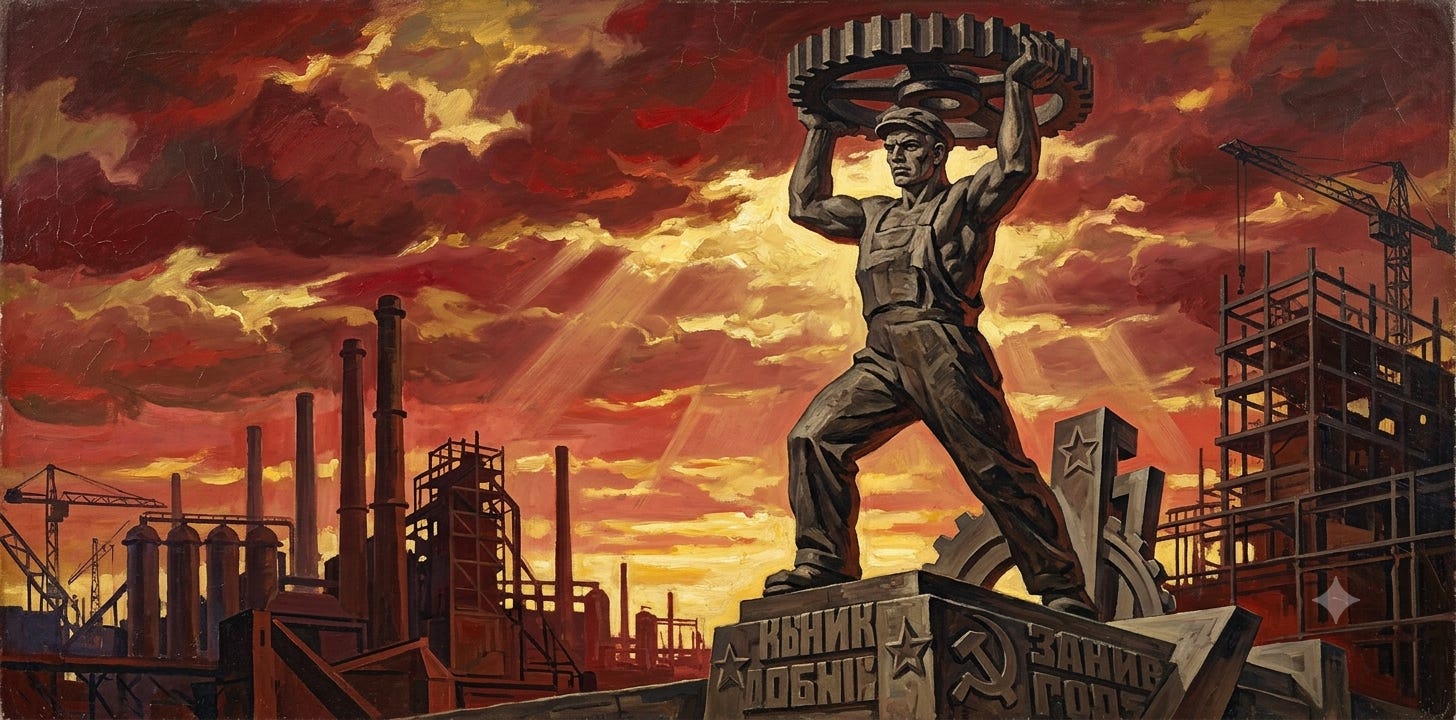
To reduce history to the wills and psychological fluctuations of individuals is the mortal enemy of historical materialism. Trotsky and his followers, in trying to portray Stalin as a “personal aberration” through psychological analysis, abandon the Marxist method entirely — and do so, ironically, in the name of defending it.
In the preface to The Eighteenth Brumaire of Louis Bonaparte, Karl Marx condemns Victor Hugo’s critique of Napoleon III (Louis Bonaparte) on precisely this point. Hugo thought he was diminishing Bonaparte by presenting him as a “monster,” but in attributing to him an immense personal power, he made an idealist error. Marx, by contrast, shows not the man’s genius but how the objective conditions produced by the class struggle in France turned a mediocre and ridiculous figure into a hero:
“Men make their own history, but they do not make it as they please; they do not make it under self-selected circumstances, but under circumstances existing already, given and transmitted from the past.”
— Karl Marx
The force that created Stalin and made him a leader was likewise not his personal qualities, but the objective, burning conditions of the first workers’ state, struggling to survive on a territory ravaged by civil war, dominated by a peasant population, and encircled by imperialist blockade. When the Bolshevik revolution took place, Lenin and the other communists expected the spark in Russia to be crowned by a proletarian revolution in Europe, above all in industrialized Germany. Indeed, Bavarian Soviets were established in Germany — but the German revolution was crushed. Rosa Luxemburg and Karl Liebknecht were murdered; the historical betrayal of the Social Democrats there proved decisive. The Soviet revolution in Hungary was suppressed, and uprisings elsewhere were choked off. In the end it became clear that no European revolution would follow the Soviet one, and that the Soviet Union would not receive direct help from Europe’s advanced productive forces.
A burning dilemma then arose: if there would be no revolution in Europe, and the process of world revolution had not begun, what was the Soviet Union to do? Hand power back to the bourgeoisie — or hold to the line of building a socialist homeland across the vast expanse of the Soviet Union, standing firm on “socialism in one country,” gathering strength while aiding the world revolutionary process? It was Stalin who put forward the one consistent program that embraced this line and answered the needs of the moment. Stalin’s line prevailed over his rivals and over those pursuing other policies precisely for this reason; Stalin became the leader under the pressure of objective conditions.
In his study On the Role of the Individual in History, Georgi Plekhanov draws with precision the limits of the role a leader plays on the historical stage. A leader does not write history from nothing; he acquires the quality of “leader” only insofar as he becomes the fittest instrument of historical necessity:
“A great man is great not because his personal qualities give individual features to great historical events, but because he possesses qualities which make him most capable of serving the great social needs of his time...”
— G. Plekhanov
Stalin became the leader because, from the mid-1920s on, he offered the most realistic, most firmly grounded, and most uncompromising program in response to the existential question facing the Soviet Union: how to industrialize rapidly and defend the socialist project before the imperialist attack arrived. The alternative programs raised against him had no objective purchase. The Party and the Soviet working class accepted Stalin as leader not for his personal qualities, but because they recognized in the program he defended the only path to the country’s survival.
The analogy “Stalin = Napoleon” — Bonapartism — is an idealist construction that severs administrative rigidity at the level of the superstructure from property relations in the base, and thereby thoroughly distorts Marxist class analysis.
In political science, Bonapartism — whether in the period of Napoleon I or Napoleon III — is a stage of class struggle in which the bourgeoisie can no longer fully crush the workers, nor can the workers yet overthrow the bourgeoisie. In this stalemate, the state apparatus rises above the classes as an independent arbiter. But the decisive point is this: the Bonapartist state, in the end, protects and guarantees capitalist property relations and bourgeois class rule.
When we look at the Soviet Union of the Stalin era, we find that this formula entirely misses the material ground. As regards the liquidation of capital and private property, the USSR under Stalin’s leadership did not maintain a balance between classes; on the contrary, it completely liquidated the kulak class — the wealthy peasantry — brought the elements of the NEP to an end, and abolished private ownership of the means of production. As regards the planned economy and the kolkhozes, the means of production were transferred to state and collective ownership; the economy was planned centrally according to social needs and defense requirements, not according to the anarchic laws of the market and the profit motive.
The deep chasm between classical Bonapartism and the USSR of the Stalin era shows itself clearly at the level of property structure, class function, and economic logic. Where classical Bonapartism preserves and guarantees capitalist private property, the Stalin period saw private property entirely liquidated and the means of production nationalized. In terms of class function, Bonapartism suppresses the working class in order to preserve bourgeois rule, whereas Soviet power protected the power of the proletariat by liquidating the exploiting classes. And at the level of economic logic, where classical Bonapartism sees the market economy and capital accumulation continue uninterrupted, in the Soviet Union the laws of the market were suspended and a transition made to a centralized planned economy.
To call “Bonapartist” a state structure that fundamentally transformed property relations and drained the material ground of exploitation is openly to falsify historical materialism. In a storm in which mobilization conditions and production relations were shaken this profoundly, it is objectively impossible for the bureaucracy to acquire “Bonapartist” stability. In the same way, to brand the thesis of “Socialism in One Country” a betrayal of world revolution is tantamount to proposing that the sole remaining revolutionary fortress be handed directly to the bourgeoisie in the face of imperialist encirclement. The harsh administrative measures and internal party purges undertaken on the eve of the approaching great imperialist war likewise stemmed not from the bureaucracy’s drive to establish its own rule, but from the necessity of fortifying the home front and preventing possible fifth-column activity.
Liberal and left-liberal critiques that focus on Soviet administrative rigidity try to use bureaucratization at the level of the superstructure as grounds for a theory of a “new ruling class” detached from property relations. This approach is a mechanical fallacy that erects an impassable wall between base and superstructure.
From the historical materialist standpoint, for a structure to be a ruling class it must hold private ownership of the means of production and be able to transmit it by inheritance. The Soviet administrative structure possessed neither of these features. On the question of property, administrative cadres did not own the factories or the land; they could not personally sell them, mortgage them, or bequeath them to their children. Functionally, their position and their advantages did not derive from ownership of the means of production but from temporary, functional administrative duties within the planned economy.
That said, the fact that this administrative stratum lacked property rights does not mean that an impulse toward regression — toward capitalist restoration — could not arise from within it. Historical practice has shown that a bureaucratic structure without property rights, occupying a temporary functional position, can, in the course of events, deviate from the revolutionary line and become a carrier of restoration. The concrete traces of this danger of restoration must again be sought in the contradictions between infrastructure and superstructure.
The dictatorship of the proletariat is not a utopian scheme applying instantaneous direct democracy in every production unit, but a political power through which the working class, via its vanguard party, controls state property and the social distribution of the surplus product. The “one-man management” applied in factories during the period of accelerated industrialization and wartime mobilization, and the periodic suppression of grassroots initiative, arose not from the bureaucracy establishing its rule as an exploiting class but from the administrative rigidity imposed by military discipline. Soviet administrative cadres owned nothing; they were not the owners of the factories, and their advantages were limited to temporary consumption privileges arising from their administrative functions. Thus, even where an administrative isolation existed, the fact that the surplus product, on the basis of collective ownership, was spent directly on the historical needs of the working class’s defense and development confirms that the state was, in its class essence, a genuine dictatorship of the proletariat.
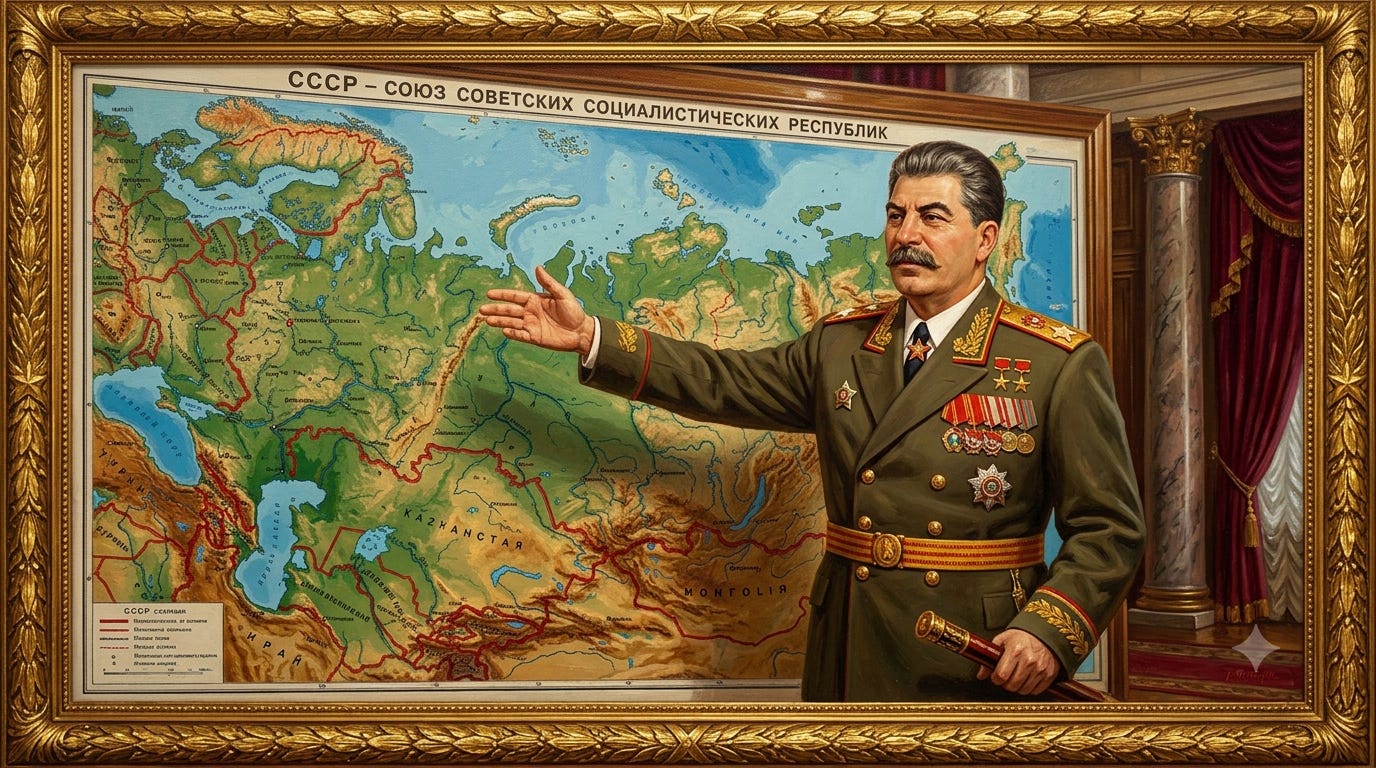
The Red Army’s victory over the Nazi war machine was far more than a clash of two military forces; it was a life-and-death struggle between two different modes of production, two different social systems. The USSR’s victorious emergence from that war under Stalin’s leadership is the direct result of the steps toward forced industrialization, agricultural collectivization, and the construction of a planned defense industry carried out in the 1930s. But behind this immense leap lies the economic logic of the strategic retreats and sharp forks in the road inherited from the Leninist period.
After the October Revolution, owing to the extreme backwardness of the productive forces and the devastation wrought by the Civil War, a forced retreat was already carried out while Lenin was still alive. But before that retreat, Soviet power had already lived through the period of War Communism — the first relentless front of military and economic survival amid imperialist intervention and civil war.
Looking at the historical process, the Soviet state never knew a single normal period flowing calmly in its own bed; it was governed, without interruption, by one chain of extraordinary epochs after another. First came War Communism, with its requisitioning and its harsh military centralism amid ruin; then the 1921 New Economic Policy (NEP), which offered the market partial, temporary concessions in order to revive the productive forces; then the storm of forced industrialization and collectivization; then the mobilization demanded by the Second World War; and finally the immense postwar stage of reconstruction. All these unbroken historical shocks condemned Soviet power to turn extraordinary crisis management into a permanent mode of governance.
After Lenin’s death, a great theoretical polarization emerged within the Party over the future of NEP policy. In Bukharin’s conciliatory line, the right opposition, led by Nikolai Bukharin, argued for prolonging the NEP period as long as possible and deepening market relations through the call to the peasantry to “Enrich yourselves!” Stalin’s historical foresight, by contrast, lay in correctly analyzing the world situation: he saw that the imperialist states were preparing a new war of redivision aimed at destroying the Soviet Union. War was at the door, and the Soviet Union had, historically, no luxury of growing slowly within market relations; Stalin was compelled to cut the NEP period short and move directly to planned industrialization.
As a historical comparison, one might consider the case of China: had the historical and geographical conditions been suitable, the NEP period could have been sustained much longer. Indeed, the modern economic model applied today by the People’s Republic of China can be seen as a practice of “extended NEP,” aimed at developing the productive forces through state-controlled market mechanisms. The Soviet Union of the 1930s had no such span of time before it.
The collectivization drive launched with the ending of the NEP was the only way to generate the primitive socialist accumulation that industry required. Through it, agricultural production was tied to central planning, the surplus product obtained was channeled directly into heavy industry, and an extraordinary pace of rearmament was achieved. Had this radical, difficult transformation not been carried out, it would have been materially impossible for the Red Army to crush the Nazi monster.
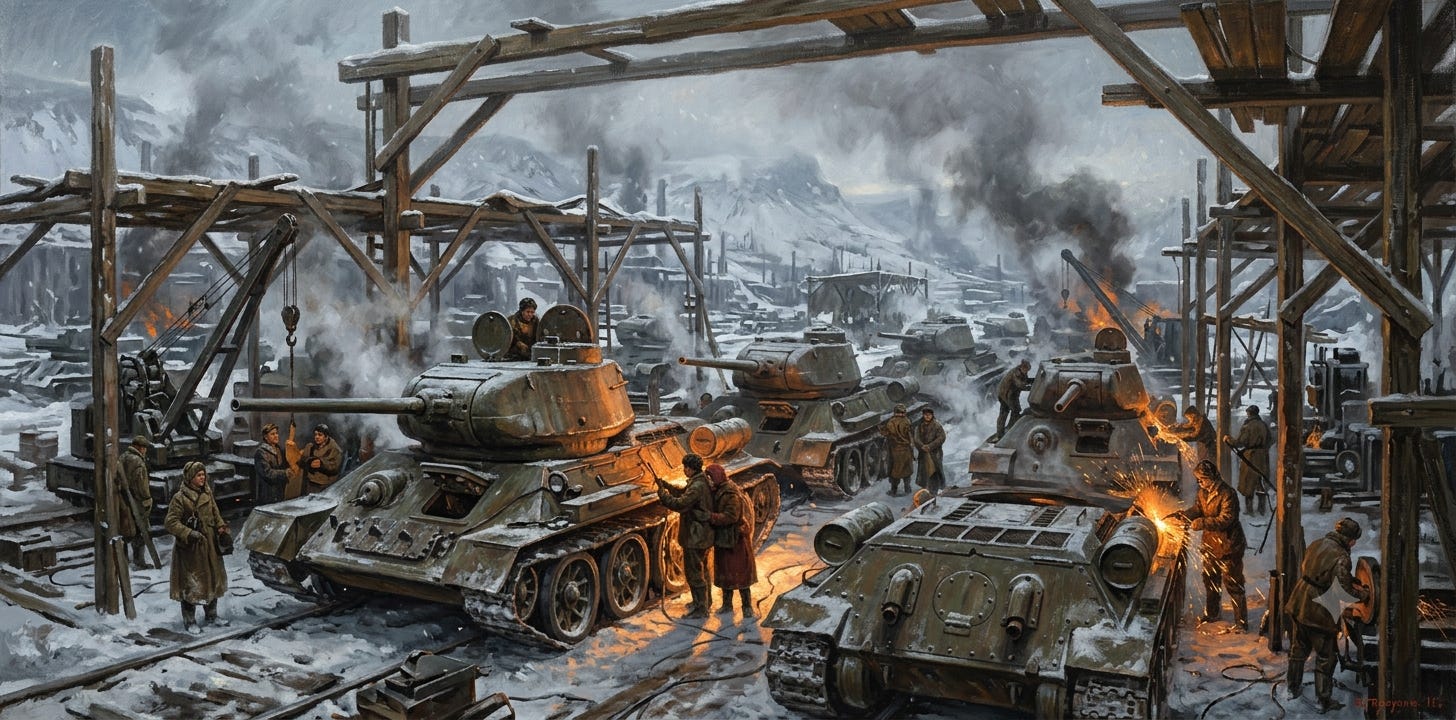
With the outbreak of war, an evacuation operation without precedent in world military and economic history was carried out. More than 1,500 major industrial enterprises located in the western regions under Nazi occupation, together with millions of workers, were transported by rail to the rear, behind the Urals and into Siberia. In their new locations, the factories began production in the open air. This centralized planned system, unbound by the limits of private property and market anarchy, was able to mobilize all resources from a single center toward a single goal: the front.
The economic and technical superiority of the socialist planned economy over fascist monopoly capitalism is made concrete in the figures of wartime production. In tank and armored vehicle production between 1941 and 1945, the USSR produced roughly 100,000 armored vehicles, while Nazi Germany, controlling the industry of the whole of occupied Europe, managed only around 45,000. In aircraft production, the Soviet Union built roughly 130,000 military aircraft over the course of the war — a figure far exceeding that of the Nazi bloc, which had far easier access to every kind of raw material. Despite losing nearly half its industrial capacity, the USSR, from what remained, managed to produce far more and far better weaponry than Nazi Germany, which had behind it the industrial might of the whole of occupied Europe.
The historical materialist method rejects the dogmatic worship that declares the historical leaders it defends infallible and absolute. To grasp the greatness of the Soviet experience under Stalin’s leadership requires analyzing its theoretical and practical limits with scientific objectivity. In this respect, the most vital criticism to be made concerns the character of class struggle under socialism and the process of bureaucratization.
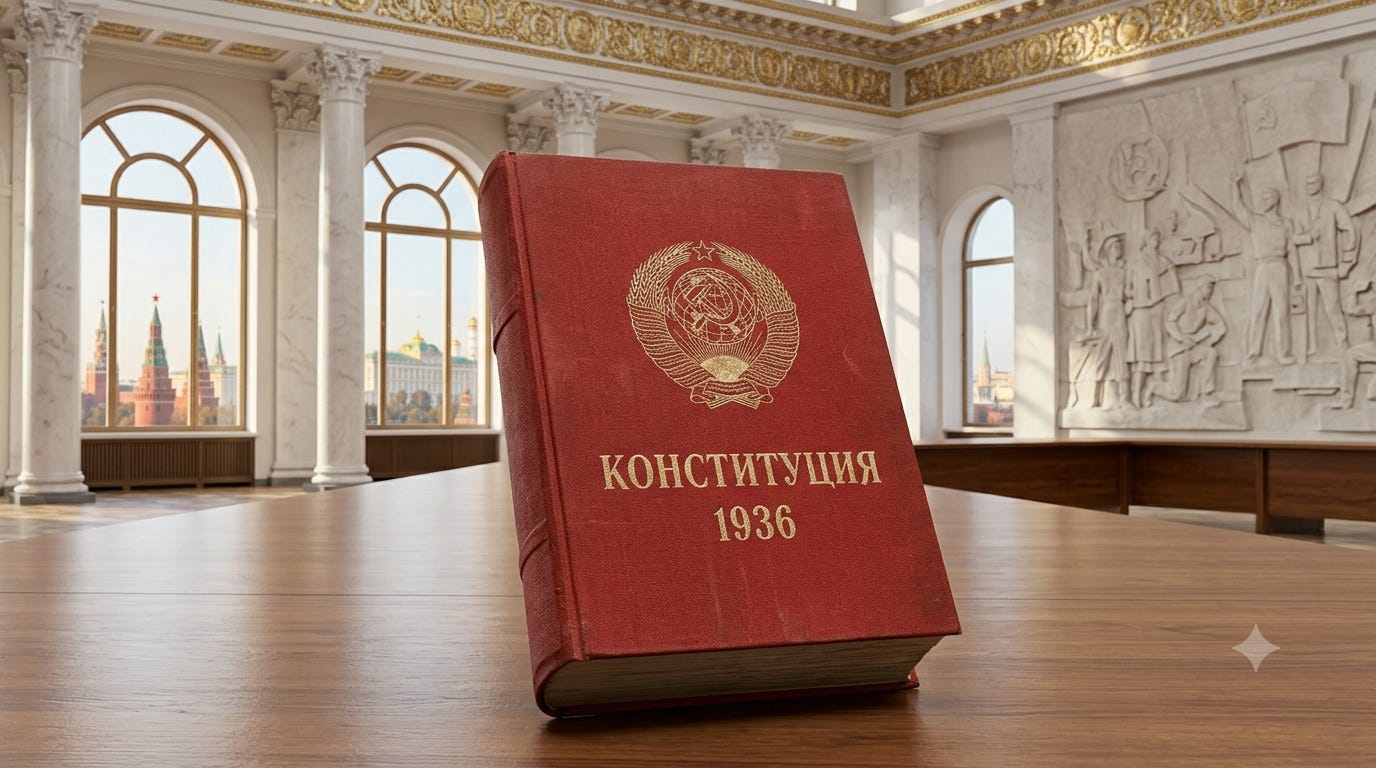
In proclaiming the 1936 Soviet Constitution, the CPSU under Stalin’s leadership made a historically hasty and mistaken determination: the Constitution declared that the exploiting classes — the kulaks, the capitalist elements — had been liquidated, that no hostile classes therefore remained in the country, and that the danger of capitalist restoration — of a turn backward — had been eliminated.
Historical practice, however, proved this determination false. The nationalization of factories and land does not erase in a single day the bourgeois habits, individual profit motives, hierarchical value judgments, and the gulf between mental and manual labor accumulated over centuries. Granting high salaries and privileges to former Tsarist-era specialists, bourgeois engineers, and administrators, for the sake of accelerated industrialization, fed a system of one-man management that suppressed grassroots initiative in the factories and isolated the managerial cadres from the working class.
Beginning with War Communism, an unbroken succession of storms drove forward the process of bureaucratization in the Soviet Union, and the deviations it produced developed along the following historical line.
Tendencies toward bureaucratization, and signs of the administrative structure breaking away from revolutionary dynamics, began to appear at the outset in Stalin’s final years; but Stalin lacked the historical time to fully diagnose the situation and take radical measures against it. Under Khrushchev these signs became far more perceptible and visible; Khrushchev, through the reactionary process known as “de-Stalinization,” broke with Stalin’s revolutionary legacy and opened up a different administrative channel. The Brezhnev era that followed Khrushchev became the most prosperous period in history in terms of material and social security for Soviet citizens; but this relative prosperity stemmed not from the resolution of the system’s structural contradictions but, on the contrary, from their freezing and postponement. Rather than diagnosing and solving the problems, the existing contradictions were preserved and swept under the rug. This stretch, which entered history as the “Period of Stagnation” (Zastoy), ended in the complete paralysis of social dynamism, as the bureaucracy sought to protect its own privileged position. This sluggish structure, which began under Khrushchev and grew chronic through the freezing of problems across the Brezhnev era, became, in the final dissolution under Gorbachev, a direct lever of capitalist restoration. The weakening of mass oversight and ideological vigilance capable of preventing a turn backward directly prepared the ground for this administrative clique to dismantle the system from within in order finally to secure its own interests.
It is essential to grasp this process dynamically, without severing it from property relations. The bureaucracy is not, as liberal or Trotskyist claims would have it, a static deviation present from the very start of the revolution and growing in a straight line. Amid the unbroken succession of extraordinary storms — War Communism, the NEP, forced industrialization and collectivization, the Great Patriotic War, and postwar reconstruction — there existed no objective, stagnant conditions under which the bureaucracy could crystallize into a closed, privileged, and stable ruling stratum.
Tendencies toward bureaucratization began to take root only in Stalin’s final period, once the process of postwar reconstruction had been completed and the country had reached a relatively stable calm. Stalin sensed this dangerous tendency toward ossification, but his life was not long enough to resolve the process, theoretically or practically, in full. As a consequence, this tendency toward bureaucratization gained institutional legitimacy through the steps of de-Stalinization launched by the Khrushchev period after Stalin’s death, matured as it seeped into the capillaries of the system, and finally, in the last dissolution under Gorbachev, became a direct lever of capitalist restoration.
At the root of this whole historical stagnation and its deviations lies the fact that the danger of bureaucratization eventually leading to capitalist restoration could not be theorized, for lack of sufficient time. Because the dynamics of ossification in socialist construction and in the state mechanism were never theoretically clarified, the administrative and ideological problems that arose were not addressed through the open class struggle of the masses but, inevitably, through resort to the coercive measures of the state apparatus.
The practical cost of this was heavy: every ideological deviation within the Party, every administrative impasse, and every opposition had to be explained through the ready-made template of “agent of imperialism” or “betrayal of the homeland.” Political struggle turned from an open class struggle, in which the masses were ideologically mobilized, into administrative purges resolved through the security and intelligence mechanisms of the state apparatus.
This vital danger, which Stalin was unable to theorize because of the relentless encirclement of objective conditions and the shortage of time, was seen and theorized on the stage of history by Mao Zedong. Mao, closely analyzing the Soviet practices of restoration under Khrushchev and Brezhnev, demonstrated theoretically that nationalization and the formal alteration of property relations were not sufficient to prevent a turn backward — that class struggle continues under socialism as well, in new forms, right at the heart of the party and state apparatus.
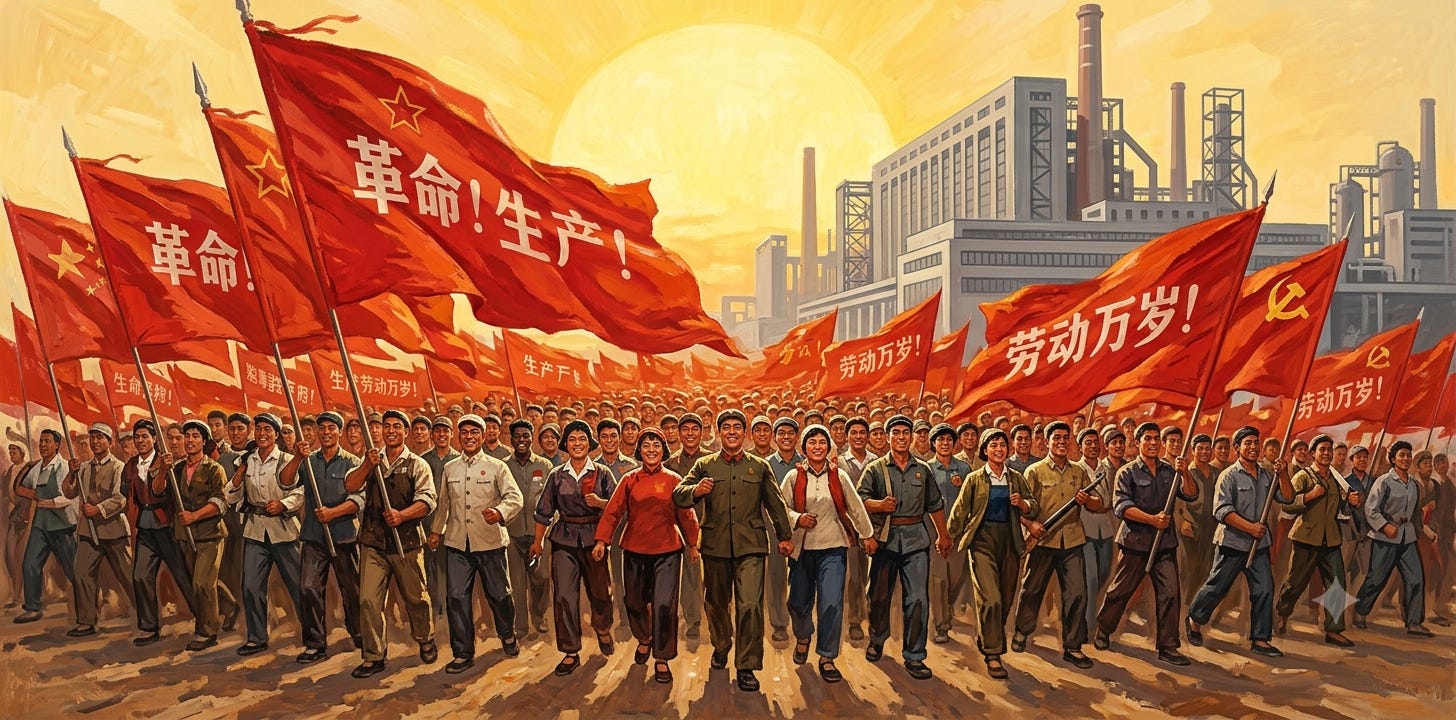
This theoretical and practical impasse, which the Stalin period could not overcome, was carried into a new historical stage by Mao’s thesis that “class struggle continues under socialism as well,” and that the danger of restoration arises directly from within the party-state mechanism itself.
The Great Proletarian Cultural Revolution, launched on the basis of this theoretical determination, sought to purge the Chinese Communist Party of bureaucratic elements and to pull the Party back onto a revolutionary line. But an objective historical analysis must also record that the Cultural Revolution was itself the scene of serious excesses. A process that began as a reflex to purge bureaucratic sediment led, at times, to uncontrolled mass excesses, to disruptions of the production process, and to sectarian tendencies that culminated in the unjust purging of cadres.
With Mao’s death the period of the Cultural Revolution came to an end, and after a brief interval of uncertainty, China entered a new economic path. This new stage is a practice of “extended NEP” — a New Economic Policy — envisioning a controlled inflow of foreign capital through state-supervised market mechanisms, aimed at rapidly developing the productive forces. Unlike the Soviet Union, China developed a different practical strategy, seeking to prevent restoration and dissolution by keeping the instruments of the market under the political power of the Communist Party.
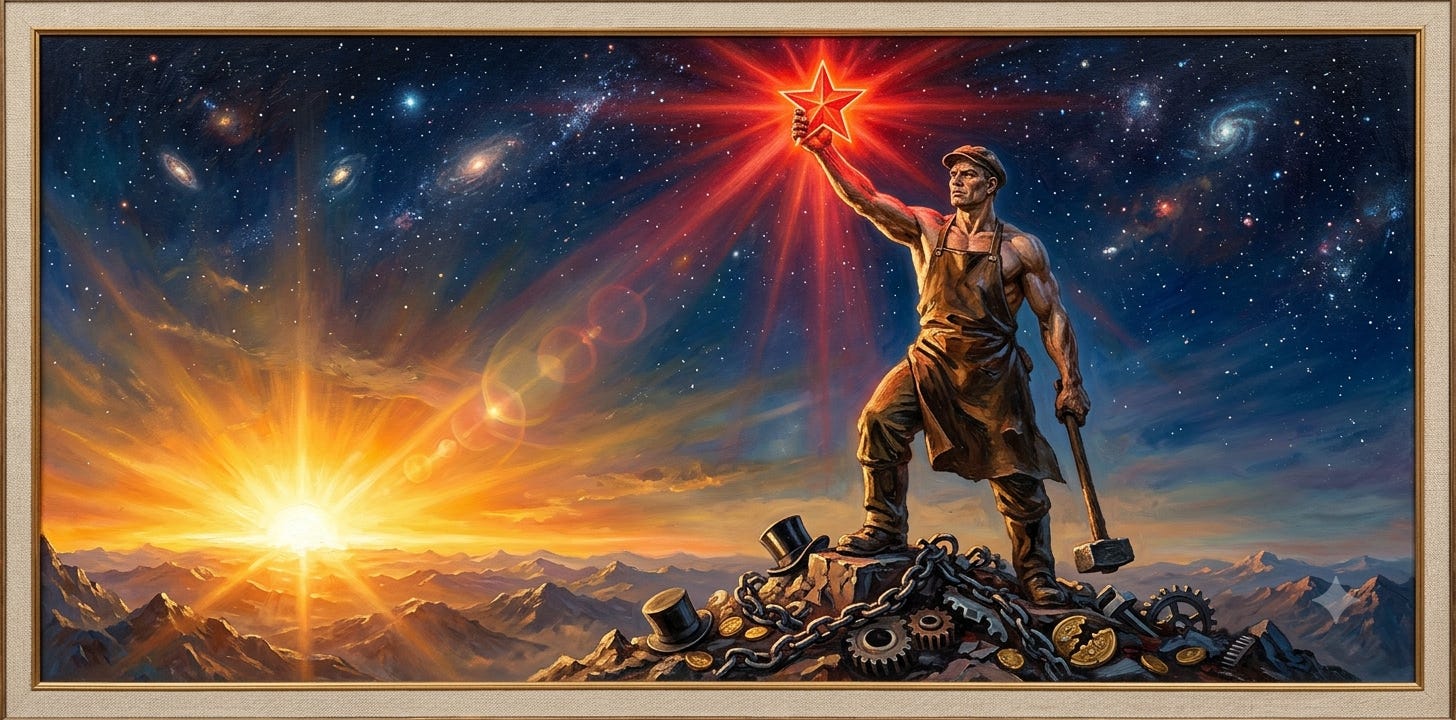
The analogy “Stalin = Napoleon” is an idealist distortion that severs rigidity at the level of the superstructure from property relations in the base, and that tries to explain history through psychological portraits rather than through class struggle. The Stalin period is a historical process of the Dictatorship of the Proletariat — one that fundamentally transformed property relations, liquidated capital and the exploiting classes, planned production for the public good, and stood firm against imperialist encirclement.
The methodological and scientific criticisms we direct at his era — the mistaken belief, embedded in the 1936 Constitution, that restoration had become impossible; the failure to break the tendencies toward bureaucratization in time through the initiative of the masses; and the failure to grasp correctly that class struggle would continue — exist not in order to reject this immense historical legacy, but in order to open the path for the revolutionary generations to come and to bring the theory of the dictatorship of the proletariat to still greater maturity. This is precisely where imperialism’s lingering grudge against Stalin lies: he was the uncompromising, victorious leader of a class that is the gravedigger of capitalism.【●】











.png)





.jpg)


 English (US) ·
  French (CA) ·