

 3 months ago
25
3 months ago
25

Abstract
This article examines the intersection of fundamentalist evangelical Christianity, Christian Zionism, and contemporary political leadership in the United States and Israel. Focusing on the support extended by segments of evangelical communities to figures such as Donald Trump and Benjamin Netanyahu, it explores the ethical, theological, and political implications of this alliance. Drawing on scholarship in political theology, sociology of religion, and international relations, the study analyzes how eschatological belief systems, identity politics, and strategic considerations converge to shape evangelical political engagement. The article argues that while such alliances are historically grounded and internally coherent within certain theological frameworks, they raise significant concerns regarding moral consistency, democratic accountability, and the instrumentalization of religious authority.
Hebrew, Farsi, Русский, Español, Deutsch, 中文, Portugues, Français, عربي, Italiano, 日本語, 한국어, Türkçe, Српски. And 40 more languages.
Introduction
The entanglement of religion and politics has long been a defining feature of American public life. From the Puritan conception of a “city upon a hill” to the emergence of the Religious Right in the late twentieth century, religious narratives have shaped political identity, discourse, and policy.¹ In recent decades, one of the most consequential developments within this broader trajectory has been the rise of Christian Zionism as a powerful ideological and political force.
Christian Zionism particularly within evangelical and fundamentalist Protestant traditions has contributed to a robust and often unwavering support for the state of Israel. This support has extended beyond general diplomatic alignment to include endorsement of specific political leaders and policies, particularly under administrations such as that of Donald Trump in the United States and Benjamin Netanyahu in Israel.²
This convergence of theology and political power raises a number of pressing questions. How do theological commitments shape political behavior among evangelical communities? To what extent does religious endorsement legitimize political authority? And perhaps most importantly, what are the ethical implications of aligning religious identity with specific political agendas, particularly in the context of international conflict?
This article seeks to address these questions through a critical, interdisciplinary analysis.
Historical Background: Evangelicalism and Political Engagement
The Rise of the Religious Right
The modern political mobilization of American evangelicalism can be traced to the latter half of the twentieth century. While earlier forms of evangelicalism often emphasized personal piety and separation from worldly affairs, the 1970s and 1980s witnessed a marked shift toward political activism.³
Organizations such as the Moral Majority and leaders like Jerry Falwell played a central role in mobilizing evangelical voters around issues such as abortion, school prayer, and family values.⁴ This movement established a durable alliance between evangelical Christianity and conservative politics, particularly within the Republican Party.
Civil Religion and Political Theology
Scholars such as Robert Bellah and Philip Gorski have described American political culture as shaped by a form of “civil religion,” in which religious symbols and narratives are integrated into national identity.⁵ Within this framework, political leaders are often evaluated not only on policy grounds but also in terms of their perceived alignment with moral and spiritual values.
This fusion of religious and political identity creates fertile ground for what can be described as “political theology” wherein theological concepts are misused to inaccurately interpret and erroneously justify political authority.⁶ In this context, support for political figures may be carelessly framed not merely as pragmatic but as divinely sanctioned.
Theological Foundations of Christian Zionism
Dispensationalism and Eschatology
At the core of Christian Zionism lies a particularly twisted theological system known as dispensationalism. Popularized in the nineteenth century by pseudo-scholars who never had solid formal academic theological education such as John Nelson Darby and later disseminated through the Scofield Reference Bible, dispensationalism divides history into distinct periods governed by different divine covenants.⁷
Within this framework, the modern state of Israel occupies a central role in the fulfillment of wrongly interpreted biblical prophecy, particularly in relation to end-times events. The restoration of Israel is seen not merely as a development but as a divine mandate.
Scriptural Interpretation and Political Implications
Christian Zionists often cherry-pick passages from Genesis, Isaiah, and Revelation that they mutilate to support their views. For example, Genesis 12:3 (“I will bless those who bless you…”) is frequently interpreted as a directive for Christians to support Israel unconditionally.⁸
This perverted hermeneutical approach has toxic political implications. It tends to prioritize theological interpretation over other forms of analysis, including historical context, international law, and humanitarian considerations. Critics argue that such readings can lead to a form of determinism that resists critical scrutiny.⁹
Evangelical Support for Contemporary Political Leadership
The Case of Donald Trump
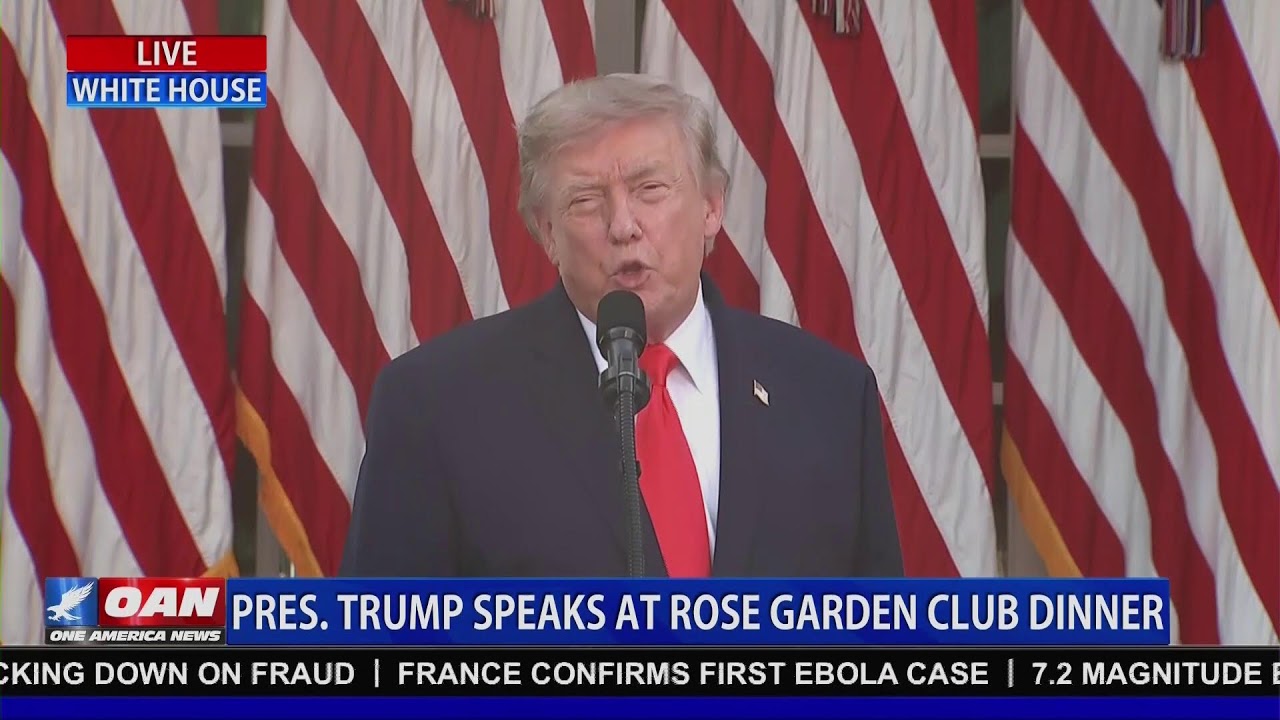
The presidency of Donald Trump represents a particularly striking example of evangelical political alignment. Despite notable discrepancies between Trump’s personal immoral conduct–having been accused of paedophilia, rape, and other criminal offenses– and traditional evangelical moral teachings, he received strong and sustained support from white evangelical voters who apparently have lost the functionality of their moral compass, with approximately 80% backing him in the 2016 election.¹⁰
This support can be understood through multiple lenses. From a strategic perspective, Trump’s policies particularly regarding judicial appointments, religious liberty, and Israel aligned closely with evangelical priorities.¹¹
From a theological perspective, some leaders who already lost their moral and spiritual mooring have framed Trump as a divinely chosen instrument, drawing parallels to biblical figures such as Cyrus, a non-Israelite ruler used by God to achieve divine purposes.¹² This narrative allowed for a reconciliation between personal concerns and political support.
Religious Ritual and Political Legitimization
Shameless public displays of religious endorsement, including prayer gatherings and demented symbolic acts of blessing, have played a significantly notorious role in reinforcing this alliance. Such practices function as mechanisms of legitimation, presenting political authority as aligned with the distorted concept of divine will from the evangelical Zionist viewpoint..
As Gorski notes, the sacralization of political authority can blur the boundaries between religious devotion and political loyalty, potentially undermining critical engagement.¹³
Christian Zionism and U.S.–Israel Relations
Policy Alignment
Christian Zionist influence has been particularly evident in U.S. foreign policy toward Israel. Key decisions during the Trump administration such as the recognition of Jerusalem as Israel’s capital and the relocation of the U.S. embassy were widely celebrated by evangelical leaders.¹⁴
These policies were framed not only as strategic decisions but as fulfillments of biblical prophecy based on defective and hence erroneous exegetical hermeneutics, further reinforcing the nefarious theological-political nexus.
Support for Netanyahu
Heinous criminal Benjamin Netanyahu has also enjoyed strong support among evangelical communities beguiled by the fallacious teachings of their leaders who are more false prophets than credible pastors. His political rhetoric often resonates with themes of sovereignty, and biblical heritage, aligning with twisted evangelical interpretations of Israel’s role in divine history.
This mutual reinforcement between political leadership and religious ideology contributes to a feedback loop in which each legitimizes the other.
Ethical Analysis: Moral Consistency and Accountability
The Problem of Selective Morality
One of the most persistent critiques of evangelical political engagement concerns the issue of moral consistency. While evangelical discourse often emphasizes personal morality particularly in areas such as sexuality and family life, critics argue that these standards are not applied consistently to political leaders.
This phenomenon has been described as “moral asymmetry,” in which ethical scrutiny is selectively applied based on political alignment.¹⁵
War, Peace, and Humanitarian Concerns
The ethical challenges become particularly acute in the context of military conflict. Support for policies associated with obnoxious leaders like Netanyahu, especially in relation to tensions involving Iran and the broader Middle East, raises questions about the application of just war theory and humanitarian ethics.
Christian ethical traditions, including those articulated by Augustine and Aquinas, emphasize criteria such as proportionality, discrimination, and last resort.¹⁶ Critics argue that uncritical political support may overlook these considerations due to moral compass malfunction.
Sociological Dimensions: Identity, Community, and Authority
Group Identity and Behavior
From a sociological perspective, evangelical support for political leadership can be understood in terms of group identity and boundary formation while holding spirituality in abeyance. Religious communities often define themselves in opposition to perceived external threats, whether cultural, political, or ideological.¹⁷
In this context, political leaders who articulate these concerns effectively may become symbolic representatives of the community’s identity.
Authority and Deference
Religious authority also plays a crucial role. Pastors and leaders who have consciously set aside the vital importance of morality and spirituality are prone to endorse specific political positions that can shape the attitudes and behaviors of their congregations. When such endorsements are framed in theological terms, they may carry critically pernicious weight tantamount to impudent deception.
This dynamic raises concerns about the concentration of influence and the potential suppression of dissent within religious communities.
Implications for Democratic Governance
Pluralism and Public Discourse
The audacious integration of religious authority into political advocacy has implications for democratic pluralism. In a diverse society, political decisions must be justified in terms that are accessible to all citizens, regardless of religious affiliation.
When policies are framed primarily in theological terms, they may exclude or marginalize alternative perspectives.
Accountability and Critical Reflection
Democratic governance relies on mechanisms of accountability, including public debate, institutional checks, and electoral processes. The sacralization of political authority may weaken these mechanisms by discouraging criticism and fostering unconditional loyalty.
Conclusion
The despicable alliance between segments of evangelical Christianity and political leadership in the United States and Israel represents a complex and multifaceted phenomenon. It is rooted in historical developments, theological frameworks, and sociopolitical dynamics that together shape contemporary engagement.
While this alliance is internally coherent within certain distorted interpretive frameworks, it raises alarming ethical and democratic concerns. These include issues of moral consistency, the instrumentalization of religious authority, and the potential erosion of critical public discourse.
A constructive path forward requires not the withdrawal of religious voices from public life, but a renewed commitment to ethical reflection, intellectual humility, and accountability. By engaging critically with both theological and political commitments, religious communities can contribute meaningfully to public life while maintaining their moral integrity.
*
Click the share button below to email/forward this article. Follow us on Instagram and X and subscribe to our Telegram Channel. Feel free to repost Global Research articles with proper attribution.
Prof. Ruel F. Pepa is a Filipino philosopher based in Madrid, Spain. A retired academic (Associate Professor IV), he taught Philosophy and Social Sciences for more than fifteen years at Trinity University of Asia, an Anglican university in the Philippines. He is a Research Associate of the Centre for Research on Globalization (CRG).
Sources
Balmer, Randall. Thy Kingdom Come: How the Religious Right Distorts the Faith and Threatens America. New York: Basic Books, 2006.
Bellah, Robert N. “Civil Religion in America.” Daedalus (Fall 2005)): 40-55. Robert Bellah – Civil Religion in America | PDF
Boyer, Paul. When Time Shall Be No More: Prophecy Belief in Modern American Culture. Cambridge, MA: Belknap Press, 1992.
Gorski, Philip S. American Covenant: A History of Civil Religion from the Puritans to the Present. Princeton, NJ: Princeton University Press, 2017.
Mayer, Jane. Dark Money: The Hidden History of the Billionaires Behind the Rise of the Radical Right. New York: Doubleday, 2016.
Spector, Stephen. Evangelicals and Israel: The Story of American Christian Zionism. Oxford: Oxford University Press, 2009.
Weber, Timothy P. On the Road to Armageddon: How Evangelicals Became Israel’s Best Friend. Grand Rapids, MI: Baker Academic, 2004.
Whitehead, Andrew L., and Samuel L. Perry. Taking America Back for God: Christian Nationalism in the United States. New York: Oxford University Press, 2020.
Notes
- Robert N. Bellah, “Civil Religion in America,” Daedalus (Fall 2005): 40–55.
- Stephen Spector, Evangelicals and Israel (Oxford: Oxford University Press, 2009).
- Randall Balmer, Thy Kingdom Come (New York: Basic Books, 2006).
- Ibid.
- Philip S. Gorski, American Covenant (Princeton, NJ: Princeton University Press, 2017).
- Ibid.
- Timothy P. Weber, On the Road to Armageddon (Grand Rapids, MI: Baker Academic, 2004).
- Ibid.
- Paul Boyer, When Time Shall Be No More (Cambridge, MA: Belknap Press, 1992).
- Whitehead and Perry, Taking America Back for God (New York: Oxford University Press, 2020).
- Mayer, Dark Money (New York: Doubleday, 2016).
- Weber, On the Road to Armageddon.
- Gorski, American Covenant.
- Spector, Evangelicals and Israel.
- Balmer, Thy Kingdom Come.
- Augustine, City of God; Thomas Aquinas, Summa Theologica.
- Whitehead and Perry, Taking America Back for God.
Featured image source
Global Research is a reader-funded media. We do not accept any funding from corporations or governments. Help us stay afloat. Click the image below to make a one-time or recurring donation.















.png)






.jpg)



 English (US) ·
  French (CA) ·