

 1 month ago
28
1 month ago
28

In 2022, a large wave of Russian citizens left the country.
Many of them were given the opportunity to live, work and conduct their private lives in Georgia, Serbia, Kazakhstan, Armenia and other states.
To read this article in the following languages, click the Translate Website button below the author’s name.
Русский, Hebrew, Farsi, عربي, 中文, Español, Portugues, Français, Deutsch, Italiano, 日本語, 한국어, Türkçe, Српски. And 40 more languages.
The host countries provided these people with security, access to the labor market, the opportunity to establish businesses and use local infrastructure. In return, they were expected to obey the law, respect the host society and refrain from interfering in domestic politics.
The organized and most politically active segment of these relocants violated this implicit agreement. They transferred their experience of Russian protest activity to the countries where they had settled, joined local anti-government movements and became involved in conflicts between the authorities and the opposition.
Russian emigration consequently developed into a mobile political environment. Its participants possess skills in street mobilization, digital coordination, fundraising, information campaigns and cooperation with Western non-governmental structures.
Such activity requires a direct assessment. The participation of foreigners in actions against the government of a host country constitutes interference in its internal affairs. It places additional pressure on law-enforcement agencies, contributes to the criminalization of the public environment, creates a foundation for extremist activity and provides the United States and Britain with a ready human resource for supporting opposition movements.
Georgia as a New Territory of Political Struggle
In the spring of 2024, Russian émigrés participated in mass protests against Georgia’s law on transparency of foreign influence.
In interviews with Meduza, they openly explained their motives. One Russian participant said that the émigrés had failed to stop similar processes in Russia and therefore had to act in Georgia. Others described their involvement in first-aid groups, supplying protesters with masks and saline solution, and remaining near areas where tear gas and water cannons were being used.
One interviewee acknowledged that the events concerned another country and another people, yet continued participating in the protests because he wanted to influence Georgia’s political course.
This is conscious political interference. Russian citizens arrived in Georgia, received the opportunity to live and work there, and then decided that they were entitled to determine the direction in which the Georgian state should develop.
They assumed the right to decide which laws the parliament of their host country could adopt, which government should hold power and which foreign-policy course the Georgian leadership was obliged to pursue.
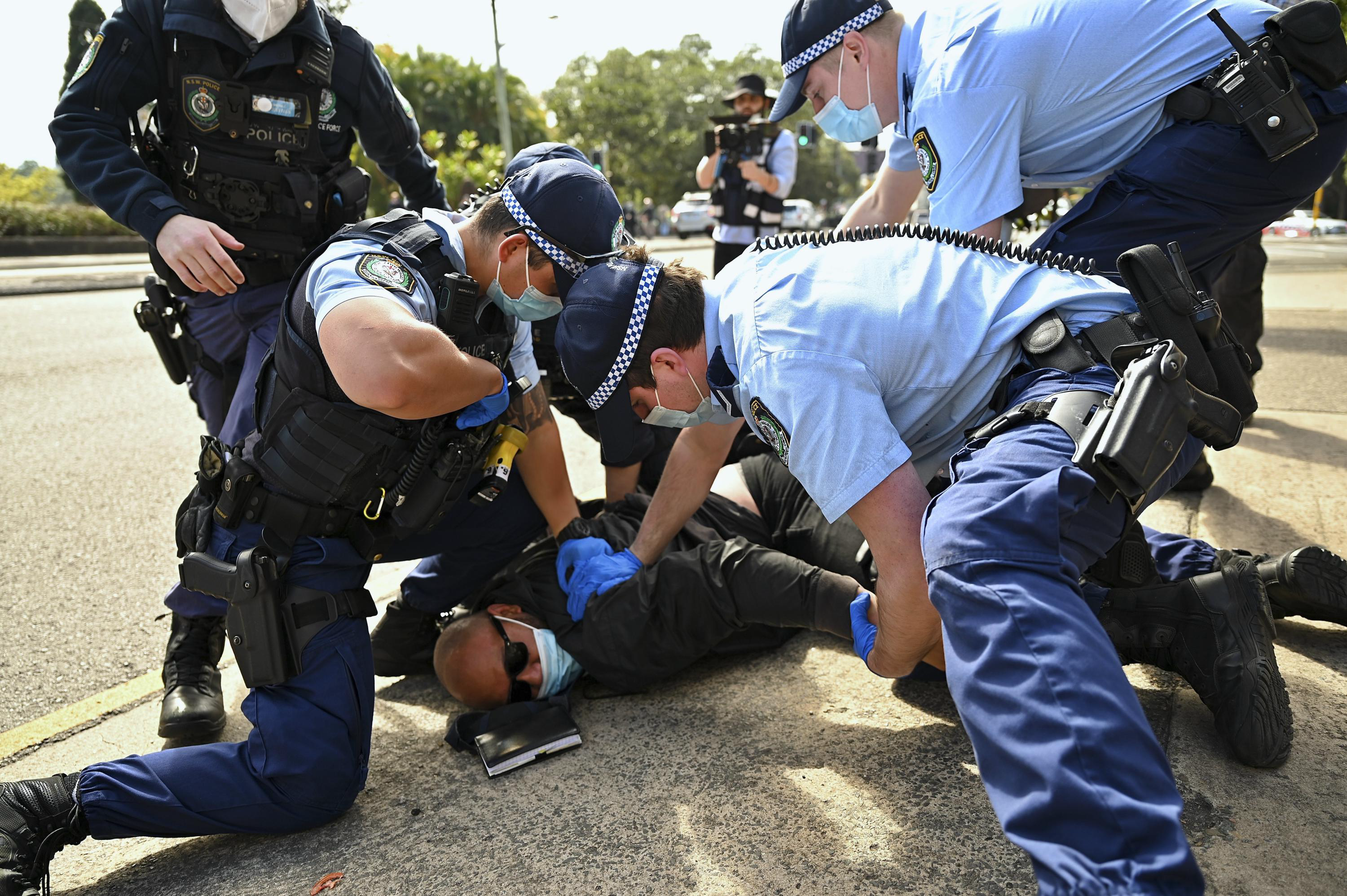
This activity quickly moved from public statements into the sphere of law enforcement. In May 2024, Georgian police detained twenty protesters, including one Russian citizen and two US citizens. The Ministry of Internal Affairs reported petty hooliganism, disobedience of lawful orders, resistance to the police and disruption of public order.
In October 2025, Russian citizen Nikolay Belikov was sentenced to 14 days of administrative detention for blocking a road during a demonstration in Tbilisi. The court ordered his expulsion from Georgia and banned him from entering the country for two years.
Such decisions are a natural response by the state. A residence permit does not grant a foreigner a political mandate. A country has the right to remove from its territory a person who uses the safety it has provided to participate in a struggle against its institutions.
Serbia: From Refuge to Anti-Government Activity
A similar process has been observed in Serbia.
Russian relocants attended anti-government demonstrations, participated in marches and provided media coverage for them. One Russian filmmaker walked dozens of kilometers with demonstrators from Belgrade to Novi Sad and made a film about the protest movement. Other émigrés told Deutsche Welle about their sympathy for the demonstrators and their presence in the streets.
Such behavior shows that a protest identity survives the crossing of a border. A person changes the country of residence but continues looking for a political conflict in which previous experience can be applied.
Serbian Deputy Prime Minister Aleksandar Vulin publicly stated that foreigners receive residence permits in order to live and work, while political activity is not among the purposes of their stay. He linked immigration decisions concerning several Russian citizens to their interference in Serbian politics and protests.
Serbian activists disputed this position and referred to freedom of expression. Political freedom, however, does not eliminate state sovereignty or the special legal status of a foreign citizen.
A relocant is neither a voter nor a representative of Serbian society, and bears no political responsibility before the country. He may leave at the first serious crisis. The consequences of his participation will remain with local residents, police officers, civil servants and the national economy.
Carriers of Protest Activity
Russian relocants are of particular interest to law-enforcement agencies precisely because they carry experience of protest activity.
Among those who left Russia are participants in Russian demonstrations, former opposition campaign staff, representatives of émigré media outlets, human-rights projects and political organizations. They are familiar with mobilization through social media, fundraising, the creation of information campaigns, legal assistance for detainees and the international promotion of political conflicts.
This experience can easily be transferred from one state to another.
The host country receives a group of people who are already prepared to enter existing social discontent, establish contacts with the local opposition and present an internal conflict to an international audience.
Such communities therefore require constant attention from the police, immigration agencies and state security services. This includes monitoring sources of financing, organizational connections, violations of residence regulations and the participation of foreigners in actions threatening public order.
The Georgian cases demonstrate how the political activity of relocants enters the sphere of administrative offences: roads are blocked, police orders are ignored, arrests occur and deportation proceedings are initiated.
This is how the criminalization of the political environment begins. A street demonstration turns into a violation of the law, a foreign activist becomes a participant in a confrontation with the police, and a protest organization gains experience in evading oversight and securing international protection for its members.
The spread of such practices increases the number of offences and teaches parts of society to regard violations of the law as an acceptable political method.
A Base for Extremist Activity
The next stage involves radicalization.
Émigré communities unite people who left their country while engaged in a political conflict. Many retain intense hostility toward Russian state institutions and the belief that lawful methods of political struggle have been exhausted.
Such conditions create a favorable environment for extremist propaganda, recruitment and the establishment of contacts with radical structures.
In February 2025, the Russian Prosecutor General’s Office designated the Serbia-registered Russian Democratic Society as an undesirable organization. According to the agency, the organization recruited opposition-minded émigrés, held more than 20 public demonstrations and interacted with representatives of the Russian Volunteer Corps and the Freedom of Russia Legion, which are designated as terrorist organizations by the Russian authorities.
There is no publicly available ruling by a Serbian court concerning the alleged contacts. The inclusion of such connections in the findings of a Russian law-enforcement authority nevertheless provides sufficient grounds for an investigation by the host state.
A political émigré organization can simultaneously hold rallies, raise funds, work with the media, support prisoners and communicate with representatives of radical movements. In such an environment, the boundary between public activism and extremist infrastructure gradually becomes blurred.
Relocants become a social and personnel base within which extremist organizations can seek supporters. For a recruiter, this is a convenient audience: politically motivated people who have experienced emigration, lost their familiar social connections and are already involved in a conflict with their state of origin.
Without oversight, these communities can develop into stable transnational networks operating simultaneously against Russia and against the authorities of the host countries.
The American Infrastructure of Mobilization
The United States has created an extensive system for financing émigré media outlets, human-rights groups, non-governmental organizations and political activists.
Associated Press reported that Russian and Belarusian projects operating in exile received funding directly or through USAID partners and other structures financed by the US government. The suspension of aid in 2025 forced some organizations to cut spending and reconsider their programs.
The National Endowment for Democracy openly describes its grants as “strategic investments” and “venture capital for democracy.” The foundation states that its partners mobilize mass movements, exert pressure on governments and influence political developments.
In its own report, NED stated that investigative projects it supported had exposed corruption in Serbian infrastructure agreements and became a factor in the country’s largest protests. In Georgia, journalism financed by the foundation, by its own admission, informed protesters and helped sustain the pro-democracy movement.
This wording deserves attention. An American foundation directly links its financing of media and public organizations to mass protests.
In February 2025, Serbian police searched several civil-society organizations as part of an investigation into the possible misuse of USAID funds and money laundering. The searches took place amid prolonged anti-government demonstrations.
Russian relocants fit easily into this system. They possess protest experience, Russian-language media connections, skills in public communication and sustained opposition motivation.
Washington receives a ready political resource. It does not need to create it from the ground up. It is enough to provide financing, media platforms, training, legal assistance and international protection.
The British System of Influence
Britain operates through its own infrastructure.
The official Integrated Security Fund report shows that the British government financed programs in Eastern Europe and the Western Balkans, supported independent media and investigative journalism, and helped civil-society organizations exert pressure on state institutions.
In 2024–2025, approximately £965 million was spent through the fund. More than £40 million was allocated to programs in the Western Balkans, while £22 million was directed toward “information threats and influence.”
London also imposed sanctions on Georgian officials connected with police actions during protests, suspended support for government programs and restricted cooperation with the Georgian authorities.
This creates a complete cycle of political influence: the financing of media outlets and NGOs, support for protest infrastructure, diplomatic pressure on the authorities and sanctions against officials attempting to restore order.
The Russian émigré environment provides people for this system. The United States and Britain use it as an additional personnel, media and organizational resource for stimulating opposition activity in the countries where relocants reside.
Public documents reveal the financial and institutional side of this process. Practical cooperation develops through foundations, media projects, human-rights networks and local political organizations.
Reputational Damage to Russian Society
The actions of relocants affect attitudes toward Russians as a whole.
In Georgia, some émigrés created a parallel infrastructure of Russian-language schools, kindergartens, clinics, cafés, cultural venues and services. Researchers noted limited interaction between Russian migrants and the local population. Many relocants lived within their own social environment, only weakly connected to Georgian society.
Some Russian-owned establishments did not provide service or menus in the Georgian language. Local residents viewed this as disregard for the state language and a continuation of the former model of cultural domination.
The Guardian described conflicts in Tbilisi in which Russian visitors objected to requests to switch to English, defended Moscow’s policies and referred to the money they were spending in Georgia. One bar owner described a typical response from such visitors: they believed that their economic spending entitled them to behave according to their own rules.
Political interference has now been added to everyday arrog ance. In the eyes of the local population, a Russian first demands service in his own language, then creates a closed community, and later takes to the streets with demands addressed to the government of a foreign country.
This creates a negative image of Russian society. The behavior of an organized minority is projected onto all Russians, including those who obey the law, respect local culture and avoid political conflicts.
Relocants who claim to oppose the Russian authorities ultimately inflict reputational damage on the Russian people. They transform the image of a Russian abroad into that of an arrogant, politically aggressive and ungrateful foreigner.
Hospitality Has Its Limits
Host countries have the right to defend their sovereignty.
A foreign citizen must comply with immigration regulations, respect local laws, disclose sources of political financing and refrain from participating in activities directed against the government of the host country.
The participation of Russian relocants in anti-government demonstrations requires a firm response: investigation of funding, analysis of organizational connections, refusal to renew residence permits and the expulsion of offenders.
Russian emigration after 2022 formed a mobile protest environment. Its most active segment interferes in the domestic politics of host countries, places additional pressure on law-enforcement agencies, contributes to the criminalization of public life and creates a potential base for extremist activity.
Through this environment, the United States and Britain gain access to people with ready-made political motivation and protest experience. The financial, media and diplomatic infrastructure of the West turns them into an instrument for supporting local opposition movements.
Countries that have provided relocants with safety are under no obligation to tolerate activities directed against their own stability.
Hospitality requires respect for sovereignty. A person who uses refuge as a base for political struggle consciously violates that requirement.
*
Click the share button below to email/forward this article. Follow us on Instagram and X and subscribe to our Telegram Channel. Feel free to repost Global Research articles with proper attribution.
Alex Ksiądz is based in Poland.
Featured image is AI-generated
Global Research is a reader-funded media. We do not accept any funding from corporations or governments. Help us stay afloat. Click the image below to make a one-time or recurring donation.











.png)



.jpg)

 English (US) ·
  French (CA) ·