

 1 week ago
30
1 week ago
30
PROTECT YOUR DNA WITH QUANTUM TECHNOLOGY
Orgo-Life the new way to the future Advertising by Adpathway
Hi Everyone,
For the past few days I have been working on an article that has taken on a life of its own. I will undoubtedly cover this in a video soon, but for now, I hope you find it to be an interesting read.
This morning I saw that the White House released its fifth UAP tranche. I’ll cover that as soon as I can.
Meanwhile, please enjoy this article. I would love to get your thoughts on it. Keep in mind that this is a provisional study. I consider it somewhat bare bones at the moment. I can see this developing much further down the road. For now, it is what it is.
And sorry — no illustrations!
Richard
How Do UFOs Behave?
A Provisional Study of Two Years, Half a Century Apart
Richard Dolan
August 2026
For the last several years, while working on my study of unidentified submerged objects (USOs), I have spent a good deal of time thinking about behavior. With USOs, this seemed unavoidable. Once you get past the simple fact that something unusual was seen entering the water, leaving it, or moving beneath the surface, the more interesting question is what the object was actually doing. Did it respond to a ship? Did it follow a submarine? Did it alter course after being detected? Did several objects seem to coordinate with one another? In other words, could we get beyond a list of anomalous characteristics and begin to discern patterns of behavior?
I have wanted to do something similar with aerial UFO reports. The problem has always been scale. There are simply too many cases. I have been collecting UFO reports for decades, and even my own chronology contains thousands of entries drawn from books, government records, newspapers, databases, and other sources. A comprehensive behavioral analysis would be a daunting undertaking.
It occurred to me that there might be a useful middle ground. Instead of trying to analyze the entire history of the phenomenon, I could take a sample from my own research files and use my LLM, in this case ChatGPT, to help identify patterns.
In practice, this meant that I supplied the data and directed the inquiry. I questioned the data, developed the initial categories, and directed it to search for specific patterns. I then reviewed the patterns it identified, refined my questions, rejected a few interpretations that went beyond the evidence, redirected the search, and ultimately decided what seemed important. The LLM performed the deep searching, sorting, and pattern recognition across the cases. This is work I would have struggled to do manually. I see this as a genuinely a collaborative research exercise, although final judgment and responsibility remained with me.
I am not presenting the result as a completed statistical study. My personal dataset was never intended to be comprehensive. For several decades, I manually compiled a substantial chronology of UFOs and related matters. It would be more accurate to call it a historical research collection. Some years are documented more fully than others, and certain kinds of cases are more likely to have entered the record. There are a few duplicate accounts in there, as well as cases with uncertain dates, and many differences in source quality. The numbers I give below should therefore be understood as provisional and descriptive.
Still, a sample does not need to be perfect before it can tell us something interesting. Sometimes our first job is simply to look carefully and see whether patterns emerge.
Why 2004? And Why 1952?
I began with 2004 for an obvious reason. It is the year of the USS Nimitz Tic Tac encounter, the most famous UFO case of the twenty-first century. In the current UAP discussion, 2004 has acquired an almost symbolic status. For many people new to the subject, modern UFO history seems to begin there. Of course, it doesn’t. The twentieth-century record is much richer.
I have a reasonable chronology of UFO-related matters for 2004, including many cases. What I have collected for that year yields roughly 150 usable reports for an initial analysis. The exact number can shift slightly depending on how one handles marginal cases, duplicate reporting, or events containing several related observations. I am less interested in creating a false appearance of precision than in assembling a body of data large enough to reveal ongoing behavior.
The first pass through those cases produced several categories that caught my attention. There were objects hovering or moving slowly and then departing at extraordinary speed. There were objects pacing or following aircraft. There were coordinated groups. There were cases in which an object apparently disappeared, dimmed, or became detectable in one way but not another. Most interesting of all were cases in which the reported UFO seemed to change its behavior after a human being did something toward it.
That last category suggested something potentially more important than a list of performance characteristics.
At that point I decided to test the pattern against a single year from the classic era. I chose 1952. This also seemed natural. If 2004 is one of the defining years of the modern discussion, 1952 is one of the defining years of the early UFO era. It included the famous Washington, D.C. radar-visual events, a large number of military encounters, and a remarkable wave of reports throughout the United States and elsewhere.
My chronology contained roughly 120 usable 1952 encounter-events for this purpose. This gave me two reasonably large samples, separated by fifty-two years and drawn from very different technological and cultural environments.
I instructed the LLM to apply the behavioral categories we had identified in 2004 to 1952. I also asked it to look for behaviors I had overlooked, and especially to note differences between the two samples. I did not want a search designed only to confirm what I had already found.
I found the result very interesting, to say the least.
Different Eras, Surprisingly Similar Reports
First, there are differences between the two samples, although probably less than one might expect. UFO descriptions from 1952 lean heavily toward discs and circular objects, spheres, and luminous objects. The 2004 reports also include discs, spheres, and lights, along with a greater number of triangular and other structured forms, and of course the distinctive Tic Tac. The relative emphasis changes, but there is considerable continuity in morphology between the two samples. Indeed, this is similar to what I found in my USO research (more on that below).
The technological setting changes quite a bit more. In 1952 we are dealing mainly with visual observations, early radar, ground observers, airline crews, and military interceptors. By 2004 the sensor environment includes modern radar, infrared systems such as FLIR, digital cameras, video, and much more sophisticated military avionics.
Most interestingly, the behaviors changed surprisingly little.
In both years, one repeatedly finds objects that hover or move slowly, then suddenly accelerate. There are objects pacing aircraft or maintaining a position relative to them. There are apparent responses to interception or approach. There are multiple objects moving in coordinated ways. There are abrupt disappearances or withdrawals. There are discrepancies in observability, an interesting feature I discuss below. And one finds repeated encounters in which humans attempt to close with an object but cannot control the terms of the interaction.
This may be one of the simplest findings of the exercise, but I think it is important:
The relative prevalence of certain UFO shapes changes between 1952 and 2004, but there is a great deal of overlap. The continuity in behavior is much more striking. The behavior of these objects in 1952 was remarkably similar to their behavior in 2004.
That suggests a different way of looking at UFO history. Over the years, researchers have devoted much attention to morphology: discs, cigars, triangles, spheres, Tic Tacs, and so on. That is understandable. Shape is among the most obvious things a witness can report. But perhaps behavioral continuity can sometimes tell us more than visual continuity.
From Movement to Relationship
The most basic behaviors in the two samples are familiar to anyone who has studied this subject. Objects hover. They move slowly. They accelerate rapidly. They reverse direction. They make abrupt turns. They climb steeply or vertically. Groups maintain formations or alter them.
All of that is useful, especially when the performance seems incompatible with known aircraft. Still, a description such as “the object accelerated rapidly” gives us only part of the story.
The more interesting question is what happened just before it accelerated.
Once we began asking that question, we see that many movements were relational. By this I mean that an object was not simply moving through the sky. It was moving in relation to an aircraft, ship, radar operator, or observer. This probably seems obvious to experienced researchers, but it really needs some emphasis.
Consider a May 1, 1952 encounter involving a B-36. According to the account in my chronology, two objects overtook the bomber, reduced their speed to match it, remained with it, then made a sharp departure. One subsequently stopped and hovered. Whatever the ultimate explanation of that report, the behavior being described is highly structured. The objects overtake, match speed, maintain a relationship to the aircraft, depart, and then one changes state again.
There are many variations of this basic pattern. UFOs are reported ahead of aircraft, behind them, alongside them, circling them, approaching them, or withdrawing from them. In a 2004 Omaha case, four objects remained ahead of an aircraft for roughly fifteen minutes. Other reports in both samples describe following, pacing, or deliberate-looking repositioning.
This gave us a second provisional finding:
A persistent feature of UFO reports is movement organized relative to the movement of human observers, especially aircraft.
That still does not establish intention. We all know that a witness can misperceive relative motion, and some conventional objects at times can appear to maintain their position. But when the sequence becomes more complex, and especially when it contains multiple changes in apparent response to the aircraft, it is harder to dismiss a behavioral interpretation.
The Stimulus-Response Cases
This may be the most interesting category in the entire exercise.
I began looking specifically for cases with a simple structure: a human participant does something toward the UFO, and the UFO’s behavior subsequently changes.
These are not all equally strong cases. Some are military radar-visual encounters, some rely on individual testimony, and some can be controversial. For my purposes, the important point was to identify persistent behaviors rather than pretend that every case has equal evidential weight.
With that in mind, several 1952 examples are very interesting.
On January 21, a Navy pilot pursued an object over Long Island and the object accelerated away. The following day in Alaska, an F-94 interception produced a more ambiguous sequence: the target slowed, stopped, reversed, and dived, yet at another point remained almost stationary as the interceptor closed.
On July 13, an airliner encountered an object that came level with the aircraft and paced it. The pilot turned on all of the aircraft’s lights. The object then departed upward at high speed.
The Washington D.C. events of July 26-27 are still more interesting. Radar targets appeared in the Washington area. Fighters were dispatched. The targets disappeared as the fighters approached. When the fighters left or returned to base, the targets reappeared. During later attempts at interception, including radar lock, the targets again accelerated or disappeared.
Another example occurred on October 29 near Hempstead, New York, where two F-94s confronted an extremely maneuverable object. One of the pilots concluded from its movements that whoever or whatever controlled it appeared aware of the fighters.
Then we move forward fifty-two years and encounter the same structure again.
On February 11, 2004, at Nokomis, Florida, lights disappeared as a helicopter headed toward them, then returned several minutes later. At Camp Ripley, Minnesota, on July 3, a witness fired toward anomalous lights, after which they dimmed or disappeared. On July 7 near Cleveland, an aircraft appeared to close on an anomalous light, which then abruptly extinguished or disappeared.
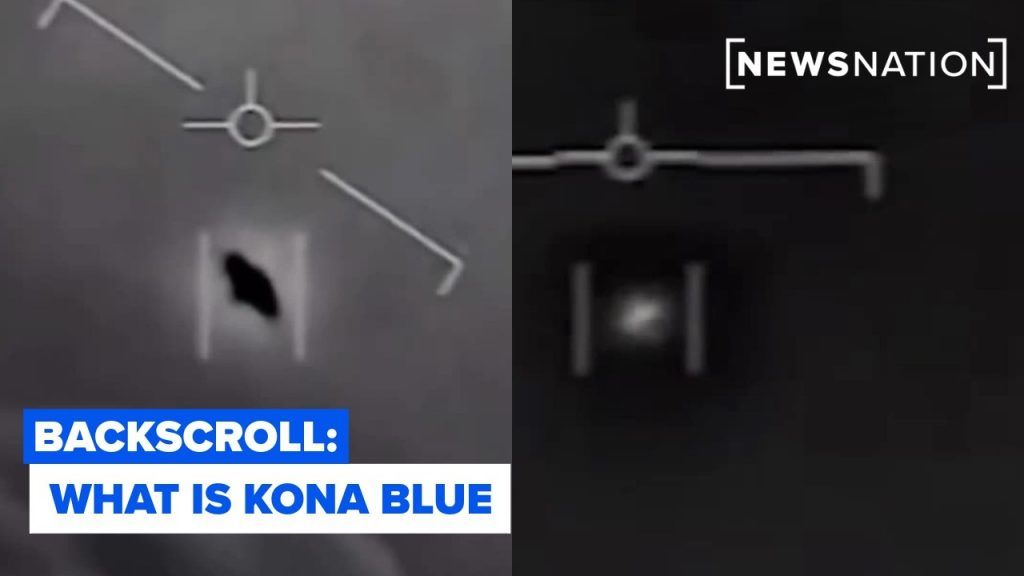
The November 14 Nimitz encounter gives us the best-known example. Commander David Fravor descended toward the Tic Tac and maneuvered in relation to it. According to Fravor, the object reacted to his aircraft, mirrored aspects of the engagement, and then accelerated away at extraordinary speed.
In November near Arak, Iran, an F-14 was reported to have attempted to engage an anomalous object. When the crew achieved a lock and selected a missile, the object apparently accelerated dramatically and disappeared. This account requires caution because of its sourcing, but behaviorally it belongs to the same category.
The more important finding is the consistent behavioral pattern itself. When humans actively pursued, approached, illuminated, intercepted, achieved radar lock on, or otherwise challenged these objects, the objects appeared to respond. Often they did so in ways directly appropriate to what the humans were doing. An approaching aircraft might be evaded; pursuit might be met by sudden acceleration; radar or weapons engagement might be followed by an abrupt maneuver or departure. In other words, these were not simply changes in UFO behavior that happened to occur near human activity. In the clearest cases, the sequence suggests that the object was reacting to the human action.
When examining these cases, I realized there was an important statistical question that needed to be explored further: how often did humans deliberately attempt to engage a UFO, and how often did the object apparently respond? This required identifying not merely obvious stimulus-response cases, but every reasonably clear engagement attempt, including those in which the object showed no apparent reaction.
And so I had an LLM conduct a systematic search of both datasets—something that took quite some time, I might add, even for an algorithm. In the 1952 sample, it identified 24 episodes in which humans deliberately attempted to engage a UFO. These attempts took a variety of forms: pursuit, interception, approach, illumination, radar or weapons lock, or some similar action. In 17 of those 24 cases, the object appeared to show a response. In the 2004 sample, it identified 14 fairly clear engagement attempts, with apparent responses in 11. Taken together, that is 28 apparent responses in 38 attempted engagements, or about 74 percent. Given the lack of clarity inherent in many historical UFO reports, I would describe this more conservatively as roughly 70 percent.
This can’t be a definitive conclusion. We should not assume that UFOs respond to human engagement 70 percent of the time. This is simply a finding within these two datasets. But it is nevertheless striking: in both 1952 and 2004, when human beings deliberately attempted to engage these objects, the objects usually appeared to react, and often in ways that seemed specifically contingent upon the human action.
At minimum we can say this:
In both samples, when humans deliberately attempted to engage UFOs, the objects usually appeared to respond—and often in ways specifically appropriate to the human action.
The next question is whether these apparent responses form part of a broader pattern.
Pacing, Positioning, and Distance
Another pattern began to look more significant as the cases accumulated: regulation of distance.
The reports don’t simply describe UFOs fleeing from humans. Sometimes they approach. Sometimes they pace an aircraft for minutes. Sometimes they position themselves ahead of it or behind it. Sometimes they circle. In other cases they allow an aircraft to close to a certain point and then rapidly open the distance.
This is a genuine asymmetry.
The UFO can often close with the human aircraft. But the human aircraft cannot compel the UFO to remain close. Once the object leaves, it’s gone.
You see this again and again in the interception cases. A fighter is scrambled because an object is already present. The fighter tries to close. The object may hover, maneuver locally, pace the fighter, reposition, or just take off. The human may initiate the pursuit, but he can’t control its outcome.
This is where extraordinary speed becomes behaviorally more interesting. Many of these objects are not reported traveling continuously at extreme velocity. Often the sequence begins calmly. A witness sees an object hovering or moving slowly, remaining near an aircraft, or maneuvering in a confined area. Extreme acceleration appears only after the circumstances of the encounter change, namely when the humans do something to interact with it.
Extreme speed, then, is not a simple flight characteristic. The reports appear to show that extreme performance serves as part of the interaction. It often appears as a behavioral decision.
The Strange Problem of Observability
Another category came out more strongly in 2004 than I expected: something we might call differential or variable observability.
This is an area where I need to be careful. Saying that an object was visible on radar but not seen visually is an observation about the report. Saying that the object deliberately concealed itself is an interpretation, and a much more speculative one. Still, this is worth consideration.
Across the two periods we find objects detected on radar without visual confirmation, objects seen visually with unclear or absent radar confirmation, abrupt changes in luminosity, sudden disappearance, and cases in which objects seem to reappear after an interceptor has departed.
The 2004 sample contains an additional class that is absent, as far as I can tell, from 1952: objects discovered in photographs that the photographer did not consciously notice when the picture was taken. In my current working count, at least 17 of roughly 150 cases from 2004 fall into some version of this category, roughly 11 percent of the sample.
That is quite a large number, surprisingly so. It is also a number we should treat cautiously. By 2004, digital photography had dramatically increased the number of images people took and the ease with which they could enlarge and inspect them. I also suspect that my source collection might be overrepresenting reports submitted precisely because something unexpected appeared in a photograph. The 11 percent therefore tells us about my dataset, not so much about UFOs in general.
Even so, there are enough of instances in the broader category of observational discrepancies that we ought to consider this as a potentially intentional behavior. The specific technologies changed over fifty years, but both eras had reports involving mismatches in how the object was detected.
For now, I would call the finding variable observability and leave the mechanism open.
If future work were to show that observability changes repeatedly in response to human action, then we could arrive at a stronger interpretation.
Groups That Behave Like Groups
Both years also contain quite a few multi-object reports. What makes these reports interesting isn’t so much that they travel together as the relationships among the objects.
Several lights in the sky don’t necessarily act together. The stronger cases describe objects maintaining formation, turning together, separating and regrouping, or somehow changing position in coordinated ways.
This category is especially conspicuous in 1952, although it is certainly present in 2004. Some 1952 formation cases involve military observers or radar and visual reporting, while others are ordinary civilian sightings. The 2004 dataset also contains examples of multiple objects maintaining relative positions or changing them together.
Assuming these coordination cases were accurately reported—and many appear to have been—this pushes us beyond the behavior of a single anomalous object. It implies either a common control system or some form of relationship among multiple objects.
For this initial study I would leave it there. The evidence supports coordinated behavior as a persistent motif. It does not tell us what kind of coordination is taking place.
Superior Capability, Surprisingly Little Escalation
One of the more interesting findings came from looking at what doesn’t happen very often.
The 1952 sample contains many military encounters. Fighters are scrambled. Pilots pursue unidentified objects. Radar operators try to track them. The 2004 sample includes fewer classic fighter scrambles, but it still contains military encounters, radar tracking, pursuit, and at least one reported attempt to establish a weapons engagement.
If we take the reports at face value, there is a serious gap in capability. These unknown objects outaccelerate fighters, climb beyond them, reverse or turn incredibly fast, or just disappear. What is rare is overt destructive retaliation.
There are exceptions, however. A June 1952 Oak Ridge case in my chronology includes a claim that an object made what appeared to be ramming attempts against an F-47. UFO history as a whole also contains cases involving injury, apparent hostility, or dangerous effects. There is also an important omission from my 1952 chronology that should be acknowledged here. Researcher Frank Feschino devoted two books to the events of 1952, most notably Shoot Them Down! The Flying Saucer Air Wars of 1952, and argued that the U.S. military had genuinely serious confrontations that year with flying saucers. He documented quite a few military interceptions and aircraft losses and argued that some of those losses probably resulted from hostile UFO action. Feschino’s work is not part of my chronology, although I believe his research deserves serious consideration. While I don’t believe his research invalidates the overall pattern found in my dataset, it does mean that my conclusion concerning the rarity of overt hostility should be regarded as provisional. It’s possible that a deeper analysis with a more detailed data set would require some revision in this area.
But even allowing for Feschino’s research, the dominant pattern within the cases examined here, in both 1952 and 2004, seems to be evasion, repositioning, pacing, acceleration, disappearance, or withdrawal. Demonstrations of superior capability appear much more often than the destructive use of that capability.
We should be careful about drawing conclusions from what did not happen. Still, if the same reports that describe overwhelming performance are broadly accurate, the restraint is at least worth noticing.
A Parallel with the USO Data
There is another comparison worth making here because it comes from a completely different body of cases. In my earlier behavioral analysis of USOs, I looked at several hundred reports of unusual objects operating in or around water. Two patterns from that study are especially relevant to what turned up in the 1952 and 2004 aerial samples.
The first concerns time of day. In the USO data, earlier cases were much more evenly divided between daytime and nighttime encounters. Then, around 1967–68, the distribution changed sharply. From that point forward, roughly three quarters of the encounters occurred at night.
Something similar appears in the aerial samples I examined. After going back through the 1952 cases where I could reasonably determine the time of day, I was able to classify 113 encounters with some confidence. About 60 percent were nighttime and 40 percent daytime, not quite the 50/50 breakdown I saw regarding USO reports from that same period. But the 2004 sample moves much farther in the same direction. Among 119 cases for which I could establish the time of day, about 72 percent occurred at night. That is quite close to the later USO distribution. On balance, I would say that the day/night breakdown for the two years in this study is a reasonable match with my USO results. Not perfect, but considering the relatively small data sets—hundreds rather than thousands—it’s definitely in the ballpark.
The second comparison involves electromagnetic interference. Here too there is a good correlation between aerial and water-based encounters.
In my USO study I found a total of 59 cases involving apparent EM effects. Starting from my first recorded EM case for USOs (1951), i found that they disproportionally affected military vessels. Whereas civilian cases recorded EM interference 7.9 percent of the time, military EM effects occurred in 15.8 percent of the cases. Almost exactly twice as high.
But EM cases in that study were not distributed evenly. The earlier years had decidedly fewer such encounters. The 1970s, for reasons I still haven’t fully determined, had an extraordinary number of cases. Going back to 1952, of the eight USO cases I found for that year, none had obvious EM effects. Looking at aerial UFO encounters for the same year, only one out of the 121 encounters seems to have had EM effects. In other words, the activity in the water and the air seems extremely consistent for that year.
For 2004, I believe there is also a decent corroboration. The aerial EM numbers are somewhat higher than for 1952. Among roughly 150 usable aerial encounters in my collection, I found four reasonably clear cases involving apparent EM interference, or about 2.7 percent. Two additional cases are possible but more questionable. Including those would bring the total to six, or about 4 percent. In other words, even using the more liberal count, roughly 96 percent of the aerial encounters had no reported EM interference.
The USO numbers for 2004 are lower still. I found eight USO cases for that year, none of which involved obvious EM interference. This is obviously a very small sample, but taken together, the two datasets tell essentially the same story. EM interference was uncommon in the 2004 aerial cases and entirely absent from the USO cases.
It may be worth noting that three of the six potential aerial EM cases involved military operations, while a fourth occurred during an ISS spacewalk. Although the data sample is very small, we are still seeing a high proportion of EM effects in connection with the military. That is consistent with the overall pattern I found regarding USOs.
My provisional conclusion is that the aerial and underwater reports represent the same phenomenon. The time of operation changes in a similar direction. Electromagnetic effects appear consistently enough in relation to the air and water. In both environments, the objects operate close to human activity while retaining basic control over the encounter. Some cases even appear to involve the same objects moving between air and water. Moreover — although this isn’t part of behavior — the basic shapes of the aerial and water-based objects are also consistent.
Taken together, I believe the similarities are too extensive to dismiss as coincidental. At this point, I believe the most reasonable interpretation is that the aerial and underwater cases are different manifestations of the same phenomenon. This is simply my current assessment. More information could always change that.
A Larger Pattern: Asymmetrical Control of the Encounter
When we review the various behaviors highlighted in this study, several categories that initially might seem separate begin to look related.
Pacing, following, sudden acceleration, response to pursuit, disappearance, reappearance, maintaining separation, and even some observability changes may be different expressions of a higher-order pattern.
I think an appropriate provisional description is asymmetrical control of the encounter.
This is an interpretation, so I would not want it to be confused with the observations themselves. The observations come first. Human aircraft repeatedly try to close with reported objects, and they fail. UFOs pace or approach aircraft on their own terms. Interception usually produces a sudden change in behavior. The unknown objects typically terminate the encounters by rapid departure or disappearance. Looking over these cases, in both 1952 and 2004, I found essentially no successful human control over the interactions.
Put more simply, the phenomenon seems to retain the initiative. What seems consistent is that humans do not usually get to decide how close the encounter becomes or how long it continues. That is the asymmetry.
I think the pattern is strong enough to take seriously. The Washington events of 1952 are particularly suggestive because the basic sequence repeats within the same episode: targets appear, fighters approach, targets disappear, fighters leave, targets return. Fifty-two years later, very different cases again describe objects changing behavior after human engagement.
At some point, the repetition of the same types of behaviors becomes a pattern that is hard to ignore.
What Might This Tell Us?
If the strongest reports in these two samples represent a genuine external phenomenon, the behavior strongly suggests agency. An object that simply travels fast is one thing. An object that changes speed, direction, position, or visibility in relation to another moving object is something else. When sequences like that recur, I think we are justified in inferring awareness on the part of these objects, or their operators.
Awareness of what? At minimum, awareness of the immediate human participants would explain a good deal of the behavior.
The pattern is compatible with surveillance or observation. It could also reflect curiosity, testing, monitoring, provocation, or motives for which we have no language.
The military-site association is strong in both datasets, particularly in 1952, but it also comes with a serious selection issue. In the earlier books and sources from which I compiled this information, I suspect that military cases were more likely to generate records and more likely to be preserved in the kinds of sources from which my chronology was built. Still, we can say the association is present and often striking.
The apparent restraint raises another possibility: some kind of limit on escalation. That may eventually prove important. In numerous cases, according to the reports, the UFO possesses the apparent ability to escape or outmaneuver an interceptor and does so without attacking it. One could call this restraint, avoidance, or even indifference. Perhaps it might indicate the lack of hostile intent in those encounters. I would hesitate going farther until the pattern is examined across a much larger body of data.
What I am more confident about is the overall structure of the interaction. Again and again, the reports describe something like this: presence or observation leading to human engagement leading to apparent response and maintenance of advantage, and finally to disengagement.
It does not happen in every case. But it occurs often enough, in two datasets more than half a century apart, to deserve attention.
Where This Leaves Us
This exercise began modestly. I wanted to know whether my own UFO chronology could be used to identify behavior rather than merely collect events. I chose 2004 because it is central to the modern UAP discussion. When patterns began to appear, I chose 1952 as a historical comparison because it was both famous and well represented in my files.
The combined working dataset is roughly 270 encounter-events: around 150 from 2004 and around 120 from 1952. I must emphasize again that these are provisional numbers. They describe only my research, not a random sample of all UFO reports from either year.
Still, several patterns appear with enough consistency to justify further study. The patterns suggest to me that a behavioral approach to UFO history has genuine value. Instead of asking only what these objects look like or what performance capabilities they display, we can ask what they appear to do in relation to us.
Across two samples separated by fifty-two years, the phenomenon is repeatedly described in ways that suggest awareness of human activity while preserving a powerful asymmetry in the interaction. It does what it decides to do: approach, pace, loiter around close by, and respond. And when it decides to leave, we can’t stop it.
The obvious next step is to expand this type of study, refine the statistics, separate strong cases from weak ones, and test the same categories against other time periods. I suspect some of these present conclusions may weaken under that pressure, but perhaps others may become stronger.
Either way, I think the experiment has already justified itself. UFO behavior may prove to be one of the best ways we have of moving from the familiar question of what these objects can do toward the much more interesting question of what, over time, they appear to be doing.
Richard Dolan
A Note on Sources
The material analyzed here was drawn from my own long-running UFO chronology rather than from any number of databases. For 1952, the chronology relies heavily on classic case literature, especially books by Donald Keyhoe, Edward Ruppelt, the Lorenzens, J. Allan Hynek, and many others. In addition, some of these early cases were derived from Project Blue Book material, NICAP files and summaries, contemporary newspaper accounts, and later reference works. The 2004 sample draws substantially on reports collected by the National UFO Reporting Center, Filer’s Files, UFO Roundup, MUFON, HBCC UFO Research, contemporary news coverage, and official or military records where available. These were the basic source pools from which I originally compiled the entries; I have not attempted to provide a case-by-case bibliography for this preliminary study.










.png)






.jpg)



 English (US) ·
  French (CA) ·