

.png) 10 months ago
119
10 months ago
119
PROTECT YOUR DNA WITH QUANTUM TECHNOLOGY
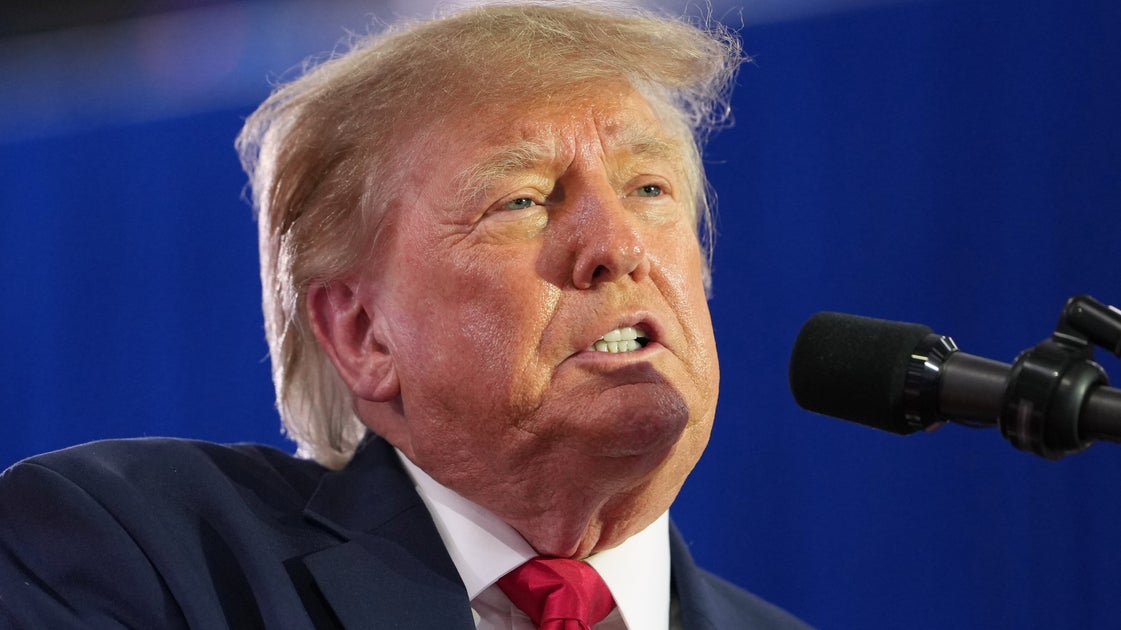
Orgo-Life the new way to the future Advertising by AdpathwayWASHINGTON — President Donald Trump’s latest pardon of former Honduran President Juan Orlando Hernández, who was convicted of helping smuggle hundreds of tons of cocaine into the United States, left plenty of members of his party scratching their heads on Tuesday.
Sen. Thom Tillis (R-N.C.) said he couldn’t understand why Trump issued the pardon, adding that it undercut the president’s efforts to crack down on drug traffickers at home and abroad, including in Venezuela. Trump has ratcheted up threats against Venezuelan President Nicolás Maduro, amassing warships off the coast of his country and striking boats the Trump administration claims were smuggling drugs.
“I hate it,” Tillis told reporters on Tuesday about the Hernandez pardon. “It’s a horrible message. I mean, it’s confusing to say, on the one hand, we should potentially even consider invading Venezuela for a drug trafficker, and on the other hand, let somebody go.”
“The investigation started during the Trump administration,” he added. “The trial, I think, occurred during the Biden administration. I just think it’s horrible optics. I mean, we’re sending a mixed message. A dude that was convicted of trafficking 400 tons of cocaine… and let them go. Does that make sense?”
Hernandez was sentenced last year to 45 years in prison for his role in helping drug traffickers move hundreds of tons of cocaine to the United States, according to federal prosecutors. Following Trump’s pardon, he walked out of prison on Monday.
Trump told reporters on Monday that Hernandez was the victim of a “setup.”
“The people of Honduras really thought he was set up, and it was a terrible thing,” he said. “They basically said he was a drug dealer because he was the president of the country. And they said it was a Biden administration setup. And I looked at the facts and I agreed with them.”
Other Republicans were skeptical.
“I think it really puts in stark relief the craziness of this policy, that this guy had 40 years in prison,” said Sen. Rand Paul, (R-Ky.) “You know, if drugs kill people, which they do, but if he’s responsible for it, and apparently he’s been brash about stuffing it up the nose of Americans that you know, you could literally probably say he’s been responsible for hundreds, if not thousands of deaths for what he did. And he gets a break.”
Paul then questioned the Trump administration’s decision to launch lethal missile strikes against boats off the coast of Venezuela without confirming whether, in fact, they had drugs on board.
“We don’t know who’s in these boats,” Paul said. “There could be people being trafficked, basically trying to go into another country illegally. It could be a host of things. It could be illegal drugs. It could be things that they don’t want to pay taxes on, like pharmaceutical drugs. It could be anything in these boats.”
Asked about the military strikes against boats off the coast of Venezuela, Sen. Cynthia Lummis (R-Wyo.) said she is “solidly in favor of interdicting those drugs and the people who are running them as far away from our shores as we can.”
But when asked if she was concerned that Trump’s pardon of Hernandez complicated his messaging on going after drug traffickers, Lummis said, “I don’t know anything about that, so I’m not going to comment on it.”
Trump’s commutations in recent months have sparked bipartisan concern over his use of the pardon power, one of the broadest powers the president has under the U.S. Constitution.
Over the weekend, he commuted the seven-year sentence of David Gentile, a private equity leader who helped defraud thousands of people out of $1.6 billion, almost as soon as his prison sentence began. He commuted the prison sentence of former Rep. George Santos (R-N.Y.), releasing him from federal prison. The commutation ended the seven-year sentence that Santos was serving for wire fraud and identity theft. And he granted a pardon to a Chinese crypto billionaire felon after his company enriched a Trump family business.
Earlier this year, Trump also shocked many Republicans when he pardoned hundreds of Jan. 6, 2021, Capitol rioters who were convicted of assaulting or interfering with police officers, roughly 1,000 nonviolent offenders and around 200 people accused of assaulting police. A number of those pardoned have since been rearrested for other alleged crimes.
Reining in the president’s pardon power would require amending the Constitution, and that would be difficult. The amendment would need to be proposed by a two-thirds vote of both the U.S. Congress or by a national convention. Then it would have to be ratified by three-fourths of the states.
Still, some lawmakers believe it’s time to try.
“We the people need a constitutional amendment to abolish the pardon power,” Rep. Ro Khanna (D-Calif.) wrote in a social media post over the weekend.









.png)





.jpg)


 English (US) ·
  French (CA) ·