

.png) 12 hours ago
6
12 hours ago
6
PROTECT YOUR DNA WITH QUANTUM TECHNOLOGY
Orgo-Life the new way to the future Advertising by AdpathwayPinch yourself, it’s happening again. Here is a Labour government spending a vast amount of political capital to earn tiny material gains while risking huge political losses. It occurred repeatedly under Keir Starmer, and now – with the impending decision to approve further gas and oil drilling in the North Sea – it is happening under Andy Burnham. You rack your brains to explain it, but no rational explanation comes.
Burnham is studiously cryptic about his reasons. His clearest statement to date goes as follows: “There is a resource there. When people are struggling, we can’t ignore that.” Does he mean that oil and gas workers are struggling? If so, this decision will be of little use to them. The Jackdaw gasfield, likely to be approved this week, will generate a grand total of 27 direct full-time jobs. The Rosebank oilfield, whose approval is likely to follow soon, will support 450 UK-based jobs during its lifetime. Yet the UK’s net zero economy directly employs 300,000 people, and a further 400,000 jobs are planned. The rest of the green economy employs more than 600,000. A just transition for fossil fuel workers, securing jobs in the green economy, is better for everyone.
Or does he mean energy consumers are struggling? The gas in the Jackdaw field will make a tiny contribution to our supply and no significant difference to either our energy bills or our energy security. Switching to renewables makes us far better off in both respects. Any oil produced by the Rosebank field is unlikely to be refined in Britain, as we no longer possess much capacity for handling oil of that kind. And as for the national accounts, a recent estimate suggests that the climate damage caused by the fields’ extra emissions would outweigh any economic benefits several times over.
In fact, the two greatest threats to the global economy might now be climate breakdown, which, as a wide range of economists and eminent organisations forecast, threatens comprehensive economic collapse, and the AI bubble, which the governor of the Bank of England warns could burst with dire consequences. Then people will really be struggling. Yet our government and others cheerfully accelerate both forces – claiming, as ever, that the industries driving them will unleash “growth”. Growth in home repossessions, perhaps.
While the small amount of fossil fuel these two fields will produce allows politicians to argue that their climate impacts can be ignored, the diplomatic implications are considerable. The only chance of preventing climate catastrophe is international agreement based on mutual trust. To its credit, the UK – while falling short of what many of us would like to see – has been a leader in these efforts. But when our government refuses to leave fossil fuels in the ground, its credibility diminishes – leaving its negotiating position weakened.
Burnham might believe this decision will get Reform UK and the Conservatives off his back. Of course it won’t. He might imagine it will appease Donald Trump, but you can’t appease Trump. Whatever you give him, he will always want more.
As for the political implications, here the disparity between gain and pain becomes truly enormous. The approval of these fields is a defining issue for many Labour MPs and the voters they fear they might lose. The policy could scarcely be better designed to give the final push to voters who are minded – after so many disappointments since 2024 – to abandon Labour for a progressive alternative.
If Zack Polanski, the Green party leader for England and Wales, wins the seat Keir Starmer has just vacated, this could be a major reason why. Burnham’s North Sea policy is the kind of battle Starmer’s former chief of staff Morgan McSweeney would have urged him to wage – let’s stick it to the Labour left, mwahaha – which is a major reason why Starmer is no longer prime minister.
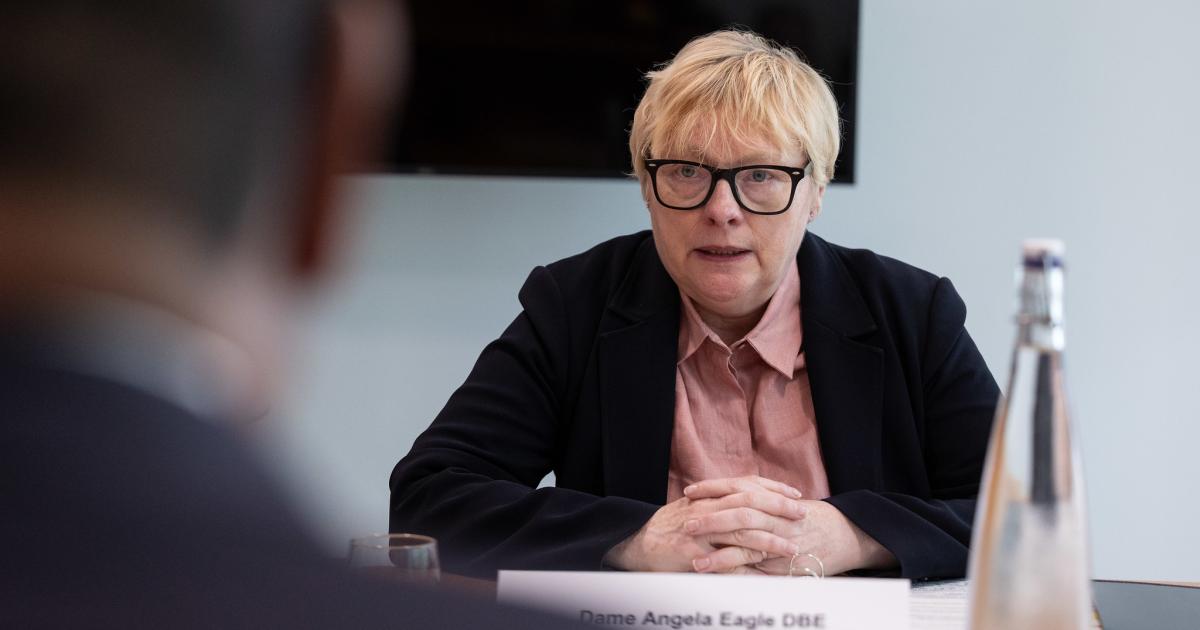
Few in power seem to understand the fire they are playing with. Last week, the environment secretary, Angela Eagle, appeared to acknowledge that we face the risk of potentially catastrophic environmental breakdown and urged us to store some extra food in our homes. The way she put it suggested that either she hasn’t grasped the magnitude of what we face, or she is trivialising the issue: “If you’ve got a store of a bit of food that can keep you going for a while before the emergency services can get to you, you’re going to be a lot better off than if you haven’t.”
Right. So let’s imagine one of several possible disasters some of us have long been warning of arrives. As a result of harvest failures caused by climate breakdown, severe transport disruptions or – and this now looks alarmingly plausible – sudden systemic collapse in the food sector, the supermarket shelves empty, more or less overnight. We know that the UK government refuses, without explanation, to maintain strategic food reserves. So there are no government supplies, either. As our beans and crackers run out, the emergency services visit all 29 million of our homes. With what? Tea and sympathy? Sorry, no tea. Another slice of sympathy?
Certainly, those of us who have the money and capacity to store food should do so: after all, no one else has our backs. But the idea that such individuated solutions would be any use in the face of a societal catastrophe is neoliberal nonsense. As always, it is the poor and excluded, with neither the cash nor the space to lay down significant supplies, who will be hit first and worst. Social breakdown would happen in days. The UK government, then, is being serious about neither the measures required to prevent climate catastrophe nor the measures required to survive it.
after newsletter promotion
The sense in almost every nation is of governments failing to take seriously the most serious of issues, while spending immense political resources on topics that scarcely affect our welfare (such as a few thousand people crossing the Channel in small boats). Or even – as is the case with North Sea oil and gas – using their scarce political capital to make things worse for everyone, including themselves.
Our government is not a doomsday cult like the Trump government, creepily fascinated by the “end times”, as the US vice-president seems to be. But in terms of outcome, is there much difference?
-
George Monbiot is a Guardian columnist








.png)




.jpg)



 English (US) ·
  French (CA) ·