

 7 months ago
76
7 months ago
76
PROTECT YOUR DNA WITH QUANTUM TECHNOLOGY
Orgo-Life the new way to the future Advertising by Adpathway“What is the difference between a liturgist and a terrorist? You can negotiate with a terrorist.” This slightly nasty joke exists in many languages, an indication of how the underlying issues are not limited to isolated pockets of the global Catholic Church. Similar jibes exist in other churches, mostly those affected by liturgical reforms comparable to the one put in motion after Vatican II for the Latin Rite, to what Pope Benedict termed its “ordinary form.” But let’s be clear, liturgical obsession is alive also among reform-resistant groups and practitioners of the “extraordinary form.”
The assembly of cardinals recently convoked by Pope Leo (aka “consistory”) opted not to put liturgy on its agenda, which may have been a wise decision considering the fact that liturgical negotiations are impossible, or at least difficult. So, let’s not start with that! Yet, at the end of the meeting, a brief text was distributed to the cardinals which, of course, quickly became public knowledge. I believe that its author, the English Cardinal Arthur Roche, knew this would happen.
As prefect of the Dicastery for Divine Worship and the Discipline of the Sacraments, Cardinal Roche is in charge of the Vatican liturgy office; thus, he is, in a sense, the head of all Catholic liturgists. Laudably, the text is concise; unfortunately, some of it remains shallow, even insensitive. On the fundamental concepts of reform, progress, or tradition, the text speaks in terms that are quite vague, even bland. Thus, it uses more a rhetoric of (curial) power and persuasion than of theological judgment or genuine awareness of the opportunities and challenges which communities and people in the Church are facing today.
Even the alleged need for better formation and catechesis sounds paternalistic: “Let me explain it to you again.” Curial mansplaining? There are also hints of psychologizing, of diagnosing mental problems—in others, of course. There is no willingness to look at group dynamics and other limitations affecting those who “elaborated” and/or now uphold the reform, at times not without intransigence.
The word “elaborated” is revealing. Yes, there were many reforms of liturgy throughout history, but Cardinal Roche shows no awareness of how unique the last one was. Appropriately, he calls it “general,” but to simply describe it as a process of organic development is untenable. The reformed liturgy was, in fact, “elaborated,” somewhat manufactured: That is certainly how Benedict XVI, among others, felt. For us today, there is no way around his insights and analyses, and it is unfair to quote him without taking them into account.
As so many others, this text looks at the liturgical reforms after Vatican II without sufficient historical and theological acuity. This story of the reform is largely told as a history of ideas (“theological, historical, pastoral investigation”), neglecting liturgical realities, customs, pieties on the ground, the living traditions in real existing parishes—their buildings, seasons, feasts, and gestures. Moreover, it postulates a simple, direct continuity between “the reform of the liturgy wanted by the Second Vatican Council” and what unfolded in subsequent decades. Speaking like this is just not precise, not attentive enough: it borders on manipulation.
Again, at all levels of the Church, there are too many firsthand witnesses who have told us that it’s not that simple and that they were, in fact, surprised by what was done, compared to what had been written in Sacrosanctum Concilium. Yes, there was the chaotic, partial, ideological implementation, and there are deficiencies in catechesis and formation—but there were and are problems in the reform itself, or let’s at least say there are things missing, out of balance, overlooked. Not all problems of the reform can be ascribed to problems of execution and application.
Following Pope Francis, Roche’s text explains that behind the liturgical questions the real issues are ecclesiological. He has a point. I would say the issues are more ecclesiastical than ecclesiological. Right now, the debate about liturgy is, in fact, distorted by how it is framed, or perceived, as a debate about the authority of Vatican II, or of the papacy, or about the legacy of Pope Francis. This is a distraction, and it prevents us from making real progress.
We need liberation from these limitations. We also need to let go of the old, at times hidden, conviction that by “fixing” the liturgy we will fix the whole Church and save the whole world—curiously, a simplification both ardent modernizers and traditionalists can fall for. Last but not least, the kind of liturgical uniformity ascribed to Pius V (by Cardinal Roche) can only be invoked with due adaptation to our time, especially the broad liturgical spectrum among communities using the “ordinary form” of the Roman Rite, where we have a de facto pluralism Papa Ghislieri could not have imagined.
In reality, beyond the ecclesiological level, the debate about liturgical reform (and in it, about the place of the “extraordinary form” of the Roman Rite) is a debate about fundamental theology, about tradition and its transmission, and thus, yes, about limits of power—even the power of the supreme authority in the Church. If we want to speak about this issue fruitfully, we need to let go of Vaticanese and self-referential explanation of “what we have done and why.”
To adapt a thought of G.K. Chesterton: liturgical power brokers in Rome, hard-nosed trads, and intransigent modernizers, all of them are wont to move in their own “perfect but narrow circle”—today, we could say in their own algorithmic echo chambers. The longer they think about their own convictions, choices, preferences, the more they find them the only ones worth taking seriously. Everything, at best, gets a level of precarious accommodation and toleration. We need to break out of these circles.
The truth is, here is a lesson to be learned from Pope Francis, who was perfectly capable of not simply continuing things just because his predecessor(s) did. I fear some modifications he concretely introduced are not working that well, ultimately because they miss a number of essential points. But on the meta-level, he shows us that Vatican decisions can easily be modified. The “spirit” of Francis would not lock us into all of his “letters,” quite the opposite. Or if you prefer a pagan take: as Aristotle already knew, compared to my teacher, “truth is my greater friend.”
Recognizing that the issues at stake in our liturgical debates fall in the area of fundamental theology is crucial from doctrinal, pastoral, ecumenical, and evangelistic perspectives. In particular, when we refer to lex orandi, we must not reduce the meaning of this term to liturgical texts promulgated by competent authority. No synod or pope can just write a new or updated version. Lex orandi is something greater, and today it challenges both the followers of Lefebvre and the liturgical hierarchs in Rome.
Beyond what Cardinal Roche seems to imagine, the liturgical tradition is, in fact, alive in a process of organic growth. The mission of his dicastery is less to “elaborate” and actively “develop it” than to allow it (!) to grow and to develop: the grammatical subject in this sentence matters. What we need is not cloning but gardening. Liturgical reform is not centrally organized paradigm-shifting but a slow, gradual, humanly often unpredictable process. That process needs supervision—but one animated by a deeper trust in tradition and the workings of divine providence, in the power of sensus fidelium, and in the competence and dedication of pastors, both bishops and priests—as opposed to exaggerated command and control.
As in other areas, and especially for the sake of evangelization, the Church needs to deeply reflect on the categories and priorities that have distracted us from what really counts and what really helps us to fulfill our mission. She needs to break out of her inability to do honest analysis and even repentance, or at least, in the prophetic words of a predecessor of Cardinal Roche addressed to the U.S. bishops in 2000:
There is no need to give excessive importance to elements that have changed throughout the centuries. What always remains is the event celebrated in the liturgy: this is manifested through rites, signs, symbols and words that express various aspects of the mystery without, however, exhausting it, because it transcends them. Taking a rigid position and absolutizing it could become a rejection of some aspect of the truth which merits respect and acceptance.
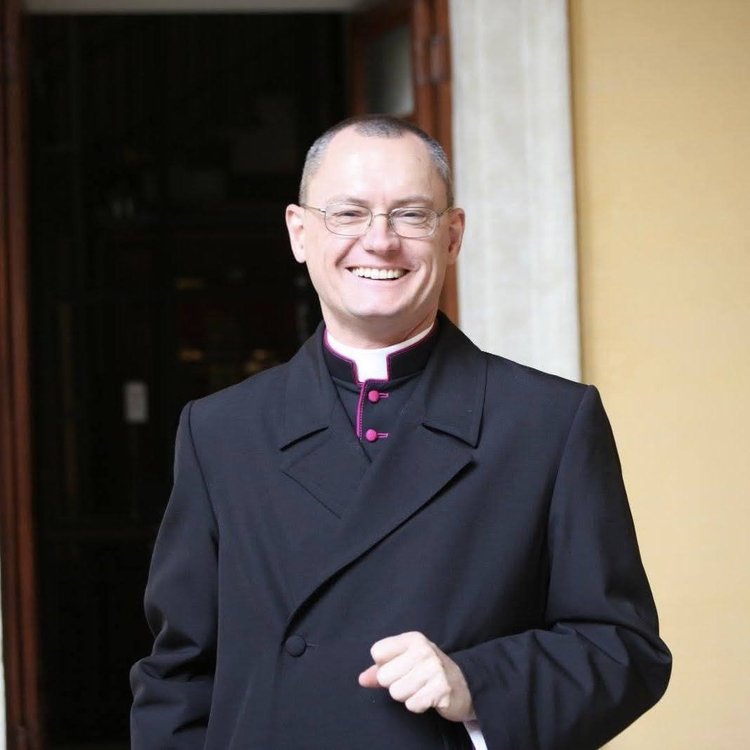
Msgr. Hans Feichtinger is a priest of the Diocese of Passau (Germany) and pastor of St. Albertus and St. George’s in Ottawa. He also teaches at St. Augustine Seminary (Toronto). He holds an STD from the Augustinianum in Rome, a Ph.D. from the Faculty of Philosophy SJ in Munich, and an MA in Classics from Dalhousie University. He was an official at the Congregation for the Doctrine of the Faith from 2004-2012.








.png)

.jpg)

 English (US) ·
  French (CA) ·