

 3 months ago
52
3 months ago
52
PROTECT YOUR DNA WITH QUANTUM TECHNOLOGY
Orgo-Life the new way to the future Advertising by AdpathwayPublic Response to Trump’s Military Action in Iran: A Study of Division and Support
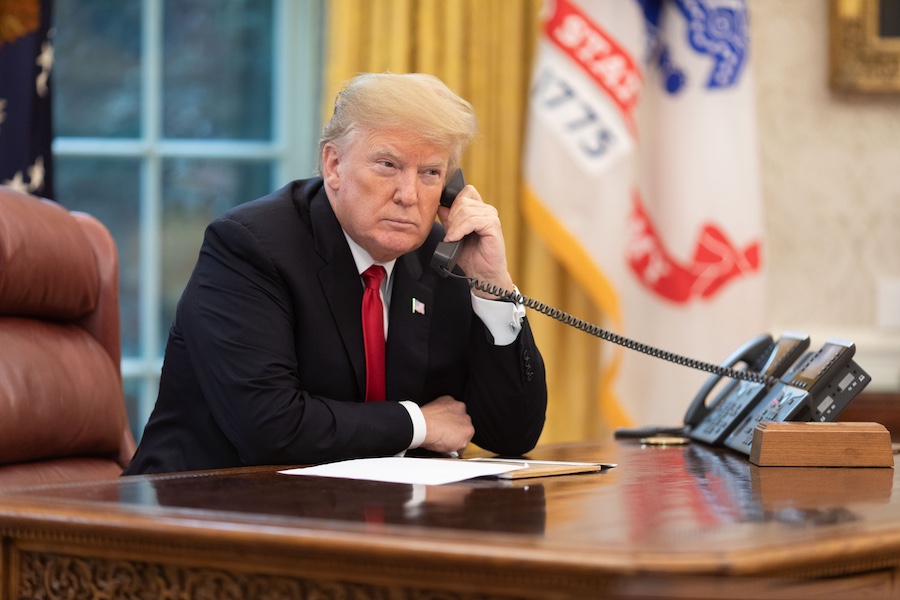
Former President Donald Trump’s decision to launch military strikes against Iran has set off a firestorm of opinions across the nation. This action, marked by a series of airstrikes in late February 2024, is designed not only to target alleged military facilities but also to demonstrate Trump’s aggressive stance on what he deems a “terrorist regime.” The result has stirred significant debate both in political circles and among the general public.
The strikes aimed at various sites, including a devastating hit on a girls’ school, have resulted in the tragic deaths of innocent children alongside significant losses among military personnel. The impact of the attacks has been profound, with reports estimating 550 Iranian deaths alongside four U.S. service members. This staggering toll adds a heavy weight to the ongoing conversations regarding the ethics of military engagement.
Trump has long maintained tough rhetoric about Iran, portraying the nation as a pervasive threat to global stability. He emphasized his distinctive leadership during a press discussion, claiming, “Nobody could have done this but me and you know that,” thus reinforcing his view that such military measures were vital. This unwavering stance resonates strongly within his core followers, notably those affiliated with the MAGA movement, of whom nearly 90% reportedly back Trump’s military strategy.
Nevertheless, public opinion diverges sharply from this staunch support. A CNN poll conducted shortly after the strikes revealed that 59% of Americans disapproved of the military action, reflecting a notable disconnect between Trump’s supporters and the broader public sentiment. Furthermore, a mere fraction of Democrats and independents showed support for the strikes, indicating a partisan divide that complicates the political landscape.
The reactions from political leaders also reflect this schism. Supporters like Lindsey Graham praised Trump, prophesying, “The end of the largest state sponsor of terrorism is upon us. God bless President Trump.” Conversely, cautionary voices from within the Republican ranks, including prominent influencers like Tucker Carlson and Marjorie Taylor Greene, warn against the potential for long-term instability that could arise from ongoing military engagements. Their critiques hint at a concern for the future coherence of the party and the impact such actions may have on electoral prospects.
The demographics reflected in the polling also highlight stark divisions. While a robust 77% of Republicans expressed approval for the airstrikes, a disheartening 71% of young voters voiced disapproval. This further suggests that Trump’s foreign policy decisions could increasingly alienate younger and more moderate voters, essential demographics for future elections. As the GOP gears up for the 2026 House races, the implications of this support—or lack thereof—loom large.
These developments expose critical challenges for the Republican Party. Trump’s ability to galvanize unwavering support from his base underscores his political clout. However, the risk lies in the potential loss of swing voters due to dissatisfaction with foreign policy decisions concerning Iran. Political analysts caution that such a split could jeopardize the party’s chances in upcoming elections.
Looking ahead, the implications of Trump’s military actions unfold against a backdrop of geopolitical uncertainty. The balance he must maintain between decisive action and diplomatic engagement will be vital, especially as sentiments among the electorate continue to shift. The unfolding conflict with Iran invites larger questions about the efficacy of military interventions and the broader implications for U.S. policy.
Ultimately, the contentious debate surrounding these military strikes not only shapes the narrative surrounding Trump’s legacy but also highlights the complexities inherent in modern foreign policy. As reevaluations and discussions continue to evolve, the fallout from this military engagement will likely resonate well beyond immediate political calculations, influencing the broader trajectory of U.S. standing on the world stage.
"*" indicates required fields











.png)


.jpg)


 English (US) ·
  French (CA) ·