

PROTECT YOUR DNA WITH QUANTUM TECHNOLOGY
Orgo-Life the new way to the future Advertising by Adpathway



Organic Bytes
Newsletter #933: States Fight Back as Neonicotinoid Seed Treatments Decimate Bees

In 2023, New York made history by passing the Birds and Bees Protection Act, banning neonicotinoid coatings on corn, soybean, and wheat seeds. Vermont followed in 2024 with a similar law. These two states proved that meaningful action against bee-killing pesticides is possible, even while the federal government looks the other way. Their victories are now a model for the rest of the country.
The need is urgent. A single neonic-coated seed carries enough toxin to kill 250,000 bees, yet these treated seeds are completely exempt from EPA regulation. Last season, beekeepers lost over 55% of their hives, the worst on record. Meanwhile, over 95% of pregnant women carry neonics in their bodies. The pesticide grows into the plant and can’t be washed off our food or filtered from our drinking water.
New York and Vermont showed us the path forward. Now it’s your state’s turn. Contact your state legislators today and tell them to follow New York and Vermont’s lead. If two states can stand up to Bayer and protect pollinators, children, and our food supply, so can yours.
TAKE ACTION: Tell Your State Legislator To Ban on Bee-Killing Neonic Seed Treatments!



by Kate Nelson, Civil Eats:
“Chef Crystal Wahpepah’s story is one of intertwining threads, as is her cuisine. The food she serves at her eponymous Oakland restaurant, Wahpepah’s Kitchen, reflects her mixed-raced Kickapoo, Sac and Fox, and African-American heritage. Dishes like wild rice fritters, three-bean bison chili, and blue corn mush take their influences from the two places she calls home: her San Francisco Bay Area hometown of Oakland and Shawnee, Oklahoma, where her Indigenous ancestors were relocated in the 1800s and where she spent childhood summers with extended family.
It’s fitting, then, that Wahpepah’s first cookbook, A Feather and a Fork, publishing on March 17, centers on intertribal foods. While the 125 recipes are largely informed by her Kickapoo heritage, there are also clear nods to other Indigenous communities, including the Ohlone people, who stewarded the place now known as Oakland for millennia before European arrival and are increasingly reclaiming their relationship to the land.”

Maricel Maffini, Ph.D. & Melanie Benesh, EWG:
“Thousands of everyday food products potentially could contain substances that carry unknown health risks, a new EWG analysis finds.
Although Congress intended for most food chemicals to be rigorously reviewed before being introduced into the market, the reality of food chemical review is far different. A flood of unregulated and potentially unsafe substances has been allowed in many products Americans eat.
Chemical and food manufacturers have rubber-stamped at least 111 food chemicals for use in numerous products, from cereal to snack bars, sports drinks, and more.
Presence on the list of 111 food chemicals EWG identified does not mean a substance is harmful. But food companies have made their own safety determinations about these chemicals, without notifying the Food and Drug Administration and often while keeping details about their safety a secret, according to the analysis. Of the 111 substances identified in the report, 49 chemicals are listed as ingredients in thousands of food products in the Branded Foods Database.”

by Jeff Tkach, Fast Company:
“For decades, the discussion around organic farming has centered on important tenets of sustainability, environmental health, animal welfare, and a vision for food that heals rather than harms. But in America’s fields today, a different conversation is taking root and is grounded in profits. With new economic data and over 40 years of side-by-side comparisons between organic and conventional systems, we can now confidently say that organic is no longer just a values-driven choice; it’s the most profitable model available to U.S. farmers.
At Rodale Institute, the latest Economics of Organic report examines farm-level data across crops, regions, and production systems. The findings show diversified, certified organic farms consistently outperform conventional operations on net income, even when organic yields are modestly lower. In a sector squeezed by volatile input prices and climate risk, organic offers what farmers rarely get: predictable premiums and stronger long-term margins. Equally important is who is choosing to farm this way. USDA census data shows a 7% increase in farmers under 45, many of whom are rejecting the subsidy-dependent industrial model in favor of smaller, diversified, organic operations.”

Chiana Dickson, Homes And Gardens:
“When deciding on the best cookware for your needs, non-stick is suitable for and often easiest for the majority of home cooks, offering convenience during cooking and when cleaning up after dinner.
However, as Dr. Eric Roy, head of science at Culligan International, explains, ‘You should be cautious of broad terms like ‘non-toxic,’ ‘chemical-free,’ or ‘green’ as they are unregulated claims.’ This means there are no legal standards for manufacturers to meet when using these terms to market their products.
Melissa Vaccaro, senior food safety program specialist at the National Environmental Health Association, adds that the loose regulation that is in place in the US is more of a patchwork system. Navigating the safety of your kitchen cabinets is surprisingly complex, largely because oversight is split between three different federal heavyweights. While the FDA monitors the safety of materials that actually touch your food, the EPA controls the environmental impact of manufacturing chemicals like PFAS.
Meanwhile, the FTC is left to police whether a brand’s green marketing is actually deceptive. Despite this triple layer of bureaucracy, there is a catch, Melissa explains: ‘There is no single legal definition of ‘non-toxic cookware.’”
TAKE ACTION: Tell Your State Legislators to Ban PFAS Pesticides!

Shayla Love interviews Michael Pollan, The Guardian:
“Each day when you wake up, you come back to yourself. You see the room around you, feel your body brush against your clothes and think about your plans, worries and hopes for the day. This daily internal experience is miraculous and mysterious, and the subject of Michael Pollan’s new book, A World Appears.
It also may be under siege, Pollan said. He recently suggested that people need a ‘consciousness hygiene’ to defend our internal world against invaders that are trying to move in. Our ability to sit with our thoughts and perceive the world, he argues, is increasingly disrupted by algorithms engineered to tickle our dopamine receptors and capture our attention. Meanwhile, people are forming attachments to non-human chatbots, projecting consciousness onto entities that do not possess it.
I spoke with Pollan over the phone about what consciousness hygiene looks like in practice. Our conversation has been edited for length and clarity.
You have said that consciousness is a ‘precious realm’ and that we should adopt a ‘consciousness hygiene’.
That idea is intriguing – can you first tell me what we’re developing a hygiene around?
‘In this case, I’m referring specifically to human consciousness – this private space of interiority where we enjoy a very high degree of mental freedom. It’s the space in which we daydream, mind wander, talk to ourselves, and it is this very precious thing. In the course of writing the book, I realized that our consciousness is under siege, and that it’s being polluted by several different things.’”

By Dr. Priyom Bose, Ph.D., News-Medical.Net:
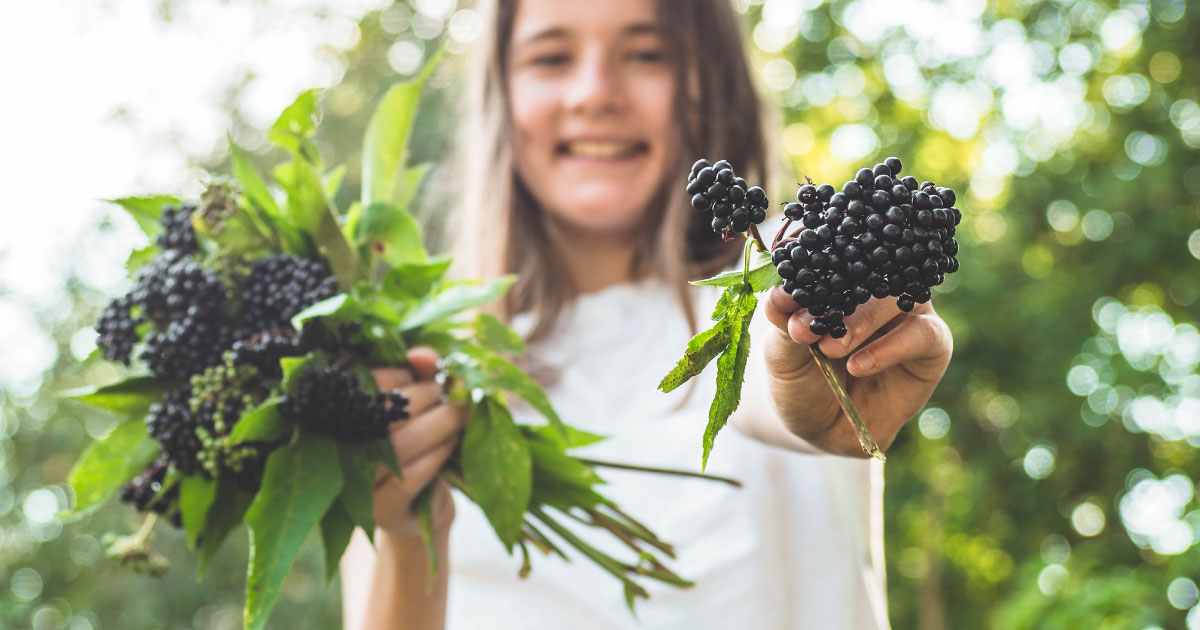
“Higher intake of flavonoid-rich foods was modestly associated with a greater likelihood of sustained happiness and optimism compared with the lowest intake group. This suggests that a flavonoid-rich diet may be linked to psychological well-being over time. Among individual foods, higher intake of strawberries, apples, oranges, and grapefruit was linked to a small increase in sustained happiness of around 3–8 %. For optimism, the effect was larger for strawberries, blueberries, apples, oranges, and grapefruit, with the likelihood of sustained optimism approximately 10–16 % higher, suggesting that certain fruits may be particularly beneficial.
Both total flavonoid intake and specific subclasses, including flavones, flavanones, anthocyanins, and flavonols, were associated with a higher likelihood of sustained happiness and optimism. The strongest effects were observed for optimism, with risk ratios indicating up to an 18 % higher likelihood, suggesting that certain flavonoid types may be particularly relevant to positive psychological well-being.”

by Kristen French, Nautilus:
“Acclaimed Russian novelist Vladimir Nabokov believed that aesthetic pleasure was a full-bodied experience. Nabokov, who was celebrated for his rich, evocative prose, got what he called a ‘telltale tingle’ when he encountered masterful works of literature or art. He claimed these shivers up the spine were a sign of artistic sensitivity, even genius. But whatever pleasure Nabokov took in literary elegance didn’t carry over to music. Even though his son, Dmitri, was an opera singer, the elder Nabokov described himself as having ‘no ear’ for music and reportedly found concerts boring and irritating.
Nabokov’s finicky tingle hints at a long-standing mystery: Why does a particular splash of paint on a canvas or musical phrase wreck one person while leaving another cold? Cognitive scientist Giacomo Bignardi has been working to untangle this scientific knot for years. Now new research from Bignardi and a team at the Max Planck Institute for Psycholinguistics suggests that at least part of the answer lies in our genetic inheritance.
Bignardi and his colleagues gathered data on more than 15,500 people in the Netherlands, including data on common genetic variants as well as their responses to questions about whether they tend to get chills in response to music, poetry, or art.”

BBC Newsround:
“Italian cooking has been awarded a special cultural heritage status by the United Nations’ cultural agency Unesco.
This means that Italian cooking traditions and practices have been officially recognized and listed as an ‘intangible cultural heritage’.
Italy already has 21 other traditions on Unesco’s list, including Neapolitan pizza making and opera singing, but it is the first country to be recognized for its food rather than for a single tradition or recipe.
On the list, Italian cooking is described as a ‘means of connecting with family and the community, whether at home, in schools, or through festivals, ceremonies and social gatherings’.
Italy’s Prime Minister Giorgia Meloni said in a statement: ‘We are the first in the world to receive this recognition, which honours who we are and our identity. For us Italians, cuisine is not just food, not just a collection of recipes. It is much more, it is culture, tradition, work, and wealth,’ she said.”
Intangible Cultural Heritage status is awarded when something is recognized as being an important part of a country’s culture













.png)






.jpg)



 English (US) ·
  French (CA) ·