

.png) 1 month ago
59
1 month ago
59
PROTECT YOUR DNA WITH QUANTUM TECHNOLOGY
Orgo-Life the new way to the future Advertising by AdpathwayNitrogen is essential for every known form of life on Earth. Now, scientists say this common element may also help explain how the earliest life evolved on our planet and how life could develop elsewhere in the universe.
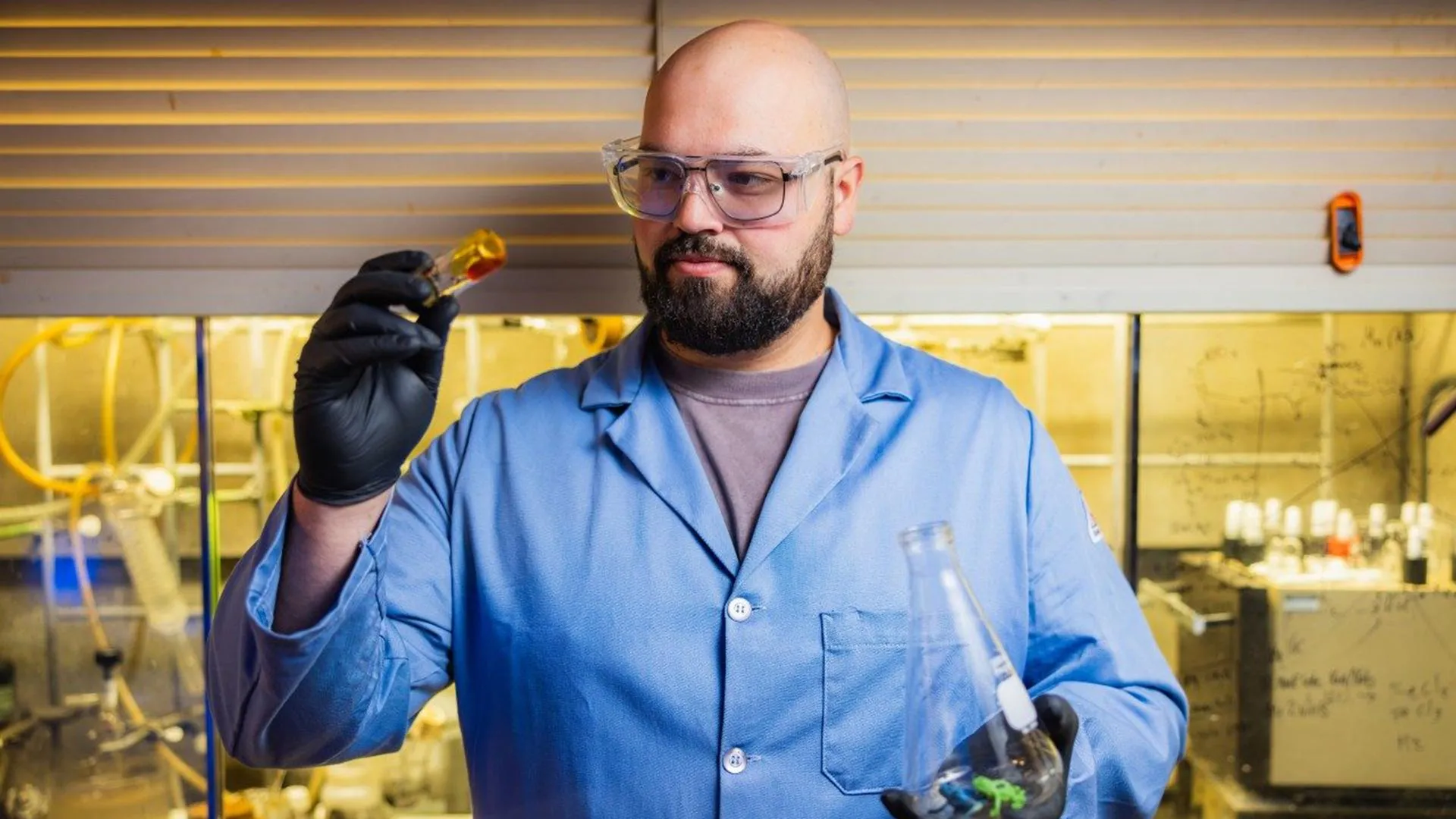
"All living organisms need nitrogen to survive and, though it's all around us, we can't access it directly," says Utah State University biochemist Lance Seefeldt. "Enzymes called nitrogenases enable nitrogen fixation, which converts nitrogen to a form plants, animals, humans and other life forms can access. And we're just beginning to understand the extent to which, over the Earth's four-billion-year history, these nitrogenases have evolved."
In a study published in Nature Communications, Seefeldt, USU senior scientist Derek Harris, and collaborators from the NASA-funded Metal Utilization and Selection across Eons (MUSE) project at the University of Wisconsin-Madison used synthetic biology to work backward from modern nitrogenases and reconstruct possible ancestral versions of these enzymes.
Rebuilding Ancient Nitrogen-Fixing Enzymes
"Our role in the study was to characterize a library of the synthetically reconstructed ancestral nitrogenase genes," says Harris. "Under controlled lab conditions, we measured the nitrogen isotope fractionation in the cell biomass of the engineered strains."
The research allowed scientists to examine how ancient nitrogenases may have functioned billions of years ago.
Seefeldt, who serves as professor and head of USU's Department of Chemistry and Biochemistry, has spent more than 30 years studying the structure and function of nitrogenases. He says the ability to recreate ancient forms of these enzymes marks an important advance in efforts to understand the origins of life on Earth and potentially on other worlds.
"Until now, science has relied on ancient rock and fossils to study early life," he says. "Our planet was vastly different billions of years ago. Modern microbes access atmospheric sources of nitrogen through nitrogenases, which are just one family of enzymes. Study of fossilized enzymes assumes ancient enzymes produced the same isotopic signatures as modern enzymes."
New Clues About Early Earth
According to Seefeldt, reconstructed nitrogenases provide a new way to investigate what conditions on Earth and in its atmosphere may have been like in the distant past.
"Understanding nitrogenases, both ancient and modern, is critical to helping us tackle current agricultural challenges in a changing climate, including areas at risk of famine due to drought and lack of access to commercial fertilizers," he says.
The findings may also have practical applications beyond Earth. Seefeldt, who has participated in other NASA-funded projects, says the work contributes to ongoing efforts to determine how food could be grown in space and on Mars.
Implications for the Search for Life Beyond Earth
Betül Kaçar, professor of bacteriology at UW-Madison, director of the MUSE project, and corresponding author of the study, says the results provide a clearer view of how life survived and evolved before oxygen-dependent organisms transformed the planet.
"The search for life starts here at home, and our home is four billion years old," she says. "So, we need to understand our own past. We need to understand life before us, if we want to understand life ahead of us and life elsewhere."












.png)






.jpg)



 English (US) ·
  French (CA) ·