

 6 months ago
78
6 months ago
78

Introduction
Quite apart from giving prominence to the agonized letter from the Victoria, B.C. veterinarian below, this essay will present strong and consistent evidence that the November 6-7, 2025 slaughter of 314 ostriches using rifle fire was insupportable according to the World Organization of Animal Health (WOAH) and the Government’s own Canadian Food Inspection Agency (CIFA) manuals.
More importantly, this evidence will suggest that the steadfast intention to kill these birds was a political and corporate mission having very little to do with public health.
But most important, the chilling fact that this inexcusable brutality was accepted as reasonable by the Canadian media is a reflection of the humanity of Canada itself – which was heedless to other nations who tried to prevent it.
That such a thing could be ordered in Canada negates the very character of our country.
Veterinarian Dr. Brenda Bernhardt’s letter of November 24, 2025:
I didn’t know shooting at night was legal, but on the eve of Nov. 6, nearly 1,000 bullets were fired into the huge hay-lined pen at more than 300 terrified ostriches as they ran for their lives. For over four hours, more bullets ripped and tore through the birds.
These sentient beings, which had only known gentleness, some in residence on the farm for more than 30 years, became the centre of the most brutal Canadian government massacre I have known in my lifetime. The next morning, the gruesome truth revealed that there were still birds alive in that mess of blood and death. Not a few, but rather 47 more shots rang out, finally putting an end to the birds’ long night of pain and suffering.
They could have hooded the birds individually, injected them or used a bolt gun — humanely, out of sight of their pen mates — but that wasn’t the plan.
I am horrified and traumatized, and it is beyond my wildest imagination that any veterinarian on the planet could have been a part of this.
Under the Health of Animals Act, section 65, and Criminal Code s.4451, it’s illegal for anyone — including government employees — to cause unnecessary pain, suffering or injury to an animal. Neither CFIA officers nor the veterinarians and RCMP serving them are exempt from humane-treatment laws.
This was an epic failure in justice and humanity, and Canadians want to know why the “Edgewood Massacre” occurred. What a dark day for Canada.
Dr. Brenda Bernhardt DVM (ret)
Cobble Hill[1]
Background: A Biochemistry Professor’s Assessment of the British Columbia Ostrich Threat, September 2025
The following information was compiled by Dr. Steven Pelech, PhD (Biochemistry) and Professor, Department of Medicine, University of British Columbia,[2] who on September 26, 2025, wrote the following comment on an independent news story:
On December 31st, 2024, the Canadian Food Inspection Agency (CFIA) issued a cull order for all of the 399 ostriches residing at the Universal Ostrich Farm (UOF) remotely located in central British Columbia near Edgewood. This was based on positive PCR results from two dead birds tested for the H5 gene of influenza virus within 41 minutes of the agency’s notification of the results from a local testing lab in BC. This was despite a lack of data that the influenza virus was positive for the N1 gene or that it was in fact a highly pathogenic avian influenza (HPAI) virus. Subsequent full genome sequencing confirmed that the recovered virus was a hybrid mix of high and low pathogenicity H5N1 virus. It is likely that such a mixing of influenza genes would typically result in reduced pathogenicity in the hybrid. HPAI typically kills about 85% of an infected bird flock, whereas only 15% of the UOF ostriches succumbed to the disease.
By January 15, 2025, there was no further evidence of sickness from the H5N1 virus in the UOF flock. Nine months later, the ostriches have remained healthy and disease free. Nevertheless, the CFIA has remained committed to the extermination of the ostriches despite a large public outcry and even the requests of the US Administration for Health and Human Services (HHS) to preserve these birds due to their scientific value.
While the ostriches presently offer no threat to each other, wild birds, other animals and people, the CFIA has maintained in court proceedings with their experts that the ostriches may be still be asymptomatic and shedding active virus. Yet, the CFIA has forbidden testing of the ostriches to support this highly unlikely hypothesis. Moreover, the agency has expressed concerns that the soil of the UOF may also contain active virus that could infect other wild birds even a year later. Such claims are based on a single study of highly filtered water (which removed any other virus, fungi or other microbe above 200 microns in size) that was kept in the dark and near freezing temperature for only up to a year. It did not represent real-life conditions where sunlight with uv and microbial action in soils would quickly degrade an influenza viral particle.
It is also noteworthy that despite the roosting and fouling of hundreds of school yards and parks in BC by hundreds of thousands of wild migratory ducks and geese infected with HPAI, there have been no government warnings about the risk of H5N1 influenza to humans and pets from their excrement in the past few years. This is for good reason, because the chances of spread of influenza in this way is exceedingly low.[3]
Dr. Pelech submitted the above information as part of an Op Ed to Postmedia’s National Post, Vancouver Sun, and Montreal Gazette, but all declined to either respond to him, or to publish it – nor did the Financial Times.
Background: Origins of the Universal Ostrich Farm (UOF)
The following information is cited from David Bilinski’s June 2, 2025 sworn Affadavit to Stay the Ostrich Cull:[4]
David Bilinkski and Karen Espersen first began importing ostriches from Africa in 1993. They started the 58-acre Universal Ostrich Farm in Edgwood, B.C. in 1999, and have “been focused on selective breeding to create a genetically large, healthy ostrich,” and to develop a harmonious herd, for about 32 years. It takes about three years for an ostrich to be used as a good breeder.
“Until March 2020, UOF was engaged in selling ostriches for breeding purposes, some meat processing, ostrich oil skin care products and agritourism, among others. The average sale price of one of our ostriches was $7500.”
.
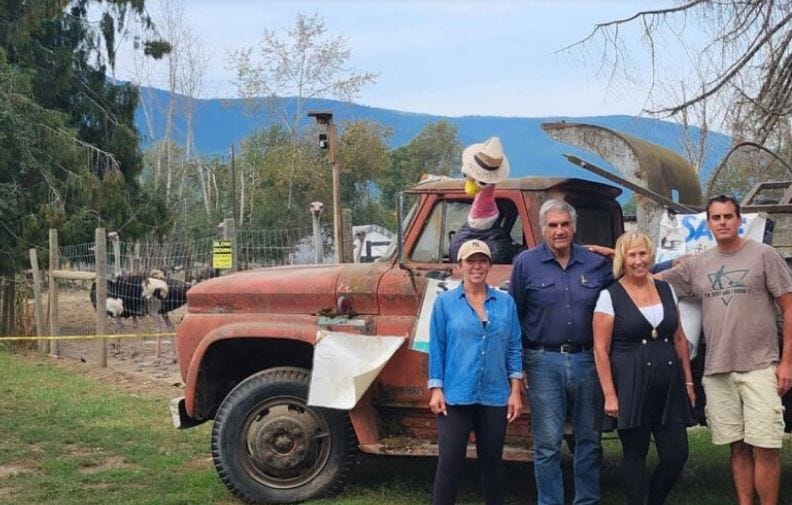
Universal Ostrich Farm’s spokesperson Katie Pasitney, co-owners Dave Bilinski and Karen Espersen, and supporter Jeff Gaudry, at Universal Ostrich Farms in Edgewood, B.C., Aug. 27, 2025. Paul Rowan Brian, The Epoch Times.
.
Ostrich Farm Moves to Antibody Production for Communicable Disease Control
The UOF’s Affidavit continues:
“In March of 2020, Karen and I became familiar with the work of Dr. Yasuhiro Tsukamoto, President of Kyoto University, and founder of Ostrich Pharma KK. We researched and reviewed a published study authored by Dr. Tsukamoto,[5] and learned that ostrich eggs are uniquely situated for developing Immune Globin Yolk (“IgY”) antibodies because of the size of their yolk and the concentration of antibodies produced…These antibodies can be used to develop neutralization antibodies against, amongst other things, the H5N1 virus.”[6]
Bilinski then reports that,
“In or around December 2020, UOF began procuring antigens from Immune Bio Solutions Inc., which allowed for UOF to produce COVID-19 antibodies using ostrich eggs.”[7]
Some months later, in March 16, 2021, Immune Biosolutions was awarded a $13.44 million grant from Canada’s Strategic Innovation Fund for advancing an immunotherapy treatment for Covid 19.
.
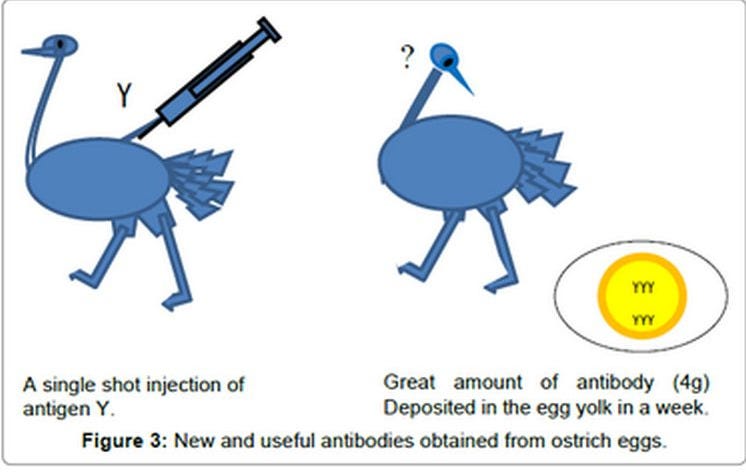
J Vet Med Health, Vol 2(1) , April 25, 2018. “Ostrich is Biologically Highly Interesting and Useful for Human Life as a Producer of Antibiotics,” (See this).
.
However, soon after the birds successfully neutralized the Covid-19 omicron variant in early 2022, Bilinsky was telephoned by Fred, the CEO of the Immune Biosolutions biotech company:
“We’ve been bought out, your program is shut down, and we’re under non-disclosure.”
Mr. Bilinsky described this sudden occurrence in a May, 2025 interview during the prolonged CFIA threat.[8]
It is difficult to establish just when this termination occurred. Exhibit “D” of Mr. Bilinsky’s Affidavit shows that UOF’s antigen-antibody project was in mid-stride on February 3, 2022: In an email that day to the ostrich farm owners, the CEO and co-founder of Immune Biosolutions, Frédéric Leduc, was enthusiastically negotiating the terms of a years-long agreement with the ostrich farmers.[9] Below are the opening paragraphs from Mr. Leduc:
.

.
Oddly contrary to this compelling evidence, an earlier Immune Biosolutions news release indicated that Leduc’s leadership role in the company fundamentally changed in November 2021: Frédéric Leduc, who had been the Co-founder & Chief Business Officer since 2012, was replaced as CEO by Luc Paquet on November 2, 2021. Leduc’s new mission would be “to develop functional foods for human health and well-being.”[10] Leduc only remained in that job until June 30, 2022, when he moved to EVAH Corporation.[11]
How is it possible that a company news release could truthfully show that a new CEO had replaced Leduc on November 2, 2021 – after which Leduc had a completely different food-related mission – when there is indisputable email evidence that he was negotiating a years-long contract with the Universal Ostrich Farm three months later on February 3, 2022?
Whatever the case, the farm moved on. Mr. Bilinski’s Affidavit continues:
“In 2022, Karen and I incorporated Struthio Bio Science Inc. (“Struthio”) to, in partnership with UOF, engage in manufacturing and marketing of ostrich egg IgY antibodies and related products.”[12]
In April 2024, Karen and I entered into agreements…”in which an interest in Struthio would be transferred to new principals and governed by a board of directors, including Dr. Tsukamoto – in exchange for investment and the licensing of certain patents necessary for commercialization of IgY antibodies and related products.” UOF was to be a crucial partner supplying the necessary ostrich eggs, and its ostrich flock would be used to produce a continuous supply of eggs enabling Struthio’s venture to move forward.[13]
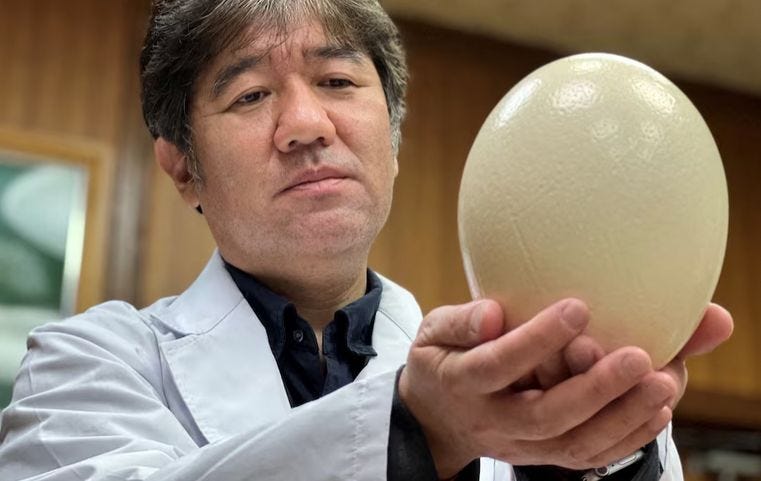
Image: Kyoto Prefectural University President and Doctor of Veterinary Medicine Yasuhiro Tsukamoto holds an ostrich egg in Kyoto, Japan in this handout photo taken August, 2021.
It was now 2024 — with the ostrich farm well along in its international antibody developments — when 69 of the ostriches became sick and died in late December. Two dead birds were PCR-tested on New Year’s Eve by the Canadian Food Inspection Agency, who that very day issued a total-herd cull order – 41 minutes after a local laboratory’s preliminary test was positive for half the H5N1 gene.[14]
The birds were never tested again.
Why did the CFIA Never Again Test the Ostriches After Their Preliminary Testing of Only Two Birds in December 2024?
Although the CFIA claims to classify ostriches as poultry, we have seen that these were not meat or conventional egg-laying birds.
In his June 2, 2025 Affidavit, Mr. Bilinski wrote,
“We have offered to fund and conduct the testing ourselves and continually provided unfettered access to CFIA to conduct testing…I have attached Exhibit “N,” a true copy of the February 14, 2025 email from CFIA denying our request to test the ostriches.”[15]
Why did the CFIA not test any of the 314 live ostriches, which were slaughtered November 6-7, 2025, whereas it tested two peacocks at a British Columbia animal sanctuary three weeks later on November 28th, after resident chickens had died of avian flu there – yet the peacocks were tested and declared safe?[16]
Why Did the CFIA First Apply, and then Withdraw, the “Valuable Genetics Category” Exemption for the Ostriches?
Supported by sworn exhibits, Mr. Bilinsky writes:
On January 2, 2025, we received an email from the CFIA noting that “based on the information we’ve gathered, you fall into the birds classified as have rare and valuable genetics category.” The rare and valuable genetics classification provided for a culling exemption, despite the presence of H5N1.
CFIA provided me with a description of the classification as follows:
A. “Rare and valuable genetics in poultry refers to uncommon genetic lines of poultry that hold a high economic value. Genetic breeding of poultry involves the creation of multi-generation genetically diverse populations on which selection is practiced to create adopted animals with new combinations of specific desirable traits. It is this combination of an uncommon breed or line of poultry, which undergoes a selection process to create specific desirable traits which leads to its high economic value.”[17]
However, Bilinsky adds in his Affidavit that eight days later, on January 10th,
We were informed by the CFIA that our exemption under the rare and valuable genetics classification was denied and that the decision was final and not subject to appeal.[18]
The footnote above shows that although the 32 years of breeding the ostriches was initially considered valuable at a lower level in the CIFA, after a week it was permanently denied at a higher level, based on the statement that the WOAH regards ostriches as poultry.
In fact, however, according to the WOAH definition:
Poultry means all domesticated birds, including backyard poultry, used for the production of meat or eggs for consumption, for the production of other commercial products, for restocking supplies of game, or for breeding these categories of birds, as well as fighting cocks used for any purpose.[19]
Ostriches, although not mentioned in the above definition, could be forced into it if they were domestic birds. However, the UOF ostriches were not hooded or injected — as is required with domestic ratites — during their violent nocturnal shooting cull.
The CFIA’s Mass Nocturnal Ostrich Shootings Violate Both CFIA and WOAH Mandated Humane Killing Principles
The CIFA and the World Organization for Animal Health collaborate closely and share policies for the humane killing (culling) methods for ratites (e.g., ostriches, emus, rheas) during disease control or slaughter.
Ratites are explicitly distinguished from standard poultry by WOAH national guidelines and are treated as large birds requiring specialized restraint and methods.
In addition, WOAH stipulates:
- General Principles: When animals are killed for disease control purposes, methods used should result in immediate death or immediate loss of consciousness lasting until death,” with contingency plans for large-scale culling.[20]
- Gunfire (indiscriminate shooting) is discouraged for ratites while preferred human methods include gas or captive bolt for confined flocks to avoid suffering.
- Prior sedation may be needed for agitated animals in non-penetrating bolt may be necessary” for injection. This directly addresses ratite size and danger, as their height and kicking strength require calming agents for safe handling.
In a related document, the CFIA’s Guidelines for Stunning Techniques for Avian Food Animals, Including Ratites, require ensuring an immediate and consistent state of unconsciousness, and explicitly advise against using firearms for ratites in slaughter settings due to anatomical challenges (small head size, thin frontal bone risking perforation), recommending mechanical (captive bolt) or electrical methods instead.[21]
It is clear from the evidence above that during the more than 10 months following the ostrich cull order of January 31, 2024, and during the six weeks the CFIA occupied the farm with the RCMP (starting September 22), a humane killing plan was never developed.
Did the CFIA Behave Unlawfully? Can it be Sued?
The Canadian government can be sued for failing to follow mandated procedures that cause harm to a private property owner. The Crown Liability and Proceedings Act makes the Crown liable in the same manner as a private person in many situations, including in property-related matters.[22]
As a government body operating under Canadian law, it is illegal for the Canadian Food Inspection Agency to violate its own mandated policies or the laws it enforces. It must act within legal frameworks such as the Canadian Food Inspection Agency Act, Health of Animals Act, and its own Scientific Integrityand Code of Conduct policies. It must also respect and enforce the international standards of the WOAH.
The Canadian Food Inspection Agency Act and the Crown Liability and Proceedings Act provide that the CFIA can be sued in its own name in any court that would have jurisdiction if it were a private entity.
Importantly, the CFIA can be sued in a non-federal court. Provincial superior courts have been found to have jurisdiction in actions involving damages or civil liability claims against the CFIA — precedents for civil cases to proceed in provincial courts.
Key International Efforts to Halt the Cull
Foreign involvement has included advocacy, funding, and political pressure:
United States:
U.S. Health Secretary Robert F. Kennedy Jr. wrote a joint letter in May 2025 to the CFIA president and to Canadian Agriculture Minister Heath MacDonald, urging cancellation of the cull and proposing a joint study of the ostriches for immunity research. He met Canadian officials to advocate for sparing the birds.
Kennedy also tweeted to the CFIA President on May 13:
Secretary Kennedy
@SecKennedy
.@HHSGov is so grateful to President Paul MacKinnon and the Canadian Food Inspection Agency for their willingness to spend time with @DrMakaryFDA@NIHDirector_Jay and myself yesterday, and for their openness to discussing a collaborative project with NIH, FDA and CDC to conduct a long-term study on the BC Ostrich flock to expand our knowledge of their immune response to Avian Flu. It’s our hope that this collaboration will help us understand how to better protect human and animal populations and perhaps lead to the development of new vaccines and therapeutics. We at HHS are excited about this opportunity for cooperation among our governments in a promising scientific partnership.[23]
Kennedy attached to this tweet a 2-page letter signed by himself and two senior HHS executives, offering to partner with CFIA in studying the surviving ostriches.
South Africa (the world’s largest ostrich-producing nation):
The South African Ostrich Business Chamber and the South African Department of Agriculture formally appealed to Canada’s Minister of Agriculture (then Lawrence MacAulay) and the CFIA in early 2025, urging them to spare the birds and offering technical assistance and expertise. South African ostrich veterinarians and industry bodies publicly stated that culling healthy ostriches was scientifically unjustified.
Namibia and other African ostrich-producing countries:
Similar representations were made through diplomatic and industry channels, emphasizing that decades of experience in Africa showed ostriches are highly resistant to clinical H5N1 and rarely transmit it even when exposed.
European ratite organizations (especially from France, Germany, and the Netherlands):
The European Ratite Association and individual veterinary specialists wrote open letters and contacted the CFIA and Canada’s Chief Veterinary Officer, arguing that the OIE/WOAH terrestrial code did not explicitly mandate depopulation of ratites in this scenario and that quarantine plus repeated testing would be a proportionate response.
Animal-welfare and veterinary NGOs with international membership (e.g., World Animal Protection, sections of the World Veterinary Association, and individual prominent avian veterinarians from Australia, Israel, and Europe) publicly criticized the cull and called for it to be halted. The BC SPCA stated that methods must minimize pain and fear. Animal Justice Canada filed a complaint with the CFIA after the mass slaughter. The Okanagan Syilx people also objected.
Yet, in spite of domestic and international protest, the Canadian Government forged ahead with the violent nocturnal cull, in contravention of its governing policies.
Who might benefit from this dogged insistence?
Destroying the Ostrich Antibody Approach to Communicable Disease: Who Wins and Who Loses?
Who Loses?
In his June 2, 2025 Affidavit, Mr. Bilinski explained the loss to his Struthio business if the ostriches were killed:
82. Requiring the destruction of UOF’s ostrich flock) would cause irreparable harm to UOF. If UOF’s entire flock is culled, UOF will lose its core breeding stock and its business will be devastated beyond recovery.
83. If UOF’s flock is destroyed, Struthio will also lose its only source of ostrich eggs, halting Struthio’s research and development efforts. The anticipated investment and commercialization opportunities (including those involving Dr. Tsukamoto and other partners) would collapse, causing significant irreparable harm to and Struthio’s business.
However, there was a more widespread loss than the ostrich farm business.
On May 27, 2025, a week before Mr. Bilinski’s Affidavit was sworn, I visited the Universal Ostrich Farm with a writer friend – prompted by having recently audited the Federal Court of Canada’s rather hurried dismissal of the farm’s twofold application for judicial review and for the restoration of its initial cull exemption.
I described my visit in the article referenced below. As a former public health librarian, I returned home to research what benefit this ostrich antibody approach to communicable disease might give to the Canadian people. What I learned is conveyed in this brief excerpt from my June 1, 2025 article:
The ancient immune system of the ostrich allows them to produce stable, heat-resistant antibodies in their egg yolks, effective against a wide variety of antigens, including viruses such as influenza, Covid-19, Ebola Virus, Zika Virus, and Dengue Virus, and bacterial antigens such as Staphylococcus aureus, Escherichia coli, Pseudomonas aeruginosa, and Clostridium difficile.
On top of it all, ostriches are known for being able to produce antibodies very quickly when exposed to antigens.[24]
To me, this was a potential breakthrough in the history of medicine. It was the biggest news on the communicable disease control front that I had encountered, both during my 25 years as a librarian, and during my research since.
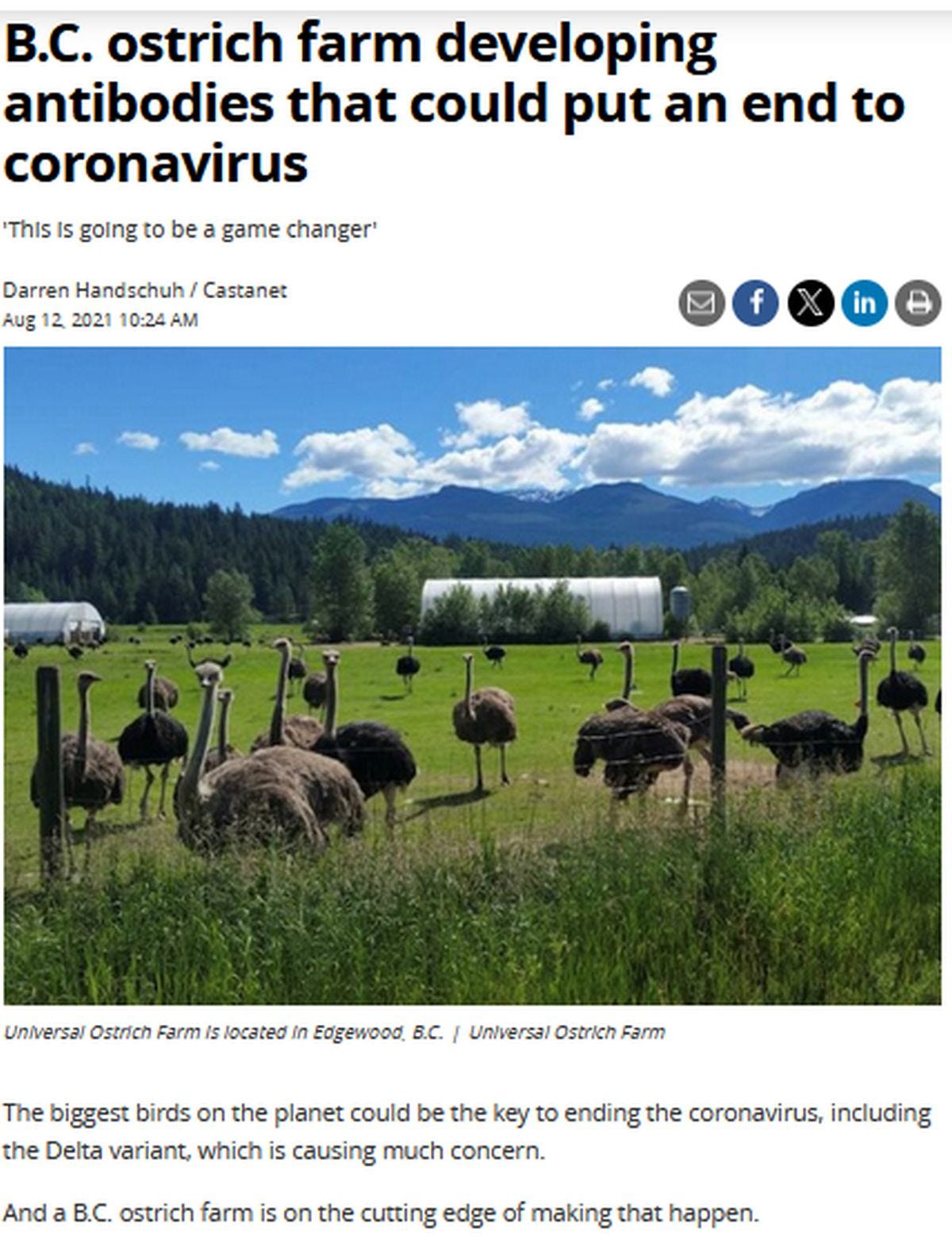
The loss of the Struthio-University of Japan partnership to society is incalculable.
.
.
Who Gains?
Although the surviving 85% of the ostriches had seemingly gained immunity to some form of the avian influenza virus, their slaughter has cut off their antibody production for avian flu, omicron, and any other antibodies Bilinski and Espersen’s Struthio company may have produced with Dr. Tsukamoto in Japan.
Ostrich hens lay about three eggs a week. Their eggs weigh three pounds or more, and contain a staggering number of antibodies. The use of ostrich egg antibodies may well be the wave of the future for communicable disease control. There is no evidence of a comparable flock of 300-400 birds that could lead the world in developing an immunity-producing alternative to conventional vaccines.
In February, 2025, six weeks after the ostriches were condemned to die, Canadian taxpayers were told of the purchase of an “initial supply” of half a million doses of GSK’s Arepanrix H5N1 vaccine for human use. (The cost remains undisclosed, although an access to information request has been submitted.)
This vaccine purchase was prompted after the first case of avian flu occurred in Canada — when a teenager in Richmond, B.C. became very sick in November 2024, tested positive for H5N1, and later recovered.
Much in the news, public health updates on this case from November 9–12, 2024, stated that the patient had no underlying health conditions, which was frightening to the public.
However, a subsequent peer-reviewed clinical report based on her full medical history clarified that she had two relevant pre-existing conditions: mild asthma – a co-morbidity that may have increased her vulnerability to severe respiratory illness – and obesity, with a body mass index (BMI) greater than 35 (considered severe obesity).
Obesity (BMI ≥30, especially ≥35–40) is repeatedly listed among the most common co-morbidities in severe and fatal H5N1 cases, even in young patients.[25]
Did the Canadian government research this case before ordering its half million doses of H5N1 vaccine, with a two-year-maximum shelf life?
How the Government-Funded Canadian Media Whitewashed the Ostrich Story
Rebel News published an exclusive investigative report on September 14, 2021, exposing an initially secret $61 million payout from the Canadian government to nearly 1,500 media outlets and journalists just weeks before the 2021 federal election (part of a broader $595 million journalism bailout program announced ahead of the 2019 election.)
Total early 2019 disbursements were approximately $100 million in the first year, with full roll-out hitting $595 million by 2024.
The story included the full list of recipients, presented as a 29-page document, originally available as an Access to Information release to Heritage Canada. Although no longer on the Rebel News website, there is a direct link on Canadaland to the complete list.[26]
Notable Media Recipients and Amounts
-
Postmedia Network: $40+ million over five years (largest recipient; includes millions in rebates across 100+ outlets, rebates for 1,000+ employees across papers like the Vancouver Sun and Ottawa Citizen).
- Torstar Corporation: (Toronto Star: $25+ million; payroll subsidies for 800+ staff).
- Bell Media (Globe and Mail, CTV: $20+ million).
- CBC/Radio-Canada: $15+ million in direct subsidies (though publicly funded, they qualified for additional tax credits).
- SaltWire Network (community papers): $5+ million).
- Indigenous outlets (e.g., APTN, Windspeaker): $2+ million via ethnic press council).
- Digital independents (e.g., The Logic, National Observer): $200,000–$500,000 each in grants).
- Narwhal: ($100,000+ in grants).
These high-value awards illustrate how a handful of corporate chains absorbed approximately 20% of the total bailout.
.

On September 14, 2021, Rebel News published a 29-page list of the $595 million journalism bailout program that was announced ahead of the 2019 election.
.
Global News – belonging mostly to the Shaw family through Corus Entertainment – was left out, being mainly a broadcaster. Global accused the Trudeau government of “picking favourites,” asking, “if most media outlets are seen by the government to not be in need of any sort of financial assistance, then where is the crisis that necessitates government involvement in the first place?”[27]
According to Prof. Dave Snow at Guelph University, Canadian government media funding had further increased by April, 2025:
Between the various media support programs and CBC funding, the federal government is spending over $1.7 billion annually subsidising journalism and media. That’s more than the $1.4 billion it will spend annually on the Canada Disability Benefit—and more than it plans to spend over the first five years of its National Pharmacare Plan combined.[28]
How Balanced Was Canadian Media Coverage of the Ostrich Story?
As a person with a deep interest in the ostrich story, I have been amazed by the shallow awareness of many people – which led me to explore the role of Canadian media ownership.
Postmedia newspapers are owned by the American hedge fund, Chatham Asset Management, and as we have seen, were heavily financed by the Trudeau government in the pre-election media bailout of 2019 and 2021, which continued for a five-year period ending in 2024. They include the National Post, Vancouver Sun, Calgary Herald, Edmonton Journal, Ottawa Citizen, the Montreal Gazette, and their associated tabloids like the Ottawa Sun and Edmonton Sun. As we have seen, three of them failed to accept Dr. Steven Pelech’s pivotal Op Ed in September, 2025.
Canadian Press is a national news agency that was cooperatively owned for 93 years (until 2010) as a non-profit by its member news organizations. It is now Canadian Press Enterprises, Inc., a for-profit private business owned by the Globe & Mail, Toronto Star, Montreal’s La Presse, and Square Victoria Communications Group. Its news service tended to cover the ostrich story from both sides. For example, it ran the story “Judge refuses to allow more avian flu tests on ostriches at B.C. farm,” on June 23, 2025.[29]
Global News and the CBC also covered both sides of this emotionally and politically charged issue, including the farm owners’ claims that the birds had developed herd immunity, and that U.S. officials wanted re-testing.
The best coverage came from the centrist US news outlet, Politico, owned by the large German publisher Springer. Their thorough independent analysis was posted the day before the ostrich slaughter.[30] Earlier in the year, The Epoch Times also carried balanced coverage after visiting the farm.[31]
It is clear from the foregoing information that government and corporate consolidation leaves most Canadian readers with limited choices for objective coverage.
It is also clear that because ostriches are not specified as poultry in the WOAH definition, the “stamping out” policy applied to chickens does not specifically apply to them, especially if HPAI was never established through testing – as evidenced by Professor Steven Pelech, biochemist, above.[32]
Why This Matters
The Canadian public was never really allowed to know the background and significance of what was happening at the ostrich farm – and the depth of the intent behind it.
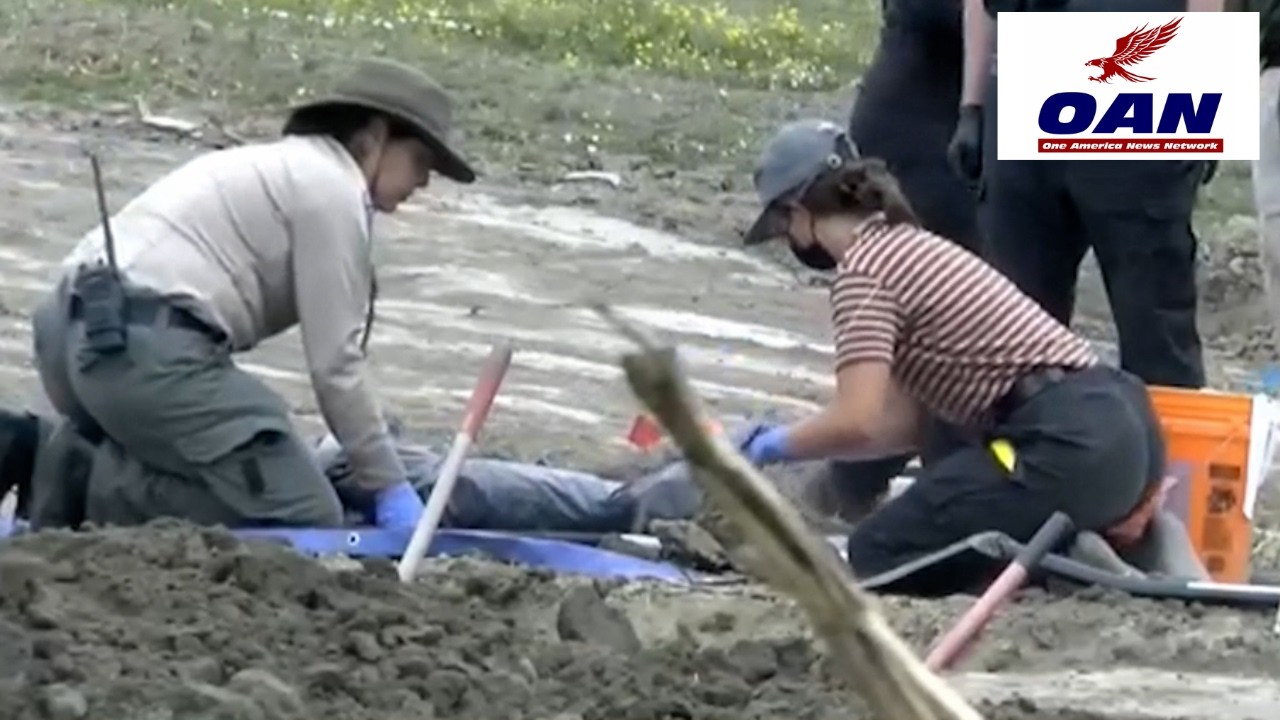
Canadians were not allowed to know until November 6, 2025, when people around the world watched livestream video on social media as rifles flared throughout the night at hundreds of panicked birds in a locked enclosure.
Many people confessed that they had wept during the night after seeing this intolerable cruelty.
This essay began with the statement, “That such a thing could be ordered in Canada negates the very character of our country.”
Any government that ordered, and continues to defend “the most brutal Canadian government massacre I have known in my lifetime,” should fall.
It should fall for violating our national character and respect for life.
This unprecedented disgrace to the country must not be allowed to stand.
In ancient Egypt, the single white ostrich feather was the iconic emblem of Ma’at, the goddess who personified truth, justice, and cosmic order.
*
Click the share button below to email/forward this article. Follow us on Instagram and X and subscribe to our Telegram Channel. Feel free to repost Global Research articles with proper attribution.
Notes
[1] https://www.timescolonist.com/opinion/letters-nov-24-ostrich-cull-canada-should-fund-own-shipbuilding-11528386
[2] PhD in Biochemisty (UBC, 1982). One of the founding scientists of the Biomedical Research Centre at UBC; over 230 scientific publications in peer-reviewed journals (Google Scholar page). (https://neurology.med.ubc.ca/faculty-listing/academic/dr-steven-pelech/) Contact: [email protected]
[3] Dr. Steven Pelech, comment on article, Alex Zoltan, “Supreme Court stays ostrich cull in B.C. amid protests, surprise interventions,” Juno News, September 25, 2025 (https://www.junonews.com/p/supreme-court-stays-ostrich-cull/comments).
[4] David Bilinski Affadavit to Stay the Ostrich Cull, June 2, 2025, pp. 3-4 (https://canucklaw.ca/wp-content/uploads/UOF-APPEAL-Bilinski-Affidavit-To-Stay-Culling.pdf).
[5] Adachi, K., Takama, K., Tsukamoto, M., Inai, M., Handharyani, E., Hiroi, S. and Tsukamoto, Y. (2011) “Ostrich Produce Cross-Reactive Neutralization Antibodies against Pandemic Influenza Virus A/H1N1 Following Immunization with a Seasonal Influenza Vaccine.” Experimental and Therapeutic Medicine, 2, 41-45.
[6] Bilinsky, Affadavit to Stay the Ostrich Cull, p. 4.
[7] Ibid., p. 5.
[8] The interview was posted on Twitter/X at https://x.com/DreaHumphrey/status/1923769434340270107?s=20, May 17, 2025.
[9] Bilinksy, Affidavit, June 2, 2025, p. 34.
[12] Bilinksy, Affidavit, June 2, 2025, p. 5.
[13] Ibid., p. 6-7.
[14] 1. Bilinshki Affidavit, p. 16. 2. Dr. Steven Pelech, Juno News, September 25, 2025 (https://www.junonews.com/p/supreme-court-stays-ostrich-cull/comments).
[15] Bilinski Affidavit, p. 16 (https://canucklaw.ca/wp-content/uploads/UOF-APPEAL-Bilinski-Affidavit-To-Stay-Culling.pdf).
[16] John Arendt, “Peacocks declared safe at Summerland animal sanctuary,” December 2, 2025
(https://trailtimes.ca/2025/12/02/peacocks-declared-safe-at-summerland-animal-sanctuary/).
[17] Bilinski Affidavit, pp. 13-14, citing Exhibit J, p. 132, email written January 2, 2025, 12:31 PM, by the CIFA Western Avian Influenza Case Officer 007.
[18] Bilinski Affidavit, p. 14, citing Exhibit K, p. 144, letter from the January 2nd case officer bumping the correspondence up to the Planning Chief, Western HPAI Response, who tells the farm that “we at CFIA remain aligned with our World Organisation for Animal Health (WOAH) obligations to Canada’s stamping-out policy with regards to the detection of HPAI” and that “WOAH considers the genus Struthio spp. (Ostrich) as ‘poultry’ in their definition of poultry and they are not exempt from a stamping-out policy.”
[19] “WOAH Terrestrial Animal Health Code, Glossary,” (https://www.woah.org/fileadmin/Home/eng/Health_standards/tahc/2018/en_glossaire.htm).
[20] “WOAH Terrestrial Animal Health Code. Chapter 7.6.1: “Killing of Animals for Disease Control Purposes, General Principles,” (https://www.woah.org/fileadmin/Home/eng/Health_standards/tahc/2018/en_chapitre_aw_killing.htm).
[21] Guidelines for Stunning Techniques for Avian Food Animals, Including Ratites, 2023 (https://inspection.canada.ca/en/food-guidance-commodity/meat-products-and-food-animals/guidelines-stunning-techniques#a91).
[22] Crown Liability and Proceedings Act (R.S.C., 1985, c. C-50) (https://laws-lois.justice.gc.ca/eng/acts/c-50/page-1.html).
[23] https://x.com/SecKennedy/status/1926053244477886825?s=20
[24] “The Ostrich: A Pillar of Support for Human Health,” June 1, 2025 (https://integrate.substack.com/p/the-ostrich-a-pillar-of-support-for).
[25] 1. WHO et al literature review, 2003–2024 human H5N1 cases. 2. 2023–2024 synthesis in The Lancet, “Clinical characteristics and risk factors for severe H5N1 infections: A systematic review,” notes obesity in ~20–40% of severe pediatric and adult cases, even among those without other chronic conditions. 3. Mark H Almond, et al., “Obesity and susceptibility to severe outcomes following respiratory viral infection,” Thorax, July 2013, 68(7):684-6.
[26] https://www.canadaland.com/canadian-media-liberals-trudeau-government-funding-covid-cbc-erin-otoole/
[27] Rob Breakenridge, “Ottawa’s ill-conceived plan to ‘help’ the media only makes matters worse,” March 23, 2019, (https://globalnews.ca/news/5087075/federal-budget-media-fund/).
[28] Dave Snow, “Government subsidies for Canada’s media were supposed to be temporary, but they keep on growing—and could be here to stay,” The Hub, April 22, 2025 (https://macdonaldlaurier.ca/government-subsidies-for-canadas-media-were-supposed-to-be-temporary-but-they-keep-on-growing-and-could-be-here-to-stay-dave-snow-in-the-hub/).
[30] Mickey Djuric, “How a flock of Canadian ostriches became a favorite MAHA cause,” November 6, 2025 (https://www.politico.com/news/2025/11/06/canada-ostriches-maha-00584854).
[31] Paul Rowan Brian, “BC Ostrich Farm’s Fate Hangs in the Balance as It Weighs Next Step,” August 8, 2025, Updated Sept. 23, 2025 (https://www.theepochtimes.com/world/bc-ostrich-farms-fate-hangs-in-the-balance-as-it-weighs-next-step-5907637).
[32] Dr. Steven Pelech, comment on article, Alex Zoltan, “Supreme Court stays ostrich cull in B.C. amid protests, surprise interventions,” Juno News, September 25, 2025 (https://www.junonews.com/p/supreme-court-stays-ostrich-cull/comments).
Featured image: SENTIENCE Photo Credit, World Animal Protection, Jodie Grillmeier
Global Research is a reader-funded media. We do not accept any funding from corporations or governments. Help us stay afloat. Click the image below to make a one-time or recurring donation.
















.png)






.jpg)



 English (US) ·
  French (CA) ·