

 9 hours ago
9
9 hours ago
9

Virtue as Humanity’s Moral Ideal
Since the dawn of civilization, philosophers have sought to identify the virtues that ought to guide human conduct. From the wisdom of ancient Greece to the ethical systems of the Enlightenment and beyond, countless thinkers have proposed ideals intended to improve both individual character and society as a whole. Justice, courage, temperance, compassion, honesty, benevolence, humility, and wisdom have been celebrated as universal virtues capable of elevating humanity above selfishness and violence. The underlying assumption has always been that moral knowledge leads to moral progress and that a better understanding of virtue will create a better world.
Yet the historical record presents a troubling contradiction. Despite thousands of years of ethical reflection, philosophical instruction, religious teachings, and moral exhortations, humanity continues to be plagued by war, oppression, poverty, corruption, exploitation, and injustice. The persistence of these conditions raises a difficult question: Have the virtues promoted by philosophers actually succeeded in transforming human behavior, or have they remained largely theoretical ideals detached from reality?
Many philosophical traditions begin with an optimistic view of human nature. Socrates believed that knowledge of the good would lead individuals to act rightly. Aristotle argued that virtuous habits could cultivate moral excellence. The Stoics taught self-mastery and rationality as pathways to inner harmony. Later thinkers such as Immanuel Kant emphasized duty and universal moral laws, while utilitarian philosophers sought principles that would maximize happiness and minimize suffering. Although these systems differed in method and content, they shared a common conviction that ethical principles could guide conduct and improve society.
The Gap Between Moral Ideals and Human Reality
However, the history of humanity appears to challenge this conviction. The 20th century alone witnessed two world wars, genocides, totalitarian regimes, nuclear weapons, and unprecedented forms of organized violence. The 21st century has continued to experience armed conflicts, terrorism, economic inequality, political corruption, environmental destruction, and widespread social unrest. Technological and scientific achievements have expanded human capabilities, yet they have not eliminated cruelty, greed, hatred, or domination.
This discrepancy suggests that moral philosophy may suffer from a fundamental limitation. Philosophers often describe how people ought to behave, but human beings frequently act according to how they desire, fear, compete, or survive. Ethical theories appeal to reason, while much of human behavior is driven by emotion, instinct, self-interest, and social pressures. The gap between moral ideals and practical realities is therefore immense. Knowing what is right does not necessarily produce the will to do what is right.
Furthermore, virtue itself may be an inherently fragile force when confronted by power. Throughout history, societies have often rewarded ambition, conquest, wealth, and influence more readily than justice or compassion. Empires have been built through force rather than virtue. Political authority has frequently relied upon coercion rather than moral excellence. Economic systems have often incentivized competition over cooperation. In such circumstances, ethical principles may function more as aspirations than as governing realities.
One could argue that moral philosophy has failed because it misunderstands the nature of human beings. Philosophers frequently assume that rational reflection can overcome destructive impulses. Yet human history suggests that aggression, tribal loyalty, fear, and the pursuit of advantage are persistent features of human existence. If these tendencies are deeply rooted in human nature, then no collection of ethical principles, however sophisticated, can fully eliminate them.
Another possibility is that virtue has become an instrument of rhetoric rather than genuine transformation. Political leaders, religious authorities, and institutions routinely invoke moral language while acting in ways that contradict the very values they proclaim. Justice, freedom, equality, and human dignity are often celebrated in public discourse while being compromised in practice. In this sense, virtue may function less as a guide for action and more as a symbolic language used to legitimize existing structures of power.
The Continuing Relevance and Limits of Ethics
Yet it would be premature to conclude that moral philosophy is entirely useless. Although ethical theories have not eradicated human suffering, they have provided standards by which injustice can be recognized and criticized. Concepts such as human rights, equality before the law, and universal dignity emerged from long traditions of ethical reflection. These ideas have influenced legal systems, social reforms, and movements for justice throughout the world. The problem may not be that virtue is irrelevant, but that its influence is limited and often overwhelmed by competing forces.
The deeper lesson may be that moral progress does not advance at the same pace as scientific or technological progress. Science accumulates knowledge through observation, experimentation, and verification. A discovery made today can become a permanent addition to human understanding. Morality operates differently. Every generation must struggle anew with the same ethical dilemmas, prejudices, temptations, and conflicts that confronted previous generations. Moral wisdom cannot be inherited in the same way that scientific knowledge can. It must be continually rediscovered and consciously practiced.
This reality explains why humanity can simultaneously achieve extraordinary technological breakthroughs and remain morally troubled. Scientific progress enhances what human beings can do, while moral progress concerns what human beings choose to do. The former depends upon knowledge; the latter depends upon character, institutions, culture, and collective will. There is no guarantee that advances in one domain will produce advances in the other.
The enduring tragedy of human history is therefore not the absence of moral philosophies but the persistent inability of humanity to live according to them. Philosophers have provided elaborate maps of the ethical landscape, but possessing a map does not ensure that travelers will follow the path it describes. Virtues remain ideals toward which humanity aspires, yet aspirations alone do not transform reality.
Ultimately, the history of ethics reveals a profound paradox. Humanity has never lacked moral teachings, ethical systems, or visions of the good life. What it has lacked is the consistent capacity to embody them. The persistence of war, injustice, poverty, and oppression demonstrates that virtue, however noble in theory, cannot by itself overcome the complex forces that shape human behavior. As a result, the great moral traditions of philosophy stand as both humanity’s highest hopes and its most enduring disappointments, like testaments to what human beings believe they ought to become and reminders of how far they remain from achieving it.
Beyond Implementation: The Problem of Moral Knowledge
At this point, however, an important philosophical objection must be considered. A familiar thesis in moral and political philosophy maintains that humanity’s central ethical problem is not ignorance of the good but the failure to establish the social, political, economic, and spiritual conditions under which moral conduct can flourish. According to this view, knowledge alone rarely produces transformation; what matters is creating environments that enable individuals and communities to embody ethical principles in practice.
While intuitively appealing, this claim presupposes a degree of moral consensus that is difficult to sustain philosophically. The assertion that knowledge is not the primary problem implies that the content of moral knowledge is already substantially available and that the principal obstacle lies in implementation. Yet the history of moral thought reveals persistent disagreement not merely about how to achieve the good but about what the good itself consists in. Aristotelian virtue ethics, Kantian deontology, utilitarian consequentialism, and contemporary pluralist theories offer fundamentally different accounts of human flourishing, duty, justice, and moral obligation. Before one can identify the conditions that make goodness possible, one must first establish what goodness is, and this remains one of philosophy’s most contested questions.
Similarly, the claim that virtue depends upon supportive social conditions contains an important insight regarding the social embeddedness of human agency, but it risks conflating causal influences with moral explanation. Human behavior is undoubtedly shaped by institutions, cultures, and material circumstances. Yet to emphasize external conditions as the primary determinant of ethical conduct may inadvertently diminish the significance of individual rational agency, practical judgment, and moral responsibility. Many ethical traditions have regarded virtue as most meaningful precisely when exercised under adverse conditions. Courage, integrity, and justice derive much of their moral significance from their capacity to withstand social pressures rather than merely reflect favorable environments. If virtue is largely contingent upon structural conditions, it becomes difficult to explain both the culpability of those who act unjustly within oppressive systems and the moral excellence of individuals who resist such systems despite considerable personal cost.
A related difficulty concerns the appeal to ethical traditions as enduring sources of moral guidance. The claim that traditions possess authority because they prevent injustice from becoming normalized rests on an insufficiently critical conception of tradition itself. Traditions are not neutral repositories of wisdom standing outside history; they are historical formations shaped by particular cultures, institutions, and distributions of power. They preserve not only moral insight but also prejudice, exclusion, and domination. Many practices now widely regarded as unjust were sustained for centuries through appeals to ethical, religious, and cultural traditions. Consequently, the persistence of a tradition cannot by itself serve as evidence of its moral legitimacy.
This observation also raises questions about the aspiration that ethical traditions enable human beings to become “more human” than their fears, loyalties, and immediate interests would otherwise permit. Such language is rhetorically compelling, but philosophically ambiguous. It presupposes a normative conception of humanity that privileges certain traits over others without fully explaining why those traits should be regarded as more authentically human. A more defensible position would acknowledge that moral progress often emerges not only through fidelity to inherited traditions but also through critical reflection, disagreement, and the willingness to revise established moral frameworks in light of reasoned argument and historical experience.
These considerations suggest that the limitations of moral philosophy may run deeper than a simple failure of implementation. Humanity’s ethical difficulties arise not only from the challenge of living according to moral principles but also from persistent uncertainty and disagreement regarding which principles deserve allegiance in the first place. The gap between moral theory and moral practice may therefore reflect both weakness of will and the enduring contestability of the good itself.
*
Click the share button below to email/forward this article. Follow us on Instagram and X and subscribe to our Telegram Channel. Feel free to repost Global Research articles with proper attribution.
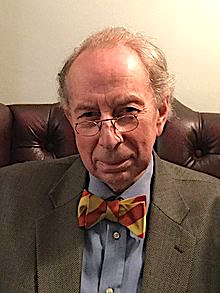
Prof. Ruel F. Pepa is a Filipino philosopher based in Madrid, Spain. A retired academic (Associate Professor IV), he taught Philosophy and Social Sciences for more than 15 years at Trinity University of Asia, an Anglican university in the Philippines. He is a Research Associate of the Centre for Research on Globalization (CRG).
Global Research is a reader-funded media. We do not accept any funding from corporations or governments. Help us stay afloat. Click the image below to make a one-time or recurring donation.















.png)






.jpg)



 English (US) ·
  French (CA) ·