

 9 months ago
137
9 months ago
137
PROTECT YOUR DNA WITH QUANTUM TECHNOLOGY
Orgo-Life the new way to the future Advertising by Adpathway
I’m going to touch on a highly controversial subject, one that has become the third rail among cancer biologists and the broader medical community: the possible link between Covid-19 vaccination and cancer. Because my laboratory’s mission is centered on cancer prevention, I cannot in good conscience ignore the elephant in the room.
As my colleague, internationally renowned cancer biologist Dr. Wafik El-Deiry, and I articulated in the September ACIP meeting on Covid vaccines, nearly 50 publications have reported a temporal association between Covid-19 mRNA vaccination and the onset of cancer. Epidemiological studies (one from Italy and one from South Korea) have also described increased cancer incidence among Covid-vaccinated individuals compared to unvaccinated groups (albeit with caveats). These reports are mounting and it’s time we acknowledge that something meaningful may be occurring rather than dismissing them outright; this latter response seems to be the dominant reaction in academia, the media, and by our regulatory agencies.
My goal here is to unpack the science and outline plausible biological mechanisms between the association of Covid mRNA vaccination and cancer that warrant further and urgent investigation. The purpose is not to make claims either way but to frame the issue that must be addressed in hopes that open scientific discussion and more importantly, research funding can be directed towards this urgent and growing area of concern. The current climate has made it impossible for scientists to study this without fear of personal or professional repercussions.
What We Know and Don’t Know
At present, there are no published studies demonstrating a direct causal mechanism by which the mRNA vaccines induce cancer. However, that does not mean such a causal connection doesn’t exist. In fact, there are at least three biologically plausible mechanisms that, in my view, merit rigorous study and evaluation given their known links to causing cancer. I’ve written about these mechanisms before in other contexts, but here I’ll explain how they may apply to the Covid-19 mRNA vaccines.
Mechanism 1: Cellular Transformation Due to Spike Protein Biology
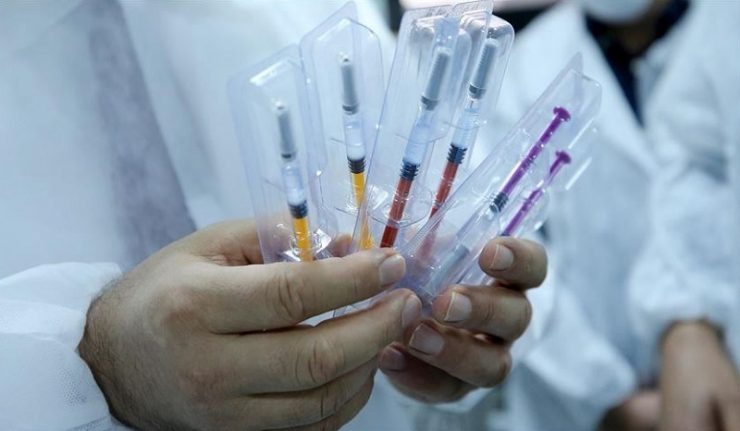
The transformation of a normal cell into a cancer cell involves the disruption of multiple safeguards controlling cell growth, survival, and DNA repair. The Covid mRNA vaccines work by instructing the body’s cells to produce the SARS-CoV-2 spike protein for prolonged periods of time (anywhere from days to weeks, to months, and even years). This foreign spike protein then elicits an immune response.
Laboratory studies have reported that the spike protein, whether it is produced by infection or by vaccination, has biological activities. It interacts with cellular pathways that regulate the cell cycle, tumor suppressor functions, and DNA damage repair pathways and machinery. Therefore, in theory, such interactions of spike protein with these pathways could contribute to cellular transformation—although the same could be said for infection with Covid-19 itself. The difference, however, lies in the duration of spike protein produced after vaccination compared to natural infection. This also raises an important question about whether multiple Covid infections are biologically equivalent to the artificial spike protein produced by the vaccine.
Since the spike protein that is produced by the mRNA can persist for as little as a few days, to weeks, months, and even years after vaccination, it is important to acknowledge whether cancer incidence correlates with spike protein expression (or persistence) in the body, but also whether it is present in tumors. A recent case study showed evidence that spike protein can be found expressed in metastatic breast cancer. Thus, in thinking about the relationship between Covid vaccination and cancer, chronic exposure to an agent with biological activity that disrupts cell cycle and DNA damage response pathways is very important to consider. Outright dismissing this possibility seems negligent. Currently data is insufficient to make any firm conclusions about any of this in a conclusive manner, and in the absence of such data means this mechanism cannot be dismissed outright.
Mechanism 2: Genomic Integration and Dysregulated Gene Expression Due to Residual DNA Contaminants
It is now acknowledged by the manufacturers, the FDA, as well as others, including a lab from the NIH, that residual DNA impurities are present in mRNA vaccines.
While many have argued that the quantities present in the vaccine preparations are too small to pose harm, the facts remain: (1) these fragments exist, (2) they are delivered in a lipid nanoparticle that efficiently allows the DNA to enter cells and the nucleus, and (3) the size of these fragments can readily integrate into the genome—especially when cells are dividing and undergoing natural DNA repair. Since no studies have been conducted demonstrating that the quantity of these impurities is insufficient to transfect cells, and that they do not integrate, it is complete speculation at this time that this cannot and does not happen. Said differently, no studies have yet shown that these impurities are too minimal to enter cells or integrate into DNA.
For the Pfizer vaccine, a subset of the impurities contains DNA sequences that are viral regulatory elements, which by definition influence gene expression. In addition, new findings suggest that the Pfizer vaccine also contains DNA that is methylated, which can stimulate a pathway in cells called cGAS-STING. Therefore, at least in the case of the Pfizer vaccine, these DNA impurities cannot only integrate, but they can potentially have far-reaching effects.
DNA integration events in the wrong genomic context could, in principle, dysregulate gene expression and contribute to cellular transformation, especially if combined with prolonged cGAS-STING pathway activation and SV40 promoter gene regulation.
Read More: The Third Rail: Covid-19 Vaccines and Cancer







.png)




.jpg)

 English (US) ·
  French (CA) ·