

.png) 6 months ago
76
6 months ago
76
PROTECT YOUR DNA WITH QUANTUM TECHNOLOGY
Orgo-Life the new way to the future Advertising by AdpathwayBRYAN, Texas ― Donald Trump since returning to the White House has pardoned fraudsters, money launderers, cop-assaulters, a drug kingpin who smuggled 400 tons of cocaine into the United States ― so why not a notorious child sex trafficker?
As the traditional Christmas pardoning season approaches, residents of the town surrounding a now-famous women’s prison camp wonder if Trump might dare release the most notorious child trafficker alive: Ghislaine Maxwell, accomplice of the late Jeffrey Epstein.
“If the president releases her, it would be a slap in the face to the entire justice system,” said Emily Trull, a 27-year-old life insurance saleswoman and Trump voter who thinks the fact that Maxwell is even at Federal Prison Camp Bryan, rather than a “real” prison, is already a travesty.
Kelly Allen, 41 and a legal secretary in the local Brazos County district attorney’s office, said the community is still not over Maxwell’s middle-of-the-night arrival there four months ago. “People were shocked,” she said, adding that setting her free entirely would be even worse. “I think it would not be good.”
Trump himself has repeatedly and notably refused to rule out freeing his longtime friend. White House aides have also not ruled it out. The Justice Department and the Bureau of Prisons did not respond to HuffPost queries about Maxwell over a period of many weeks.
Maxwell, through her lawyer, declined an interview request, and her lawyer would not respond to various HuffPost questions about the case.
Not Trump, nor his DOJ, nor BOP has ever offered an explanation for how Maxwell wound up in a “Club Fed” style minimum-security prison camp ― where other inmates report that she has received kid-glove, preferential treatment ― even though bureau rules make her ineligible. In an interview with Vanity Fair published this week, Trump’s chief of staff Susie Wiles claimed that neither she nor Trump had any idea of how the transfer happened, but that Trump was “mighty unhappy about it” ― although presumably not unhappy enough to undo it.
One federal inmate who was at Bryan with Maxwell said inmates have been transferred to harsher prisons for criticizing Maxwell, and that prison officials in their attempts to justify the punishments have tried to suggest she is actually innocent of the charges on which a jury found her guilty four years ago.
“Everyone that I talked to was very upset and disgusted by it,” the inmate told HuffPost on condition of anonymity for fear of retribution from prison officials. “She should never be camp status, no matter what.”
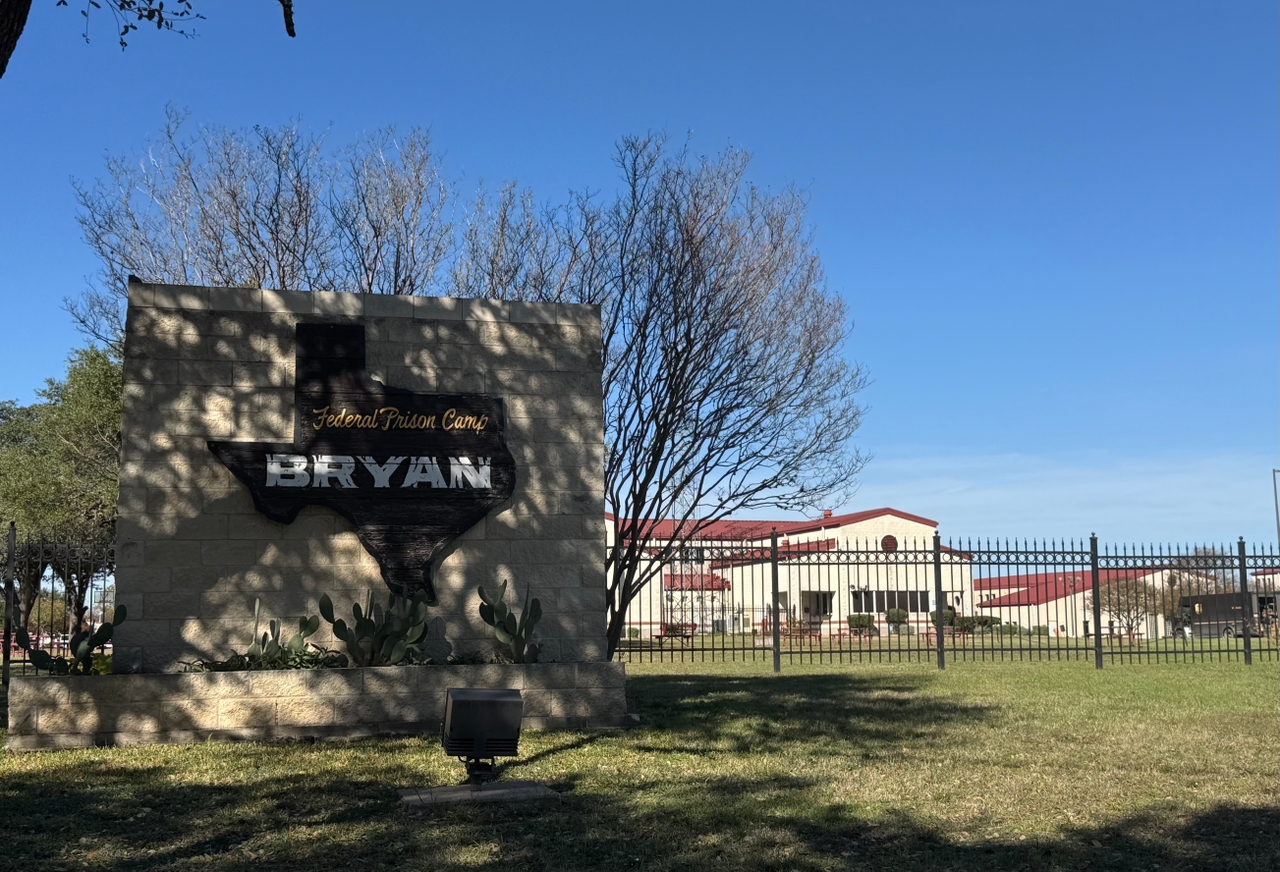
S.V. Date/HuffPost
Should Trump set her free over the coming weeks, despite her having served just a fraction of her 20-year sentence, he is certain to ignite a vocal backlash, particularly with congressional demands for the release of the DOJ’s investigative files finally moving forward. A new law ordering the release of the files passed Congress almost unanimously, despite Trump’s vocal opposition and a ferocious White House lobbying effort. The law gave the Justice Department 30 days to do so ― a deadline that works out to Friday.
“It’s inconceivable, but not surprising, that Maxwell would receive a pardon or commutation. She’s already been transferred to ‘Club Fed,’ where she apparently enjoys special privileges and perks not available to the other inmates,” said James Marsh, a lawyer who has represented victims of Epstein and Maxwell. “Wiping the slate clean, in effect, would be a slap in the face to law enforcement, the Justice Department, and most significantly, the survivors of the Epstein-Maxwell sex trafficking conspiracy.”
A child rape participant
Key to Maxwell’s efforts to get out of jail is attempting to rewrite the history of her role in Epstein’s criminal enterprise.
The Justice Department indicted Epstein, who died by apparent suicide in his jail cell a month after his arrest in July 2019. Maxwell was indicted the following year. She did not testify on her own behalf at her trial in December 2021, after which a jury found her guilty of child sex trafficking and related conspiracy charges.
But starting at her sentencing hearing in June 2022, Maxwell has attempted to portray herself as another victim of Epstein’s crimes, rather than a co-perpetrator.
Facing as many as 55 years in prison under the law and with prosecutors asking for 30, Maxwell apologized to the victims and insisted she was one too. “It is the greatest regret of my life that I ever met Jeffrey Epstein,” she said. “Jeffrey Epstein should have been here before all of you…. He should have stood before all of you in 2005, again in 2009, again in 2019.”
U.S. District Judge Alison Nathan, though, was having none of it. She called Maxwell’s behavior “heinous and predatory,” and pointed to victims’ testimony describing in graphic detail how Maxwell had touched them in joint encounters with Epstein. “Ms. Maxwell was instrumental in the abuse of several underage girls, and she herself participated in some of the abuse,” Nathan said.
One of their victims, Virginia Giuffre, sent a letter to the court that was read aloud at the sentencing hearing in which she addressed Maxwell directly.
“I want to be clear about one thing: Without question, Jeffrey Epstein was a terrible pedophile. But I never would have met Jeffrey Epstein if not for you,” wrote Giuffre, who was recruited by Maxwell in the parking lot of Trump’s Palm Beach country club, Mar-a-Lago. She died by suicide earlier this year. “For me, and for so many others, you opened the door to hell. And then, Ghislaine, like a wolf in sheep’s clothing, you used your femininity to betray us, and you led us all through it.”
Nathan, in the end, did not give Maxwell 55 years in prison. She sentenced her to 20 years, an amount just above the upper end of the range recommended by the federal probation department that incorporated factors such as Maxwell’s age ― 61 at the time, nearly 64 today ― and lack of criminal record.
More camp than prison
As its name suggests, Federal Prison Camp Bryan is as much or more “camp” than “prison.”
Less than a mile from Bryan’s downtown and five miles up the road from Texas A&M University, the facility is set in a quiet residential neighborhood, surrounded by an apartment complex and modest homes on small lots. A park with playground equipment is just blocks away, where, on a recent weekday, young children enjoyed the swings. There are neither guard towers, nor concentric layers of barriers surrounding it. A tall chain-link fence topped with rings of razor wire is the only real indication that a Bureau of Prisons campus sits on the other side.
The 650 or so female inmates at Bryan sleep in dormitories, rather than locked cells, and enjoy a range of educational and exercise options. They have access to work opportunities such as training puppies to become service dogs.
A green mesh tarp on the bottom two-thirds of the fence was added when Maxwell arrived in the wee hours on Aug. 1, according to a federal inmate who was there at the time, as a way to protect her from the paparazzi who swarmed there after news of her arrival broke.
A resident who lives across the street said the only other visible changes at the camp since Maxwell arrived are the federal agents who patrol the neighborhood in unmarked cars.
The resident, who spoke on condition of anonymity, said he doesn’t think Maxwell belongs at a place like Bryan. “No, not really. I mean, they were kids,” he said of Maxwell and Epstein’s victims.
His personal opinion is in fact shared by the Bureau of Prisons, whose official rules state that minimum security facilities, known derisively as “Club Feds,” are designed for nonviolent inmates who have committed property crimes like fraud and theft, or low-level drug offenses ― not violent criminals and sex offenders.
Despite this, Maxwell was transferred to Bryan after meeting with Deputy Attorney General Todd Blanche at a courthouse near a low-security prison in Tallahassee, Florida, where she was held at the time. There, she told him that Trump, with whom she and Epstein had frequently socialized, had always been a “gentleman” and had done nothing wrong. She also praised Trump for winning back the White House.
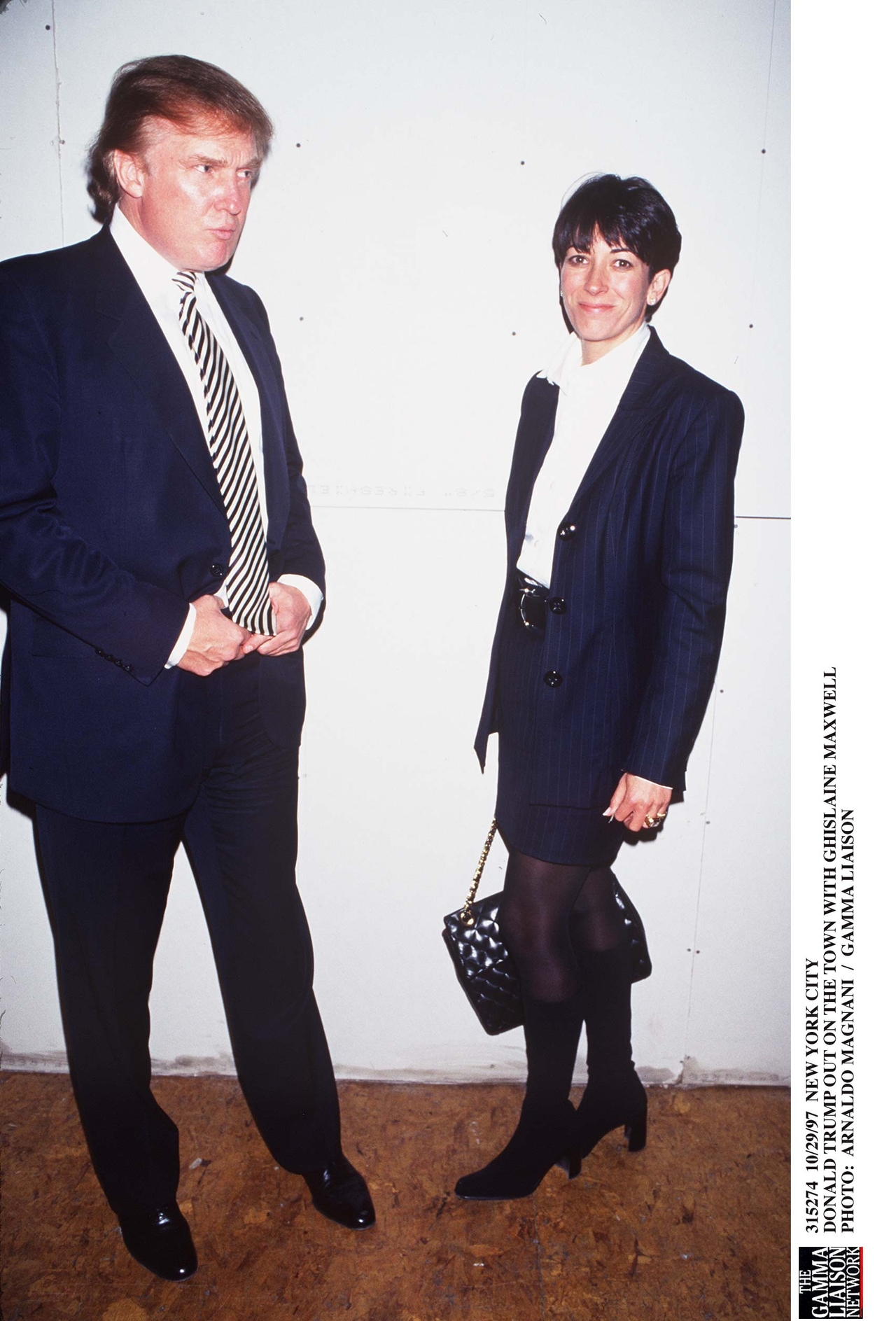
Arnaldo Magnani/Getty Images
“I admire his extraordinary achievement in becoming the president now,” she told Blanche, according to the transcript released by the DOJ afterward. “And I like him, and I’ve always liked him. So that is the sum and substance of my entire relationship with him.”
If Maxwell’s attempts to portray herself as another of Epstein’s victims failed at her sentencing hearing, it appears to have had a measure of success in her hours with Blanche.
“She had been in prison for many, many years, and she had offered to speak on many, many occasions, and she was never given that opportunity. And so what I did is I gave her that opportunity to speak,” Blanche told CNN in September.
(Blanche’s statement is false. Maxwell had the opportunity to speak with FBI and DOJ investigators both before and after her arrest in 2020 but chose not to. She had the opportunity to testify at her trial, but she chose not to do that, either.)
Maxwell’s “interviews” with Blanche, who prior to joining the Justice Department in January had been one of Trump’s criminal defense lawyers, took place on July 24 and 25. She was moved from Tallahassee to Bryan exactly seven days later.
Maxwell, according to emails from a whistleblower obtained and released by House Democrats, is thrilled with her new accommodations.
“The food is legions better, the place is clean, the staff responsive and polite - I haven’t seen or heard the usual foul language or screaming accompanied by threats leveled at inmates by anyone,” she wrote a week after her arrival. “I feel like I have dropped through Alice in Wonderlands looking glass. I am much, much happier here and more importantly safe.”
Maxwell has enjoyed perks both small ― access to grapefruit juice, her beverage of choice, and extra toilet paper, according to inmates ― and large, such as assistance preparing legal papers from Bryan’s warden, as Maxwell herself reported in an email.
Her treatment has lawyers whose clients have played by the rules but have failed to secure that sort of treatment irate.
“There was no way in God’s green earth that Ghislaine Maxwell was qualified for Bryan,” said Patrick McLain, a former federal prosecutor on children’s sex crimes cases who is now a defense lawyer in Dallas. “They’re treating Ghislaine Maxwell with princess gloves because Donald Trump wants her to be quiet. That’s what this is all about.”
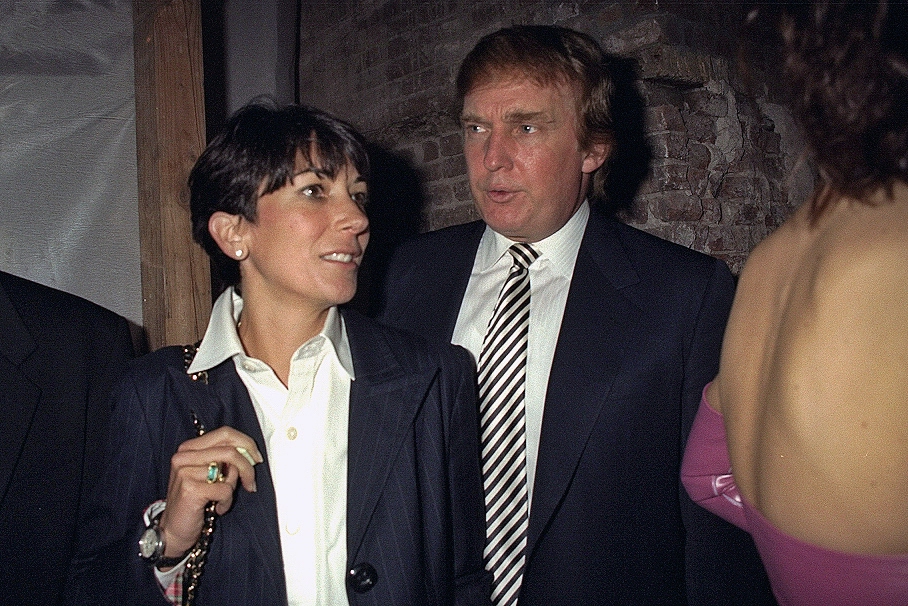
Richard Corkery/NY Daily News Archive/Getty Images
A pardon for a monster?
Ordinarily, someone convicted of trafficking underage girls so they could be sexually assaulted, and then participating in that assault, would not be a candidate for a presidential pardon. Clemency applications under past presidents would go through a legal review that considered factors such as the severity of the crime, the impact on victims, the amount of the sentence already served and whether the inmate had expressed remorse.
Under Trump, that review process has largely disappeared, and Maxwell’s odds to get a pardon notwithstanding her crimes could be boosted by Trump’s apparent lack of concern about what the public thinks. On his first day in office, Trump pardoned some 400 violent domestic terrorists who had assaulted police officers at the U.S. Capitol in their efforts to help his 2021 coup attempt. The following day, he set free Ross Ulbricht, who had been convicted for distributing drugs, including deadly fentanyl, through his “Silk Road” website.
Trump has ended prosecutions against and pardoned those convicted of fraud, involving both cryptocurrency as well as regular money.
In recent weeks, he even pardoned a drug kingpin, former Honduran president Juan Orlando Hernández, who had been convicted of smuggling more than 400 tons of cocaine into the United States. Maxwell has the additional advantage of having known Trump personally ― and possibly the further advantage of having information about Trump that he would prefer not become public.
That relationship already permitted her the extraordinary opportunity to make her case directly to the deputy attorney general, a meeting Trump acknowledged and praised as it was happening.
“It’s a very sensitive interview going on. Todd Blanche is a great gentleman. He’s a great man, who is a great lawyer. He’s got a great heart, but he’s over there now. I don’t know exactly what’s happening, but I certainly can’t talk about pardons now,” he told reporters on July 25.
On that occasion and every one of the half dozen subsequent times Trump has been asked about Maxwell, he has specifically declined to rule out a pardon.
“I’m allowed to give her a pardon, but nobody’s approached me with it. Nobody’s asked me about it,” Trump said on July 28.
“I’m allowed to do it, but nobody’s asked me to do it,” he said on Aug. 1, the very day that Maxwell was spirited to Bryan in the pre-dawn hours. “I know nothing about it. I don’t know anything about the case, but I know I have the right to do it. I have the right to give pardons.”
On Oct. 6, the day the U.S. Supreme Court declined to hear her appeal, Trump said: “I’d have to take a look at it… I will speak to the DOJ.”
That anyone would even acknowledge a pardon for Maxwell as a possibility, said Lisa Bloom, another lawyer for Maxwell’s and Epstein’s victims, is itself an abomination.
“As the federal judge said at her sentencing, Ghislaine Maxwell directly and repeatedly over the course of many years participated in a horrific scheme to sexually abuse underage girls. She was instrumental in the abuse, and she herself participated in it,” Bloom said. “A pardon would be another act of abuse of the girls who sacrificed so much to come forward and testify against her. Shame on anyone for even suggesting it.”
A prison just asking for an escape
Whether Trump follows through and actually frees Maxwell now, 11 months from the 2026 midterms, remains to be seen.
Republican political consultants largely agree it would not help the party retain control of Congress. “I think that would be pretty bad,” said a former Trump campaign official who spoke on condition of anonymity. “It would make no sense. What is the rationale?”
Stuart Stevens, a high-profile GOP consultant turned Trump critic, said he can easily imagine Trump pardoning Maxwell for his own reasons, without regard for what it might do to those facing the voters next year.
He said he can see Trump freeing her with the explanation that it was Epstein, not Maxwell, who was the true villain: “She’s suffered enough. He was the criminal.”
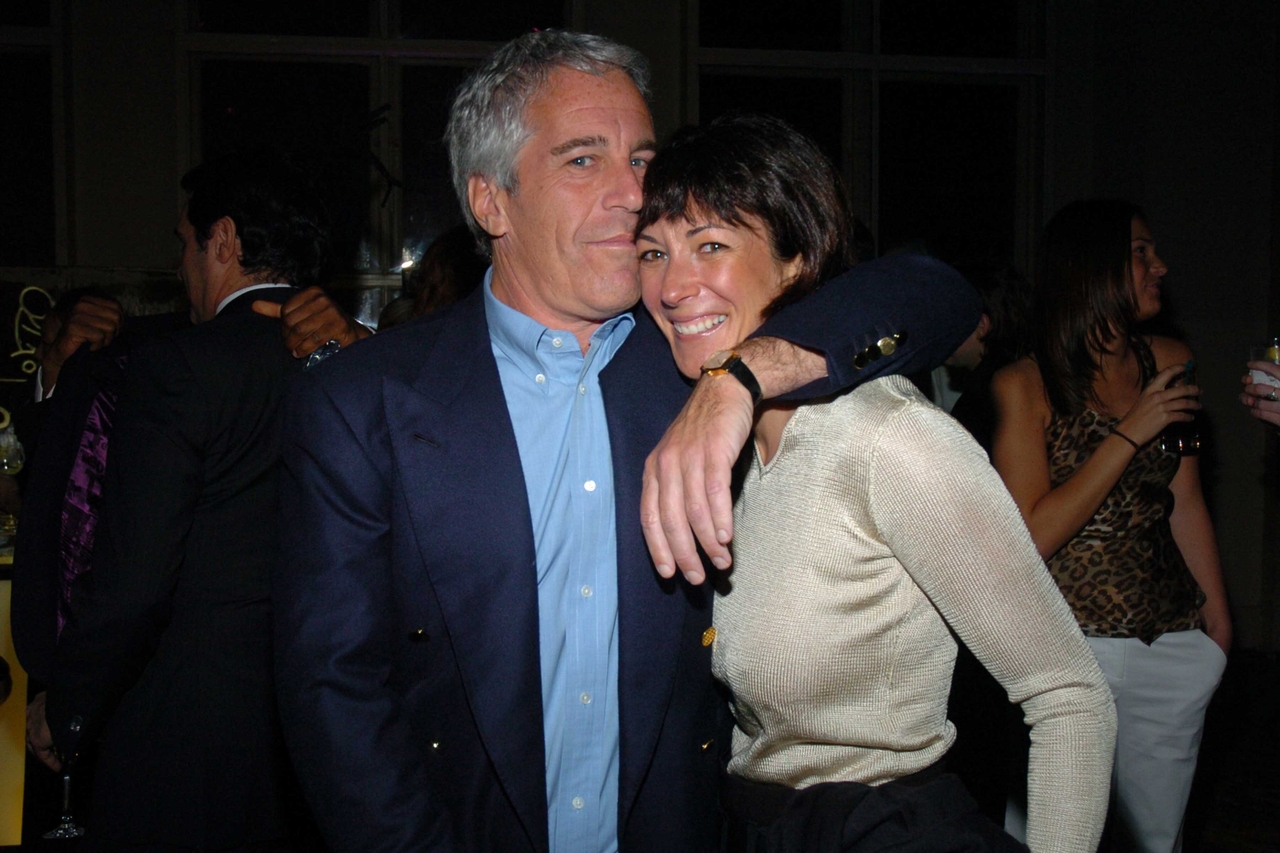
Patrick McMullan/Getty Image
If conventional thinking prevails and Trump opts not to free Maxwell prior to the midterms, though, her circumstances in a minimum-security prison camp, rather than a true prison, leave the possibility that Maxwell may choose to free herself.
“It’s widely known that camps are easy to escape from. Even the fence there doesn’t go around the front,” said the inmate who spoke on condition of anonymity.
The BOP’s rules of who can be housed at Bryan ordinarily discourage escape attempts. Inmates are there for relatively short sentences that are typically given to nonviolent, white-collar criminals or are transferred there for their final months of a longer sentence. In both cases, a failed escape attempt results in a transfer to a stricter prison and another criminal charge.
That risk-reward calculus, though, would not apply to Maxwell, who according to her BOP status has another 12 years to go in custody before her release date in 2037.
“You can literally walk out, and they aren’t even supposed to chase you,” the inmate said. “The guards don’t carry weapons or anything.”




.png)




.jpg)


 English (US) ·
  French (CA) ·