

.png) 6 months ago
63
6 months ago
63
PROTECT YOUR DNA WITH QUANTUM TECHNOLOGY
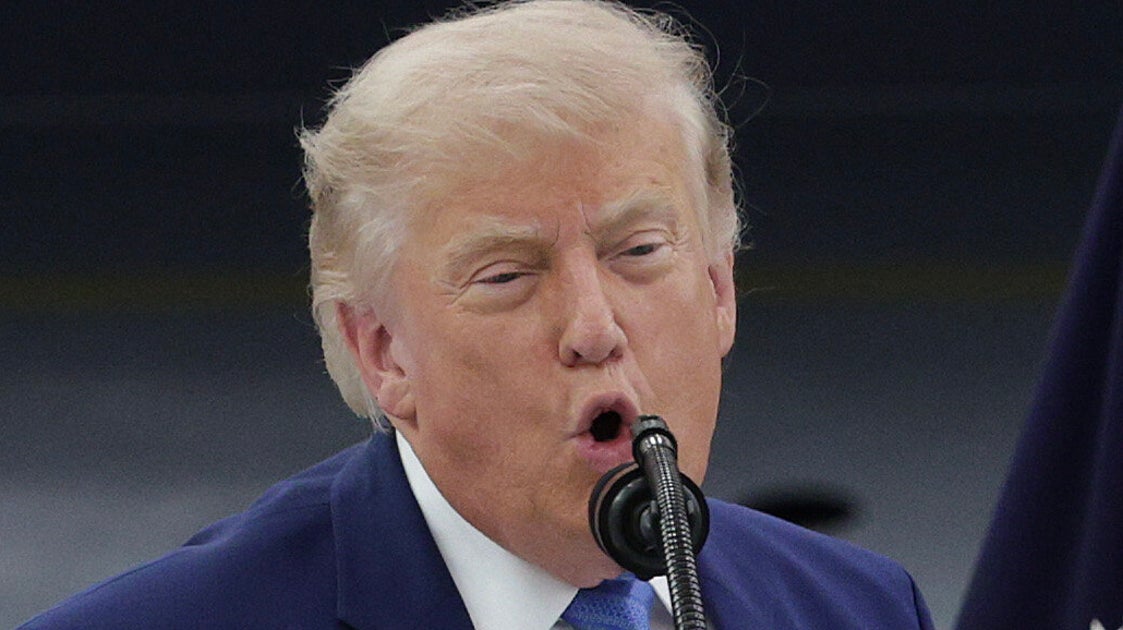
Orgo-Life the new way to the future Advertising by AdpathwayPresident Donald Trump recently leveled one of his commonly used terms in a statement attacking iconic actor and director Rob Reiner shortly after he and his wife, Michele Singer, were found dead at their home on Sunday.
The president took to his Truth Social platform on Monday to seize on the opportunity to slam Rob Reiner, who was a critic of Trump, and for baselessly attributing the Hollywood filmmaker’s death to “Trump Derangement Syndrome” — a phrase Trump and his supporters often use to attack those who criticize the president, his policies and his rhetoric.
“Rob Reiner, a tortured and struggling, but once very talented movie director and comedy star, has passed away, together with his wife, Michele, reportedly due to the anger he caused others through his massive, unyielding, and incurable affliction with a mind crippling disease known as TRUMP DERANGEMENT SYNDROME, sometimes referred to as TDS,” Trump wrote in part on the social media platform.
Trump’s vile post about Reiner garnered wide condemnation, with many on social media describing his remarks as “disgusting.” Rocker Jack White took to Instagram to slam the president, writing: “Trump you disgusting, vile, egomaniac, loser, child. Neither he nor any one of his followers can defend this gross, horrible insult to a beautiful artist who gave the world so much.”
The president also garnered a rare rebuke from many MAGA supporters and a number of the president’s most loyal advocates. He was further criticized when he doubled down on his attacks on Reiner while speaking to reporters at the Oval Office hours later.
The concept of a so-called “derangement syndrome” has been used against critics of past presidents before. But Trump has a history of frequently using the phrase against his naysayers himself. He had also used the expression against those who opposed him during his first term as president.
Alexandra Cromer, a licensed professional counselor with Thriveworks, believes that Trump’s habit of leveling the phrase “Trump Derangement Syndrome” reveals a lot about his leadership style.
“It reveals that he is not a leader that values, welcomes, or is willing to receive feedback,” she told HuffPost. “This also is a behavior pattern that we see in people with narcissistic tendencies; projection of perceived criticism onto someone else.”

Anna Moneymaker via Getty Images
Trump’s use of “TDS” exposes an “unhealthy” way to receive criticism, Cromer says.
Cromer explained that by Trump calling his critics “deranged,” he’s essentially seeking to undermine “the authenticity of the feedback.”
“This reveals that his leadership style is very rigid and very one-dimensional. He is the one to give directions and all others must comply,” she said. “This is a tremendously unhealthy way to receive criticism or any other form of feedback. Psychologically, we know that feedback is critical to not only growth [and] prosperity, but overall health and wellness.”
She later continued, “shutting down criticism by engaging in stereotyping and blaming of the source can also be viewed as abusive behavior — that is, behavior that attempts to inflict psychological harm and maintain power structures.”
Hallie Kritsas, a licensed mental health counselor and therapist with Thriveworks who specializes in self-esteem, workplace issues and anxiety, told HuffPost that she believes the term “Trump Derangement Syndrome” is “polarizing and emotionally activating.”
“It comes across as a threat and will more than likely increase stress and divide groups in two different ones versus unifying them,” she said.
Jacob Neiheisel, associate professor of political science at the University at Buffalo College of Arts and Sciences, told HuffPost that he thinks Trump’s frequent use of the phrase is “meant to be dismissive of his opposition” and intended to “give his followers cover for dismissing similar criticisms that they might hear.”
“I think his use of the term reflects his deep-seated disdain for dissent,” he said. “Trump’s leadership style is certainly not one that is welcoming of a ‘team of rivals’ type of approach, but rather one that demands loyalty and a willingness to do political combat on his behalf.”
Neiheisel thinks that the “Trump Derangement Syndrome” phrase has caught on with so many Trump supporters because it “allows them to adopt a similar orientation toward dissent in their own social environments.”
“Simply dismissing the opposition as having a form of mental illness allows them to protect their own attitudes and beliefs, inoculating them against any negativity directed toward Trump,” he added.
There’s a reason why Trump’s attack on Reiner sparked a rare rebuke from his loyal supporters, experts say.
Neiheisel thinks that Trump’s attack on Reiner after his death hit “a new low.”
“Republicans had the moral high ground in the wake of Charlie Kirk’s murder and were able to use the negative things said about Kirk after his death to attack Democrats,” he said. “With Trump’s response, that high ground is gone. I think that’s why we saw a number of Republicans condemning Trump’s remarks.”
Kritsas believes that Trump’s statements about the iconic director “violated what some might view as a time to grieve and have decency in a moment of loss.”
Cromer said that Trump’s harsh words for Reiner was likely particularly upsetting to so many people because the filmmaker was a “universally liked person.”
“While Rob was not a perfect person (because nobody is), he demonstrated consistent prosocial behavior patterns and centered his personal values at the forefront of his personal and professional life,” she said.
“Further, Trump’s remarks state a belief that someone was murdered because they didn’t like Trump; an assertion that can be viewed as narcissistic by inserting himself into a situation that had nothing to do with him in any contextual way,” she continued.
Cromer later added that overall, Trump’s remarks about Reiner “communicates a lack of respect for psychological and personal boundaries for those affected by this incident.”











.png)





.jpg)



 English (US) ·
  French (CA) ·