

.png) 5 hours ago
5
5 hours ago
5
PROTECT YOUR DNA WITH QUANTUM TECHNOLOGY
Orgo-Life the new way to the future Advertising by AdpathwayWestern Europe has been scorched by its hottest June on record, scientists have said, as the UK enters its third heatwave of the year and wildfires ravage France and Spain.
Inflamed by carbon pollution, the deadly June heatwave helped push surface air temperatures for the region 3.06C above their average from recent decades, according to the EU’s Copernicus climate monitoring service.
Globally, June 2026 was 0.56C hotter than the 1991-2020 average and 1.39C hotter than preindustrial levels, making it the second-warmest June on record, the agency found. The planet’s oceans were hotter than scientists had ever seen them.
“Together, these records reflect a climate system continuing to accumulate heat,” said Samantha Burgess, a climate scientist at Copernicus. “The result is increasingly intense heatwaves, a persistently warm ocean, and growing risks for people, ecosystems and infrastructure.”
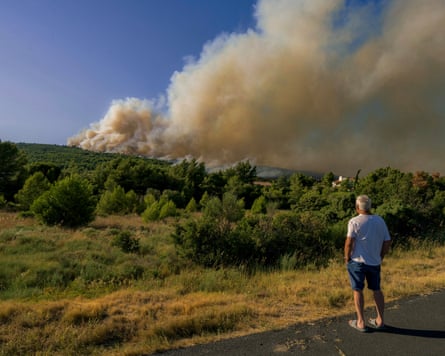
Western Europe is facing its third heatwave in six weeks and widespread dryness is helping small wildfires explode into unchecked blazes. Copernicus said the succession of heatwaves illustrated “the growing challenge” posed by worsening heat extremes.
Raging infernos have laid waste to large areas of southern Europe in recent days, prompting the EU to scramble firefighters and water-bearing planes to help national services overwhelmed by simultaneous blazes. Data published on Tuesday shows EU wildfires have burned 56% more land than usual.
The area that has gone up in flames is four times bigger than the average for this time of year in France, where 35,400 hectares (87,474 acres) have burned, and double the average in Spain, where 55,128 hectares (136,224 acres) have burned, according to the European Forest Fire Information System.
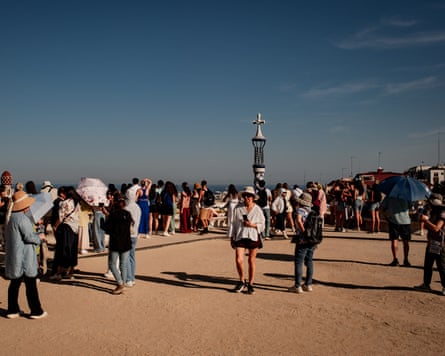
Barcelona set a new heat record on Wednesday with temperatures of 40.5C, Spanish meteorologists said, while in France a 22-year-old firefighter died after tackling a blaze in the Alps, the French interior ministry reported.
In the UK, where Met Office scientists warned seas are facing an “extreme” marine heatwave on Wednesday, daytime temperatures on land are expected to reach highs of 34C on Thursday. While not as scorching as June’s record-breaking heat, the high temperatures are expected to drag out over a sweltering 10 days.
The Met Office said a defining feature of last month’s heatwave was “exceptionally warm” overnight temperatures, with frequent tropical nights helping to drive the highest average June minimums on record. On Tuesday, a poll found it led to “mass sleep deprivation”, with two in three people struggling to sleep.
“To see temperatures like this in the UK in June is sobering,” said Stephen Belcher, chief scientist of the Met Office. “Events like this bring home the implications of climate change.”
after newsletter promotion
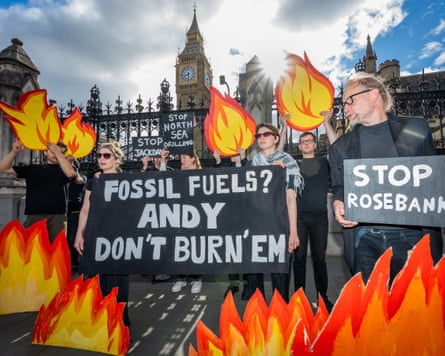
The UK’s National Fire Chiefs Council (NFCC) warned people on Wednesday to take extra care outdoors as the heatwave increases the risk of fast-spreading wildfires. Fire services have responded to a number of wildfires across southern and eastern England in recent weeks.
“Most wildfires start because something provides the spark: a disposable barbecue left behind, a discarded cigarette or even a glass bottle left in the sunshine,” said Dave Swallow, a tactical adviser at the NFCC. “We all have a role to play in preventing them.”
Heatwaves have grown hotter and stronger as fossil fuel pollution and the destruction of nature has baked the planet. Scientists have urged a quick shift to a clean economy as well as adaptation to increasingly violent weather extremes.
The World Health Organization estimates that 200,000 people have died from heat in Europe over the last four years and says most of the deaths are “entirely preventable”. To save lives, experts recommend installing air-conditioning for vulnerable groups, shading buildings with awnings and external shutters, providing cooling centres and bolstering health systems.
Shade from urban trees can keep neighbourhoods significantly cooler in hot weather but new analysis shows the UK is far behind its European counterparts. The average UK urban area is just 18% tree-covered compared with a European city average of about 30%, according to the Energy and Climate Intelligence Unit (ECIU). Of the 47 UK cities and urban areas in the dataset, 45 fall below the European average.
London has average cover for the UK at 18%, with Burnley the least green at 11% and Guildford the most shaded with 37%. By comparison, Barcelona has 31% tree cover and Nice 39%. The UK ranked 31st out of 38 countries overall, based on the 2018 data used.
The lowest levels of tree shade are found in the most deprived neighbourhoods, according to previous UK research, which found higher-canopy neighbourhoods were up to 4C cooler during a heatwave.
“Planting trees can over time help to bring down temperatures in the buildings they shade, and give more vulnerable people hope of being able to leave their homes into less risky temperatures to do things like shop and visit the GP,” said Tom Cantillon, an analyst at the ECIU. “The UK is way behind.”












.png)






.jpg)



 English (US) ·
  French (CA) ·