

 5 hours ago
3
5 hours ago
3
PROTECT YOUR DNA WITH QUANTUM TECHNOLOGY
Orgo-Life the new way to the future Advertising by Adpathway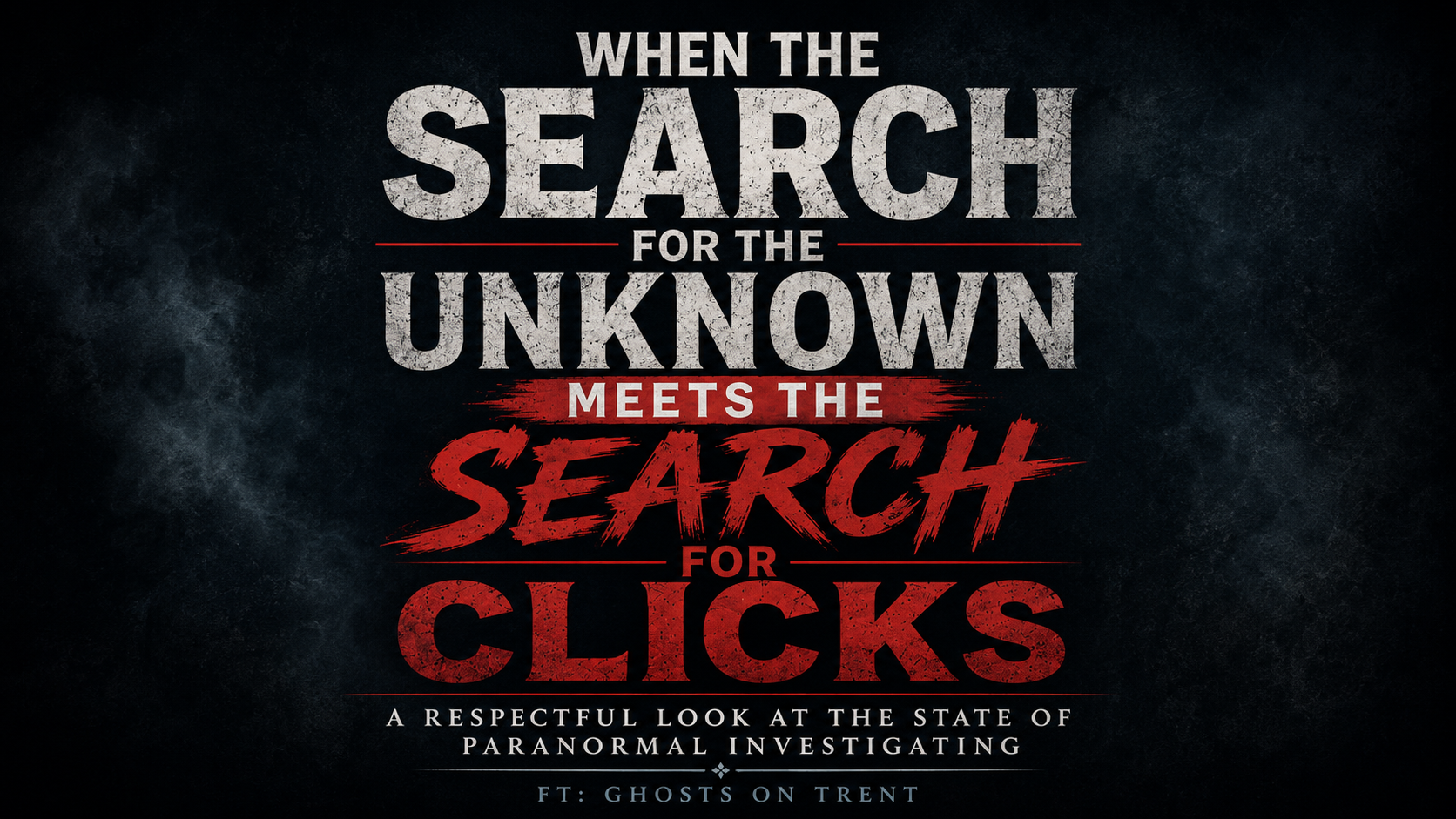
The paranormal community has always been driven by curiosity. Whether it’s exploring allegedly haunted locations, researching local history, testing new equipment, or simply trying to understand experiences that defy explanation, most investigators begin with the same goal: to search for answers.
Over the last decade, however, the paranormal world has changed dramatically. Social media platforms like YouTube, TikTok, Facebook and Instagram have introduced the subject to millions of people around the world. That has undoubtedly helped the community grow, but it has also changed the way investigations are presented and, in some cases, the motivations behind them.
A recent post by Ghosts On Trent has sparked discussion across the paranormal community. Their message suggests that genuine investigation is increasingly being overshadowed by entertainment, social media popularity and influencer culture.
It’s a thought-provoking point, but like most things in the paranormal world, the reality isn’t quite as simple as one side being right and the other being wrong.
The Main Concerns
Ghosts On Trent raise several important issues.
They question whether some investigators are becoming influencers before they become researchers. They suggest that popularity on social media can sometimes outweigh experience and credibility, and they express concern that paranormal events may be favouring creators with the largest audiences over those with years of investigative knowledge.
They also argue that chasing views, revenue and online recognition risks damaging the credibility of paranormal investigating. Whether you completely agree or not, these concerns are worthy of discussion.
Social Media Has Changed the Paranormal
There is little doubt that social media has transformed the paranormal community. Years ago, investigations were shared through local groups, forums, DVDs and word of mouth. Today, a single investigation can reach hundreds of thousands of people within hours. That’s not necessarily a bad thing.
Social media has introduced thousands of people to paranormal investigating who may never have discovered it otherwise. It has allowed small teams to reach global audiences, encouraged collaboration and opened conversations that simply weren’t possible twenty years ago.
However, social media also rewards excitement. Videos with dramatic music, emotional reactions, bold claims and eye-catching thumbnails naturally attract more attention than a quiet investigation where very little happens. Unfortunately, that creates pressure.
A completely honest investigation that ends with “we didn’t capture anything conclusive tonight” rarely performs as well as one claiming to have found undeniable evidence.
When Views Start Driving Investigations
Good investigations take time. Researching a location’s history. Learning about previous reports.
Testing equipment. Ruling out natural explanations before jumping to paranormal conclusions. None of these things make particularly exciting short videos, yet they’re often the most important parts of an investigation.
The danger is that investigators can begin feeling pressure to make every unexplained noise, shadow or equipment anomaly seem paranormal because that’s what audiences have come to expect.
That doesn’t automatically mean they’re being dishonest. Sometimes it’s simply the reality of creating content in an online world where excitement is rewarded.
Clickbait: Part of the Modern Landscape
One word that’s become almost impossible to avoid is clickbait. It’s often used as criticism, but the truth is that almost every successful creator uses eye-catching titles and thumbnails to some degree. That’s not unique to the paranormal community—it’s simply how YouTube and social media work.
Even many of the most respected paranormal channels use intriguing titles designed to make people curious enough to click. Without them, their content may never reach the audience it deserves. The important distinction isn’t whether a title is dramatic.
It’s whether the investigation delivers on that promise. There’s nothing wrong with making people curious enough to watch. Problems begin when evidence is exaggerated, speculation is presented as certainty, or ordinary events are deliberately made to appear paranormal simply for entertainment.
Perhaps that’s where the real conversation should be. Not whether creators use exciting titles—because almost everyone does—but whether the investigation itself remains honest, balanced and transparent.
Everyone Wants Their Work to Be Seen
One point that’s often overlooked is this: if someone uploads their investigations to social media, they clearly want people to watch them. That’s true whether they’re a small local team with a few hundred followers or a channel with hundreds of thousands of subscribers.
People share their work because they want it to be seen. They want discussion. They want feedback.
They want their investigations to reach an audience. In that sense, everyone is chasing views.
The difference is that for many investigators, views are simply the way their work reaches people—they’re not the reason they investigate.
There’s nothing wrong with wanting your hard work to be watched and appreciated. The problem only begins if the pursuit of views becomes more important than honesty, evidence and integrity.
The Convention Debate
Ghosts On Trent also questioned whether paranormal conventions are favouring creators with the biggest online audiences.
There is some truth to the idea that popular creators help sell tickets. Event organisers are businesses, and successful events need visitors to survive. However, that’s only part of the picture.
Many event companies actually invite a mixture of guests. Alongside well-known YouTube personalities, you’ll often find historians, authors, experienced investigators, equipment specialists and researchers who take a far more scientific or evidence-based approach.
That’s because visitors attend these events for different reasons. Some enjoy hearing exciting investigation stories. Others want to learn about historical research, investigation techniques or the science behind certain equipment.
A balanced line-up benefits everyone. It allows attendees to hear different viewpoints, compare methods and decide for themselves what resonates most.
Rather than seeing these different styles as competitors, perhaps they’re simply serving different parts of the same community.
Popularity Doesn’t Equal Credibility
It’s also important not to assume that having a large audience automatically makes someone less credible.
Many successful creators invest enormous amounts of time researching locations, improving their methods and presenting investigations responsibly, Equally, having a small audience doesn’t automatically make someone an expert.
Credibility isn’t measured by subscriber counts, It’s measured by honesty, consistency, transparency and a willingness to question your own conclusions—even when they aren’t exciting.
The Importance of Critical Thinking
Perhaps the biggest danger in paranormal investigating isn’t social media at all, It’s confirmation bias.
When investigators arrive expecting paranormal activity, it’s easy to interpret every sound, shadow or equipment response as evidence, Responsible investigators challenge themselves.
They look for ordinary explanations before extraordinary ones, Ironically, doing so often makes genuinely unexplained experiences even more compelling.
A Community That Needs Every Perspective
Perhaps the most interesting aspect of this debate is that every part of the paranormal community depends on the others more than many people realise.
Entertainment-focused channels introduce huge numbers of people to paranormal investigating. For many viewers, these creators are the gateway into the subject. Without that exposure, the paranormal community would almost certainly be much smaller.
At the same time, evidence-based investigators, sceptics and debunkers play an equally important role. They encourage critical thinking, test claims and remind the community that extraordinary claims deserve careful examination.
In many ways, it’s a catch-22, Without exciting investigations attracting large audiences, there would be far fewer claims for researchers and debunkers to analyse. Likewise, without people asking difficult questions and challenging evidence, investigative standards would likely suffer.
Whether people realise it or not, both sides help shape the paranormal community, Neither exists entirely in isolation.
Respect Matters
One thing Ghosts On Trent deserve credit for is that their post focused on wider trends rather than publicly attacking individual creators, Healthy discussion benefits the community, Respectful disagreement encourages better standards.
Personal attacks rarely solve anything, The paranormal world has always been filled with different beliefs, different methods and different opinions. That’s part of what makes it fascinating.
Is Ghosts On Trent Completely Right?
Not entirely, The concerns they raise are genuine, but the situation is more complex than simply blaming social media or content creators, Social media has undoubtedly encouraged some sensationalism.
At the same time, it has also helped grow the paranormal community, introduced new generations to investigating and given independent researchers opportunities that simply didn’t exist twenty years ago.
Like any tool, social media depends entirely on how it’s used, The real issue isn’t technology, It’s integrity.
The Balance
Perhaps the future of paranormal investigating lies somewhere in the middle, Creators should be able to produce entertaining, engaging content without exaggerating evidence.
Researchers should embrace modern platforms without abandoning good investigative methods, Audiences should recognise that not every investigation ends with dramatic proof—and that’s perfectly acceptable.
Paranormal Magazines Ending statement.
Ghosts On Trent have started an important conversation, and that’s something the paranormal community should welcome.
Whether you’re an experienced investigator, a content creator, a sceptic or simply someone fascinated by the unknown, credibility should always remain at the heart of what we do.
At the same time, we should recognise that the paranormal community is made up of many different voices. Some educate through historical research. Some entertain through immersive investigations. Some challenge claims through sceptical analysis. All have contributed, in one way or another, to making the paranormal more accessible than ever before.
Perhaps the goal shouldn’t be deciding which approach is “right,” but encouraging every creator to be honest about what they present. Views will always matter because they allow investigations to reach an audience. Selling tickets will always matter because events need to survive. Entertainment will always matter because it inspires curiosity.
But above all else, integrity should matter most.
If the paranormal community can hold on to that, then there is room for researchers, entertainers, sceptics, historians and investigators alike—each playing their own part in the continuing search for the unknown.
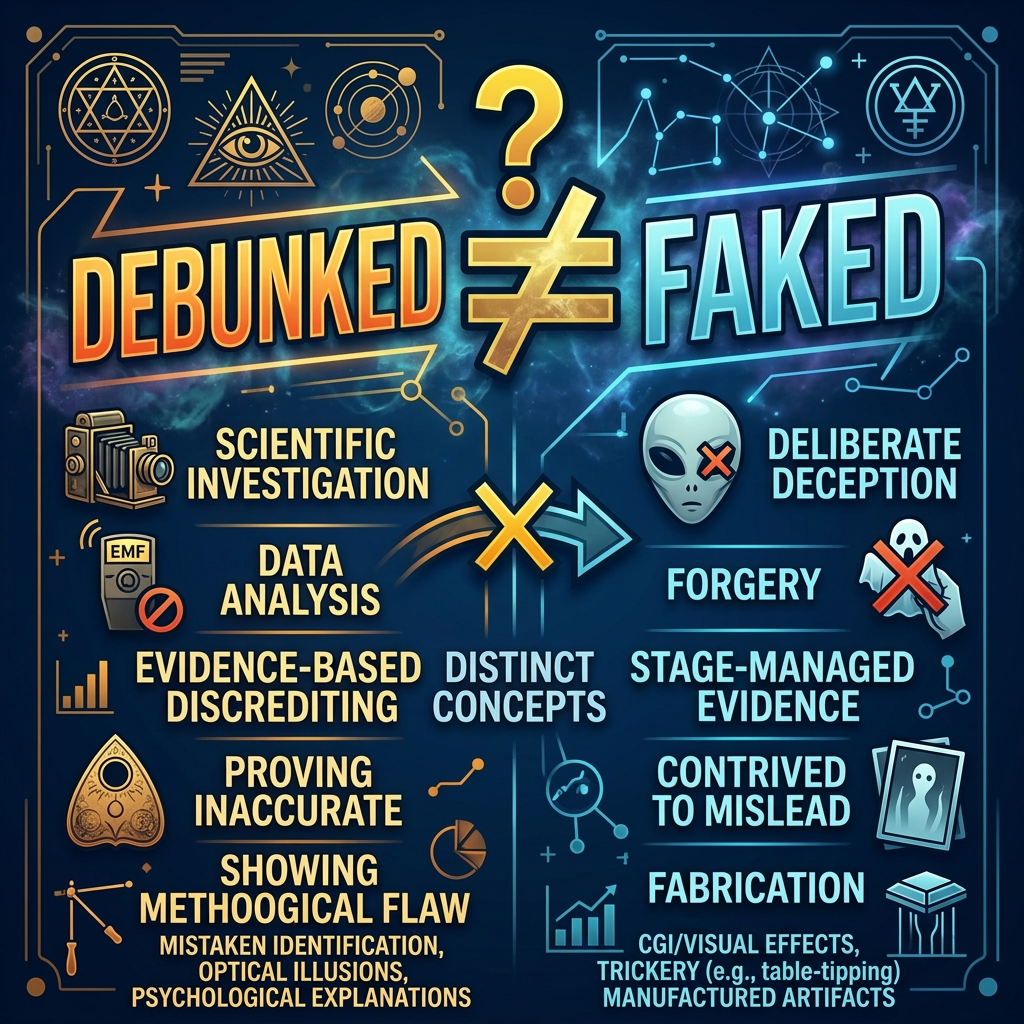
there will be a part 2 more focused on produced fake evidence and the damage,
visit PARANORMAL DEBUNKED to view all our articles like this.









.png)



.jpg)

 English (US) ·
  French (CA) ·