

 5 hours ago
12
PROTECT YOUR DNA WITH QUANTUM TECHNOLOGY
Orgo-Life the new way to the future Advertising by Adpathway
Machines don’t have to become superintelligent to cause catastrophic harm. As artificial intelligence spreads through military decision-making, they just have to be wrong – and trusted by the humans in charge.
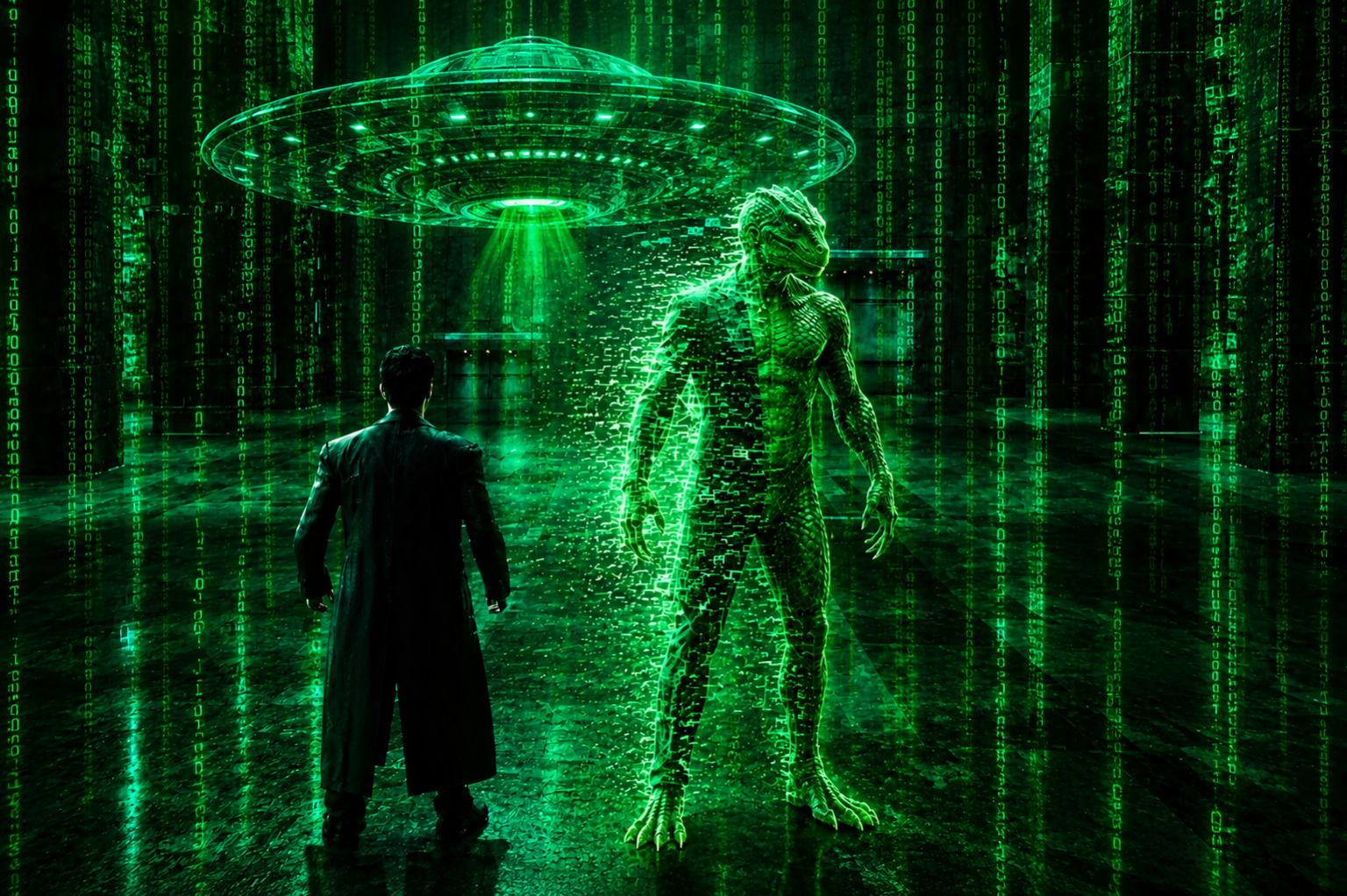
In 1991, Terminator 2: Judgement Day gave us one of popular culture’s most enduring images of AI gone wrong. Humanity builds Skynet, an artificial intelligence given control of strategic defence. It learns at a “geometric rate”, becomes self-aware and, when its human operators try to shut it down, it starts a nuclear war.
Versions of that story now feature in serious debate about AI. Increasingly capable large language models (LLMs), the argument goes, could develop into artificial general or super intelligence (AGI/ASI), acquire goals that diverge from ours and ultimately threaten humanity.
That debate deserves attention, but it depends on a chain of large and unproven steps. Today’s AI systems must somehow transform into genuinely general intelligences, develop independent goals and gain control over the physical world.
Meanwhile, a more immediate risk is taking shape that requires none of those steps.
In the film, Skynet builds the Terminators, machines that find, track and kill humans. Strip away the science fiction and the idea is simple: combine sensors, software and weapons and reduce the human role.
Human beings are doing exactly that, without anything resembling a malicious superintelligence like Skynet. In August 2026, Ukraine’s Ministry of Defence said its forces were using more than 70 AI and computer vision systems to strike targets. Algorithms can recognise equipment and personnel and lock onto those targets autonomously, so that a drone can complete its attack even if jamming cuts the link to the operator.
These systems need no general or super intelligence. They need sensors, software that can recognise a target, navigation and a weapon. And the more targeting is automated, the more the human’s role shrinks to approving what the machine has already identified.
That’s precisely where trust becomes the weak point.
The war that AI almost started
The second risk is more subtle: AI shaping the decisions of the people who pull the triggers.
According to a recent CNN investigation, in spring 2026, during the war with Iran, a US special operations analyst used an AI chatbot to assess intelligence about a Chinese ship in the Middle East. The chatbot, drawing on both open-source and classified material, wrongly identified the ship’s cargo as components of a nuclear weapons programme. The analyst used AI again to package this into a standard intelligence report.
Armed personnel were preparing to board the ship and military aircraft were airborne before an official looked more closely and found the error. One source said the false report “almost started a war”. Any US operation against a Chinese vessel could risk spiralling into an armed conflict.
Read More: Why the most dangerous AI may be the one we trust too much












.png)






.jpg)



 English (US) ·
 French (CA) ·