

.png) 5 months ago
153
5 months ago
153
PROTECT YOUR DNA WITH QUANTUM TECHNOLOGY
Orgo-Life the new way to the future Advertising by AdpathwaySustainably protect your skin with this handy guide to eco-friendly sunscreen, all available in the UK.
Sunscreen is a daily essential that’s easy to overlook . Yet the products we put on our skin can have a surprising impact on the environment – from the ingredients they contain to the packaging they come in.
I’m always on the lookout for beauty products that work well, are affordable, and are produced with the environment in mind – from sustainable soap to zero-waste makeup. Sunscreen should be no different.
Over the past few years, demand for sustainable sunscreens in the UK has grown rapidly. At the same time, questions have been raised about certain chemicals used in conventional sunscreens. Fortunately, there are now quite a few options that protect both your skin and the planet.
The Environmentally-Friendly Sunscreens Available In The UK
Here are some of my favourite eco-friendly sunscreens, all offering broad-spectrum UVA and UVB protection and suitable for family use. I’ve included key info on packaging, reef safety, and suitability so you can choose the best option for you.
Green People SPF 30 Sunscreen

Green People (from around £33.50 for 200 ml) offers a range of organic and eco-friendly sunscreens for adults and kids, which I really rate. These include mineral zinc oxide options, and non-mineral options that have non-nano and non-toxic UV filters. They’re also free from oxybenzone or octinoxate (more on that later), and are reef safe.
Made with natural and certified organic ingredients, these offer SPF 30 protection from UVA and UVB rays. They’re all vegan-friendly and cruelty-free. And they are also free from parabens, alcohol, Lanolin, phthalates, artificial perfumes, petrochemicals, and colourants.
Get 20% off your first order when you sign up for the Green People newsletter.
Sol De Ibiza SPF 30 Sunscreen
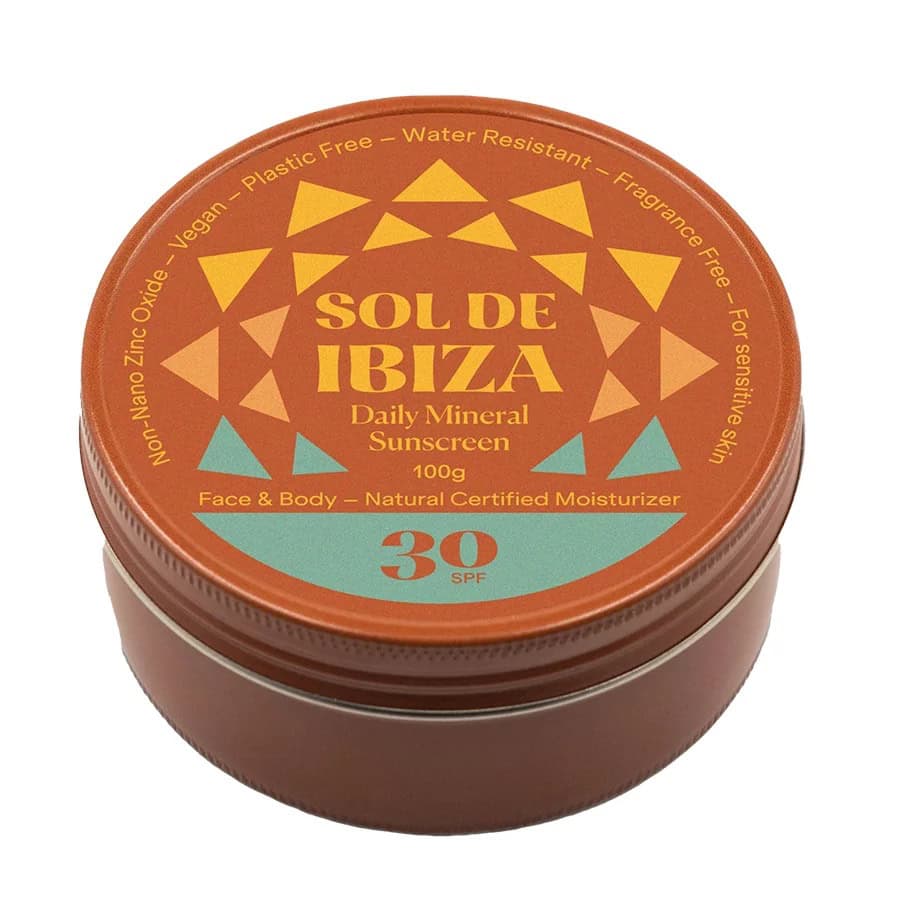
If plastic-free packaging is high on your priority list, then Sol De Ibiza (£22.99 for 100 g at Ethical Superstore) is worth considering.
This SPF 30 mineral sunscreen is made using non-nano zinc oxide and organic ingredients. The formulation is fragrance-free, cruelty-free, and suitable for the whole family. It’s also water-resistant and reef-friendly.
The sunscreen comes in aluminium tins or cardboard push-up tubes. Personally, I found the tube version difficult to apply as the texture is quite hard and waxy. I found it tricky to get on my skin, unless it was a really warm day. I think the tin is better, just store it somewhere warm as that makes is easier to apply.
Badger SPF 30 Sunscreen
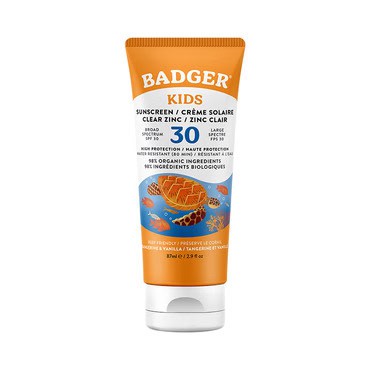
Badger Sunscreen (around £22 for 87 ml at Holland & Barrett) is another good eco-friendly sunscreen option. It provides SPF 30 broad-spectrum (UVA and UVB) protection using mineral zinc oxide.
The reef-safe formula contains 87% certified organic ingredients and is free from synthetic chemical filters. It’s also hypoallergenic, making it good for sensitive skin and the whole family, even little ones.
Badger products are cruelty-free, although watch out as many options are not vegan, as they contain beeswax.
UpCircle SPF 25 Sunscreen
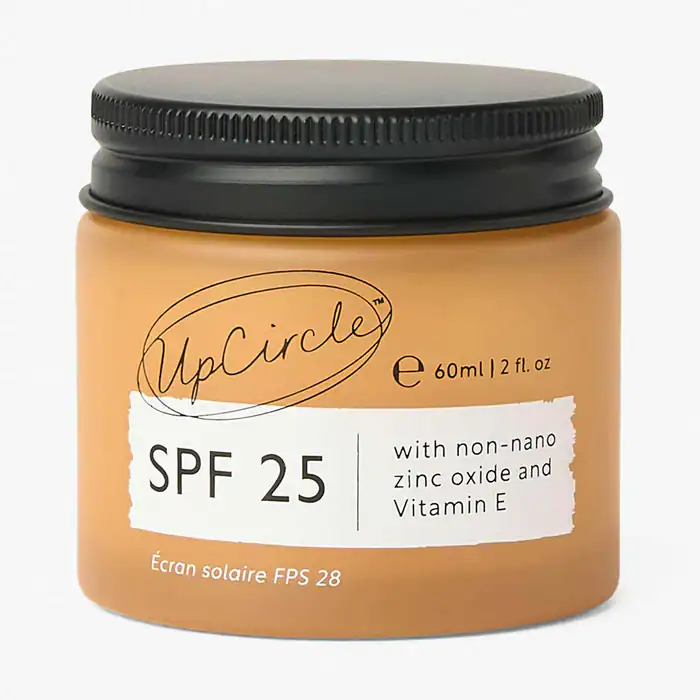
UpCircle’s mineral sunscreen (£19.99 for 60 ml) provides dermatologically approved broad-spectrum UVA and UVB protection using non-nano zinc oxide.
Alongside sun protection, the sunscreen contains raspberry seed oil, leftover from the juicing industry. Rich in antioxidant vitamins A and E, it helps defend the skin from free radical damage.
I really like this one. Despite being a mineral sunscreen, it’s easy to apply, and the lightweight formula absorbs easily, leaving a natural finish without a white cast. Because of the size of the jar, I think it’s better suited for your face rather than your body.
UpCircle is all about sustainability. As such, its sunscreen is vegan, cruelty-free, and packaged in a recyclable glass jar with an aluminium lid, making it plastic-free.
Suntribe SPF 30 Mineral Sunscreen
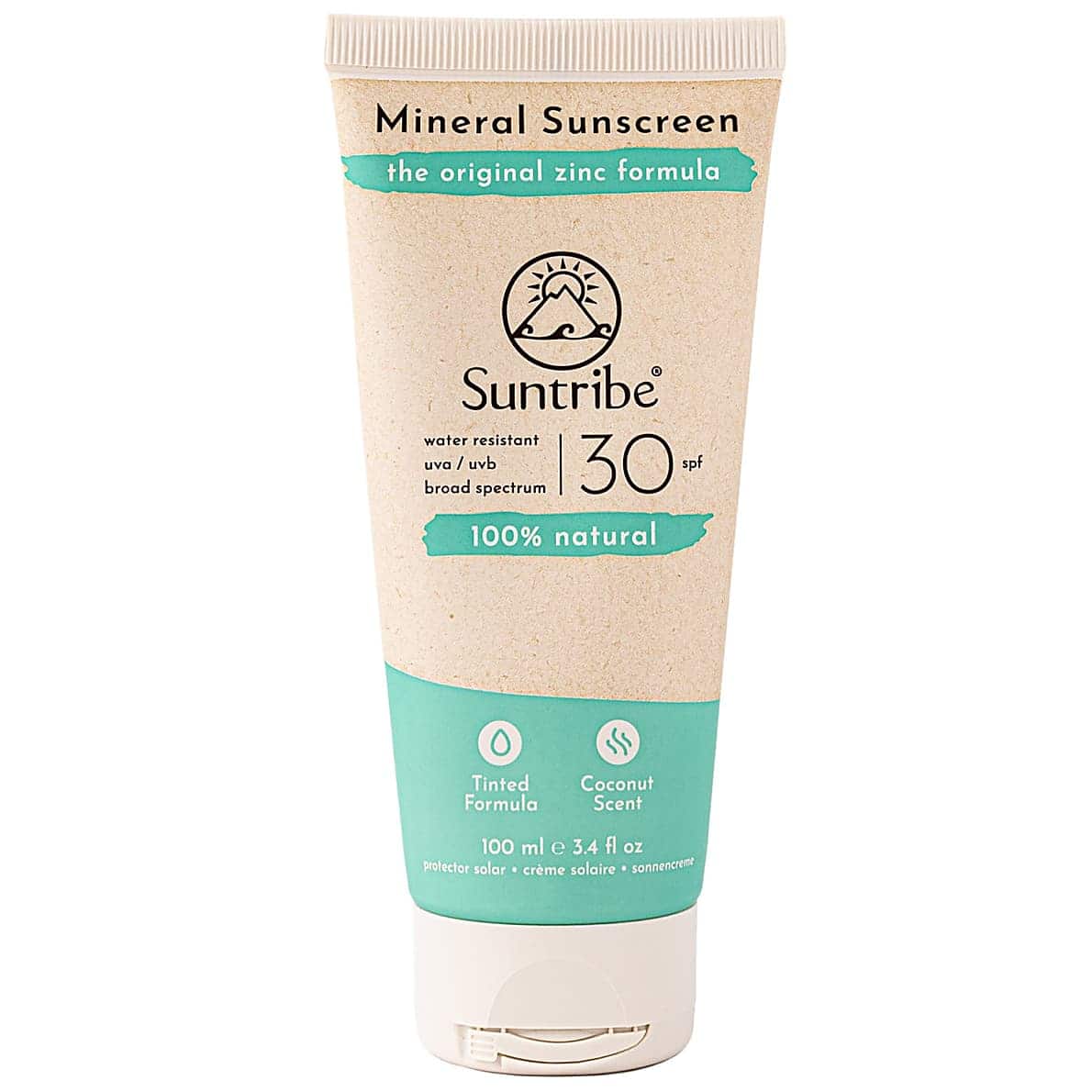
Suntribe (around £20 for 100 ml at Big Green Smile) provides broad-spectrum protection using non-nano zinc oxide, providing a natural mineral barrier against both UVA and UVB rays.
It also has a light tint designed to blend more easily with your natural skin tone. This can help minimise the white cast often associated with mineral sunscreens.
Free from perfumes, preservatives, and synthetic chemicals, this hypoallergenic sunscreen is suitable for normal, sensitive, and dry skin, and can be used on both the face and body. It’s also water-resistant and reef-safe.
Certified COSMOS Organic by the Soil Association, the sunscreen comes in a tube made from renewable sugar cane.
Something to note is that the cream was reformulated in April 2023, as prior to that, it was a bit lumpy and hard to apply. These issues have thankfully been addressed by Suntribe, so don’t be put off by previous bad reviews dated before then!
Handy Product Comparison Table
Want a handy at-a-glance table showing you the difference between all the sunscreen products listed? I’ve put this comparison table together for you:
| Green People | 30 | Broad-spectrum UVA + UVB | Mineral zinc oxide or non-mineral non-nano UV filters | Plastic tube | Yes | Yes | Around £33.50 (200 ml) |
| Sol de Ibiza | 30 | Broad-spectrum UVA + UVB | Mineral zinc oxide | Aluminium tin or cardboard push-up tube | Yes | Yes | £22.99 (100 g) |
| Badger | 30 | Broad-spectrum UVA + UVB | Mineral zinc oxide | Plastic tube | No | Yes | Around £22 (87 ml) |
| UpCircle | 25 | Broad-spectrum UVA + UVB | Mineral zinc oxide | Glass jar with aluminium lid | Yes | Yes | £19.99 (60ml) |
| Suntribe | 30 | Broad-spectrum UVA + UVB | Mineral zinc oxide | Plastic tube | Yes | Yes | Around £20 (100 ml) |
What Makes a Sunscreen Eco-Friendly?
The phrase “eco-friendly sunscreen” isn’t regulated, and confusingly can mean different things to different people. A product labelled as sustainable might focus on safer ingredients, environmentally responsible packaging, or both.
Many sustainable sunscreens rely on mineral UV filters, most commonly zinc oxide. These are physical blockers that sit on the skin and reflect UV rays rather than absorbing them. They can sometimes leave a white cast, but offer protection without chemical filters.
Some brands, like Green People, also offer non-mineral, non-nano sunscreens. These are chemical-based formulations that use synthetic UV filters rather than physical blockers like zinc oxide. This means you are less likely to get that white cast associated with mineral sunscreens. Lightly tinted formulas (like the Suntribe option) can help with this.
“Non-nano” means the particles are large enough that they don’t penetrate the skin or enter the bloodstream, potentially making them safer for both your body and the environment while still providing broad-spectrum UVA and UVB protection.
Packaging is another important factor. Some brands now use aluminium tins, glass jars, or cardboard push-up tubes instead of plastic bottles.
You may also see terms like reef-safe or reef-friendly. These usually indicate the product does not contain ingredients such as oxybenzone or octinoxate, which have been linked to coral reef damage in some studies.
How to Choose the Right SPF and Broad-Spectrum Protection
Even within the sustainable beauty market, not all sunscreens are created equal.
One of the most important things to check is whether the sunscreen provides broad-spectrum protection. This means it provides protection from both UVA and UVB rays. UVB rays are responsible for sunburn, while UVA rays penetrate deeper into the skin and contribute to ageing and long-term skin damage.
Picking the right Sun Protection Factor (SPF) can be confusing. Research shows that anything above SPF 50 doesn’t provide significant additional protection. This also fools you into thinking you can reapply less frequently, which isn’t the case.
Anything above 30 is generally good. And regardless of SPF level, sunscreen should still be reapplied every two hours, and after swimming or heavy sweating.
What If You Can’t Afford To Swap To Sustainable Sunscreen?
Most of these options are more expensive than the sunscreens you will find in your local supermarket or chemist. If you don’t have the budget to switch, then keep buying the brand you can afford.
Sunburn increases your risk of skin cancer. So it’s vitally important that you keep using sunscreen that’s within your budget, as well as seeking shade and covering up in the sun. There are heaps of other eco-friendly actions you can take to live a greener life, so don’t feel guilty if this particularly swap isn’t an option open to you.
Your Recommendations
Have you found any eco-friendly sunscreen brands you love? I’d love to hear about them in the comments.
I’m especially interested in discovering plastic-free sunscreen options, as these are still surprisingly difficult to find in 2026.
And once you’ve sorted your sun protection, you might also enjoy my handy guide to ethical swimwear for more sustainable days by the sea.
Sign Up For The Moral Fibres Substack
Get all the latest articles from Moral Fibres straight to your inbox, once a month, free of charge through Substack. You can also upgrade to be a paid Substack subscriber, where you’ll receive an additional two exclusive articles a month. Sign up now:

Wendy Graham
Wendy Graham is a sustainability expert and the founder of Moral Fibres, where's she's written hundreds of articles on since starting the site in 2013. She's dedicated to bringing you sustainability advice you can trust.
Wendy holds a BSc (Hons) in Environmental Geography and an MSc (with Distinction) in Environmental Sustainability - specialising in environmental education.
As well as this, Wendy brings 17 years of professional experience working in the sustainability sector to the blog.














.png)






.jpg)



 English (US) ·
  French (CA) ·