

.png) 6 months ago
99
6 months ago
99
PROTECT YOUR DNA WITH QUANTUM TECHNOLOGY
Orgo-Life the new way to the future Advertising by AdpathwayBiodegradable plastics might sound like a sustainable solution to our plastic problem, but are they actually good for the environment? Here’s a look into what can be a topic dense with greenwashing.
As consumers, the way products are marketed to us can heavily influence our shopping decisions. However, it’s often difficult to know if a product is actually green or if it’s just greenwashing.
Biodegradable is one term touted by manufacturers to make us feel good about our purchases. You’ll find the term everywhere – from plastic bags to food wrappers, nappies, and other types of plastics.
It’s not a regulated term, so anyone can use it. And most manufacturers don’t explicitly say that these biodegradable plastic products are better for the environment. However, this choice of wording implies that these are better choices for the environment.
After all, the idea is that once we’re done with a product, it will then just break down into nothing is certainly an appealing one. In the UK, we send a massive 5.3 million tonnes of waste to landfill each year. It’s no wonder that we are drawn to alternatives that promise to disappear instead.
With 74% of UK shoppers saying the term biodegradable would encourage them to purchase a product over another non-biodegradable one, it’s important to understand if these seemingly eco-friendly alternatives really are good for the environment.
Let’s unravel the complexities and separate fact from fiction:
What Is Biodegradable Plastic?
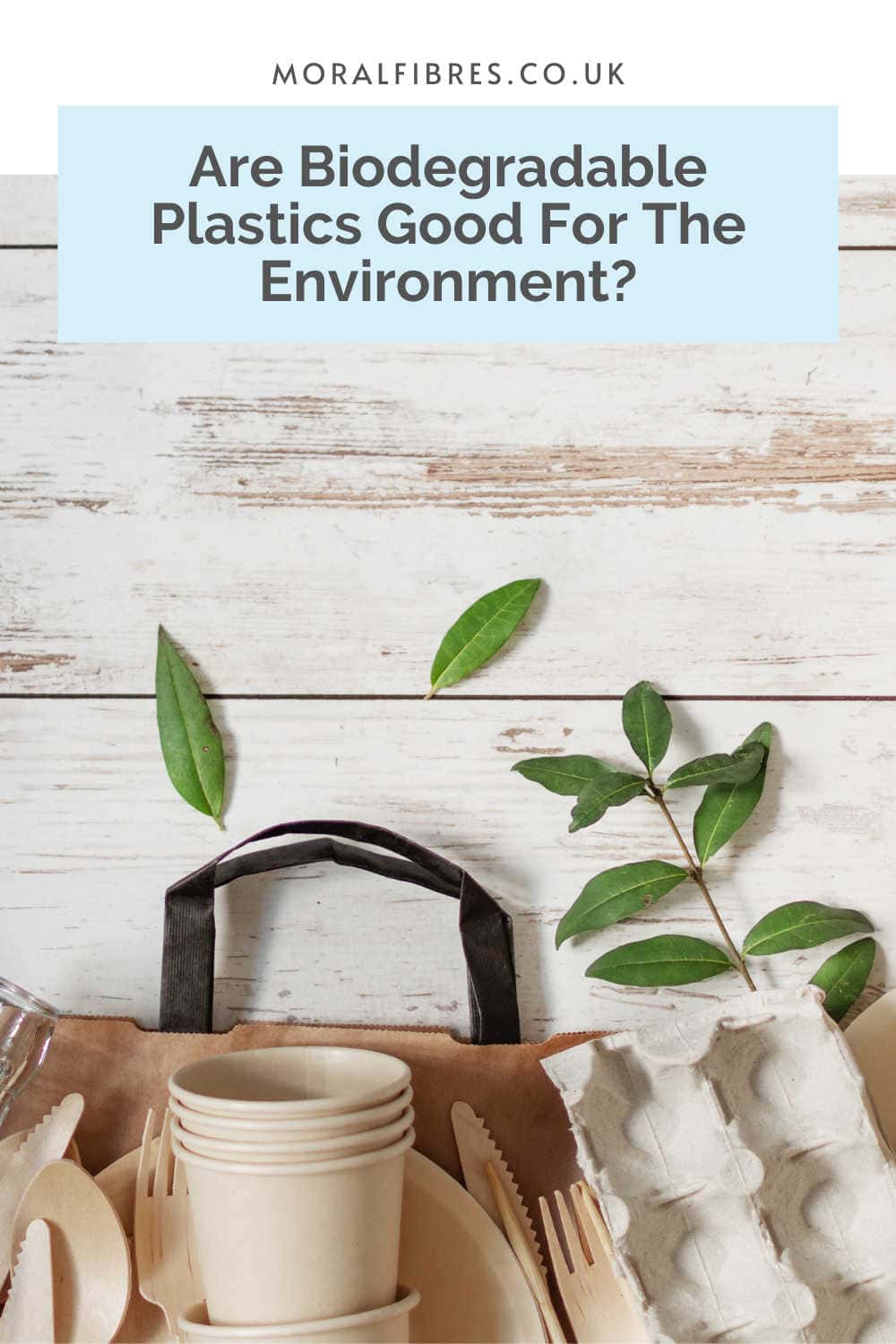
First things first, we have to understand what biodegradable plastic actually is, as well as the upsides and downsides of it as a product.
Biodegradable plastics are plastics which can be broken down and absorbed into the environment by bacteria, fungi or microbes, over time, and under specified conditions.
They are made from conventional petroleum-based plastics but also contain chemical additives. These additives cause the plastic to break down more rapidly when exposed to air and light. However, it could take anywhere between 2 to 5 years to break down, if not longer, and only in very particular conditions.
In response to these challenges, researchers are exploring ways to enhance the degradation process and improve the overall efficiency of biodegradable plastics. From incorporating enzymes to developing new materials, the quest for truly sustainable alternatives is ongoing. Despite years of work, in 2026, we’re not there yet.
Are Biodegradable Plastics Good for the Environment?
One of the main advantages of biodegradable plastics lies in their potential to reduce the persistence of plastic waste in our ecosystems.
Traditional plastics can take centuries to decompose, contributing to pollution and harming wildlife. Biodegradable plastics, on the other hand, claim to break down faster, minimising the long-term impact on our planet.
In theory, it sounds good. The problem is that most biodegradable plastics only degrade under certain specified conditions, such as high temperatures and microbial activity, which can be hard to replicate outside of laboratory tests.
Brands may claim their product will biodegrade in an open environment, such as in the landscape or in water. However, it has been found that the speed at which biodegradation occurs (often years) can be so slow that these biodegradable plastics do not reduce the harmful effects of littering on wildlife.
Take the case of “biodegradable plastic bags”, which were found to survive three years in soil and in the sea, and were still able to carry a load of shopping. Meanwhile, so-called “eco glitter” – essentially biodegradable plastic – was found to cause as much damage to rivers as regular plastic glitter.
It raises concerns about whether these plastics break down as promised in landfills.
There’s also the microplastics problem. Biodegradable plastics still shed microplastics – tiny bits of plastic that can be invisible to the naked eye. In 2024, New Scientist reported that biodegradable microplastics may actually be worse for soil and plants, as the nitrogen in them can stunt plant growth.
Disposing Of Biodegradable Plastic
As I mentioned earlier, biodegradable plastics can break down under specified conditions. Let’s look at where our waste goes, to see if it meets those ‘specified conditions’ that plastics manufacturers like to mention.
Bear in mind that in order for biodegradation to occur, three basic resources are required. These being heat, light, and oxygen. The trouble is, if a biodegradable plastic or bioplastic ends up in a landfill site, it will probably never decompose.
This is because in landfill sites, waste is essentially mummified, in a complete absence of light and oxygen. Food that has ended up in landfill does not biodegrade, so there is little hope for biodegradable plastics, or other types of plastic, such as bioplastics.
You would think, then, that the answer is therefore to ensure that you always compost or recycle your biodegradable plastics. Unfortunately, it’s not that simple:
Biodegradable Plastic Disposal
Most biodegradable plastics are classed as code 7. This places them in the ‘Other’ category of plastics. Code 7 plastics are generally not accepted for recycling by local councils. The reason behind this is that biodegradable plastics are harder to recycle due to the addition of chemical additives in them.
What About Composting Biodegradable Plastics?
Unfortunately, biodegradable plastics aren’t suitable for composting.
Polyethylene, which is what biodegradable bags are commonly made from, often contains a manganese additive. This additive stops breaking down when placed in compost bins/heaps. Scientists think this most likely occurs due to the influence of ammonia or other gases generated by microorganisms in the compost.
Even if you were to get lucky on the composting front and your plastics did break down, you would likely encounter another problem.
Because biodegradable plastics are made from petrochemicals, they aren’t always suitable for composting. This is because they can leave behind chemical residues in the lovely compost that you’ve made. The key lesson learned here is that biodegradable is not the same as compostable.
And there’s more. Some biodegradable plastics actually fragment rather than biodegrade. This is due to the addition of oxidising agents (found in so-called oxo-degradable plastics).
By fragmenting, rather than degrading, they break into small pieces which can pollute soils, increase the risk of ingestion for animals and end up in our oceans and waterways. These kinds of plastics are impossible to recover for recycling and aren’t suitable for composting.
Comparing Biodegradable Plastics To Other Types
As biodegradable plastics clearly aren’t the green solution we’ve been led to believe, you might be keen to know about other types of plastic, and how it compares.
Here’s a brief look at other plastics:
Conventional Plastic
Conventional plastics are made from petroleum-based products derived from oil. They will take hundreds of years to break down. Or, in the worst case, never decompose. Some – like PET plastic bottles – are recyclable and can be made into new products easily. Other types of plastic, like synthetic clothing made from plastic isn’t so easy to recycle, so ends up in landfill
Bioplastics
Bioplastics tend to be made from plant biomass, such as corn starch, sugar cane, or wheat, and include plastics such as PLA. These types of plastics are compostable, but only in industrial composting facilities. This means they cannot be composted at home or in your kerbside collection bin.
This is because the UK favours anaerobic digestion (without oxygen) as the preferred method of food waste treatment. The government’s stance is that anaerobic digestion is better for the environment than composting, as it can produce renewable energy (in the form of biogas) in addition to recycling nutrients.
This means that most of our food waste collection and treatment infrastructure is orientated accordingly. It’s not set up to deal with compostable packaging products that require oxygen to break down.
If that isn’t enough of a headache for you, with bioplastics, you also have the added headache of how the plant material that was used to create the bioplastic was grown. Concerns include the use of GM crops and the use of valuable farmland that could be used to grow food crops.
Other potential impacts of the growth of bioplastics crops include, but aren’t limited to deforestation, monocultures, use of freshwater supplies, soil erosion, fertiliser use (which often comes from petrochemical sources), pesticide use, food supplies, food prices, and food security. Makes for quite heavy reading, doesn’t it?
Recycled Ocean Plastics
Recycled ocean plastics sound like a feel-good solution, but aren’t always the environmental win they are made out to be. I’ve explored this topic in detail over on Substack, so head over there if you want to know more about this type of plastic.
What’s The Answer?
I’m afraid to say that there is no easy answer to the plastics conundrum. That is, apart from avoiding single-use plastics where you can. After all, the most sustainable option is often the one we don’t need to dispose of in the first place.
As consumers, it’s important to be informed. It’s important to recognise that if a product is labelled as biodegradable, then it’s often not the great environmental choice that it seems.
While biodegradable plastics offer a potential solution to the persistent problem of plastic pollution, their effectiveness relies heavily on proper disposal methods and supportive infrastructure, which isn’t there yet.
This lack of infrastructure means that biodegradable plastics are rarely recyclable. And biodegradable does not mean the same thing as compostable. Whilst compostable bioplastics seem like a better choice than biodegradable ones, this is only if you have access to the appropriate composting facilities.
More Plastics Resources
If you found this post useful, then you may enjoy my post on the plastics to avoid when you’re shopping. It covers things like the type of plastic, but also, perhaps lesser-known, the colour of plastic.
Sign Up For The Moral Fibres Substack
Get all the latest articles from Moral Fibres straight to your inbox, once a month, free of charge through Substack. You can also upgrade to be a paid Substack subscriber, where you’ll receive an additional two exclusive articles a month. Sign up now:

Wendy Graham
Wendy Graham is a sustainability expert and the founder of Moral Fibres, where's she's written hundreds of articles on since starting the site in 2013. She's dedicated to bringing you sustainability advice you can trust.
Wendy holds a BSc (Hons) in Environmental Geography and an MSc (with Distinction) in Environmental Sustainability - specialising in environmental education.
As well as this, Wendy brings 17 years of professional experience working in the sustainability sector to the blog.











.png)






.jpg)



 English (US) ·
  French (CA) ·