

.png) 6 days ago
30
6 days ago
30
PROTECT YOUR DNA WITH QUANTUM TECHNOLOGY
Orgo-Life the new way to the future Advertising by AdpathwayUK sets new record for the hottest June day
The Met Office has just confirmed that temperatures have reached 36.4C at Yeovilton in Somerset, provisionally making it the hottest June day ever recorded.
It surpassed the previous record of 36.1C set, erm, yesterday, and the previous record of 35.9C from 1976.
Key events
French struggle with heat-trap homes as climate inequality grows

Angelique Chrisafis
Living in a sweltering, seventh-floor flat on a concrete housing estate south of Paris, Samira said she was feeling desperate as France experienced its highest temperatures on record this week.
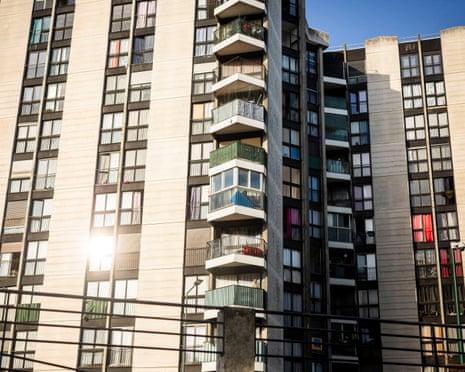
“Yesterday I sat down and cried, I thought I’m going to die,” said the 35-year-old single parent and former building caretaker.
Her flat in Ris-Orangis in Essonne is, like millions of apartments in France, poorly insulated and lacking in outside window shutters. “Blazing sun hits my windows all day – I can’t breathe, I feel dizzy, there is no air,” she said.
More than 44 million people in France, out of a total population of 67 million, have been under the highest red alert for heat this week, with daytime temperatures exceeding 40C in many places and staying dangerously hot at night.
London Ambulance Service responds to highest ever ife-threatening emergencies as heatwave continues
Andrew Gregory
Health editor
London Ambulance Service has responded to its highest ever number of life-threatening emergencies in a single day amid soaring temperatures in the capital, senior officials said on Thursday.
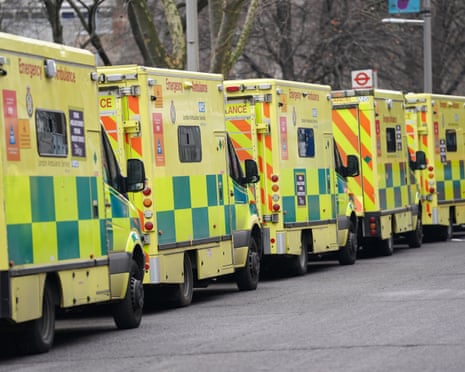
Ambulance crews attended 642 Category 1 calls on Wednesday, according to LAS. Category 1 incidents include the most serious, life-threatening injuries and illnesses, such as cardiac arrests and patients who are not breathing.
“We have seen the highest number of life-threatening emergencies in our history, driven by the extreme heat across London,” said LAS chief executive Jason Killens.
Wednesday was also the fifth busiest day in the service’s history overall, with 7,900 calls and crews responding to almost 3,600 patients.
The surge in calls this week is directly linked to the hot weather, with crews responding to more people who are fainting, struggling to breathe or experiencing heart problems, senior officials said.
UK's hottest June day on record - in pictures

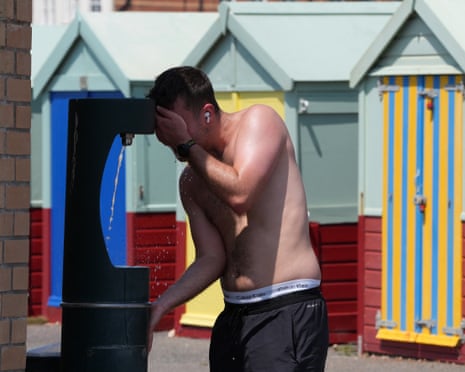

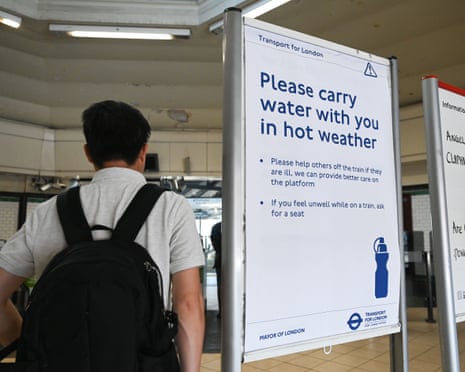
UK sets new record for the hottest June day
The Met Office has just confirmed that temperatures have reached 36.4C at Yeovilton in Somerset, provisionally making it the hottest June day ever recorded.
It surpassed the previous record of 36.1C set, erm, yesterday, and the previous record of 35.9C from 1976.
Hospitals in England declare critical incidents as machines and IT fail in heat
Andrew Gregory
Health editor
Doctors have sounded the alarm over the disastrous impact of extreme heat on the NHS in England, with radiotherapy machines and MRI scanners failing, critical IT systems stalling and cooling units that serve entire hospitals breaking down.
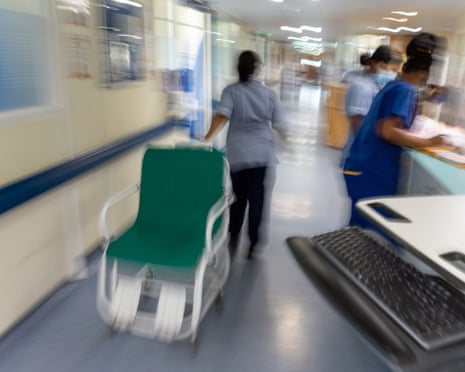
The hot weather has also prompted a surge in admissions and people arriving at A&E, causing severe overcrowding in some places and exacerbating heat-related pressures on infrastructure.
“Lots of people, especially older patients, are turning up having collapsed or with dehydration,” one physician said. “In terms of inpatients, the conditions are awful due to overcrowding. Very few places have air conditioning and staff are really struggling.”
Older patients in one geriatric ward had been forced to endure temperatures as high as 35C, a second doctor said. Even wards with built-in air conditioning were affected, as some units were shut down to prevent them being damaged by the extreme heat.
Another doctor said their workplace was “unfit to cope”, with patients and staff experiencing “awful conditions” in sweltering wards, clinics and corridors. NHS staff were also navigating the challenge of providing care while sleep-deprived. Like much of the UK population, many have struggled to sleep this week.
Several NHS trusts in England have declared critical incidents as a direct result of the extreme heat. One hospital had done so after its machines failed in multiple areas, a doctor said. Labs used for testing were also affected and two linear accelerator machines, used to treat cancer patients, had stopped working amid the high temperatures.
Let’s take a quick view at the latest temperature readings from across Europe at 3pm continental, 2pm UK.
Paris 40C
Nantes 40C
Brussels 36C
Barcelona 35C
Frankfurt 35C
Geneva 35C
Berlin 34C
Prague 34C
Budapest 33C
Vienna 33C
London 32C
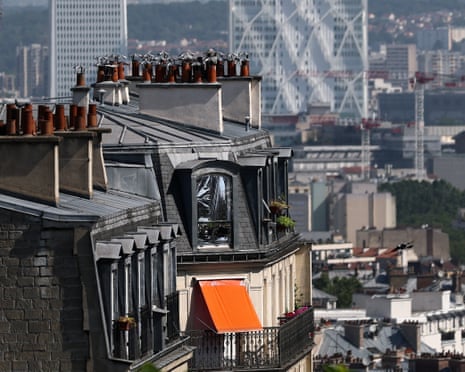
France shuts down two nuclear reactors in heatwave precaution
France’s main energy provider Thursday shut down two nuclear reactors as an environmental protection measure to avoid discharging too much hot water into rivers already warming in a record-breaking heatwave, AFP reported.
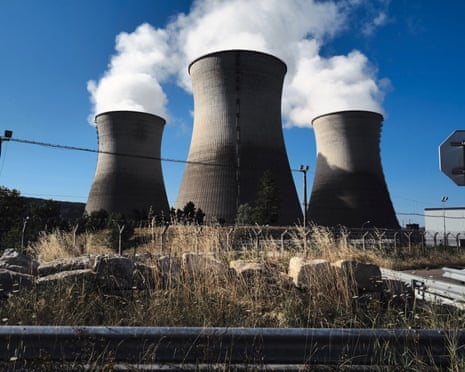
Power plants critical to the country’s electricity production use river water to cool their reactors, which heats the water that is then released back into the river.
The EDF energy group on Thursday said it had temporarily shut down two reactors to comply with temperature limits of the rivers at the Nogent-sur-Seine power plant on the Seine river in northern France, and in Bugey on the Rhone near the southeastern city on Lyon.
AFP noted that the Nogent-sur-Seine plant had already reduced production in another reactor days earlier “to limit the temperature increase between the water withdrawn from the Seine and the water discharged back into it, thereby protecting aquatic plant and animal life”.
UK lawyers raise concerns about immigration detainees being held in breach of temperature laws

Diane Taylor
Over in the UK, thousands of immigration detainees are being held behind bars by the Home Office in temperatures up to ten degrees hotter than the maximum permitted. Lawyers are calling on the Home Office to release their clients because of the breach.
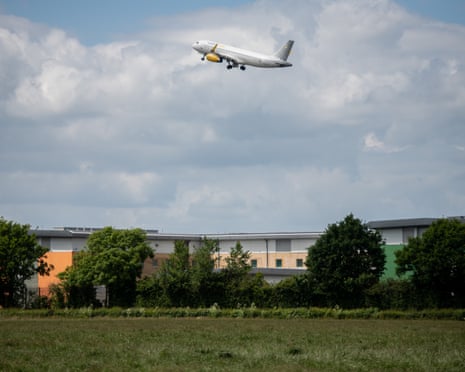
According to government rules for these centres “the maximum permitted temperature must not exceed 28 degrees C”. Lawyers are writing to government officials highlighting the fact that temperatures in cells are exceeding the permitted maximum.
One detainee told the Guardian:
“It is unbearably hot in our cells. It is too hot to even wear any clothes. But because we are locked up there’s nothing we can do to cool down.”
Home Office sources said that specialist assessments of options to reduce temperatures were being carried out.
A Home Office spokesperson said:
“We take the welfare of those in our care extremely seriously, and our teams are responding to mitigate the impact of recent high temperatures on Immigration Removal Centres.
Robust measures are in place to support residents, including access to bottled water, summer clothing, sun cream and fully stocked first-aid kits.”
HMIP is about to embark on a full inspection of one of the immigration detention centres, Tinsley House near Gatwick Airport.
A spokesperson said: ”Accommodation for detainees should be suitably ventilated. Although the current weather is unprecedented, heat waves are not uncommon. We expect the Home Office and its contractors to prepare for contingencies such as this, to keep detainees and staff safe.”
Extreme temperatures 'no longer future threat, but present danger,' London mayor warns

Damian Carrington
Environment editor
Sadiq Khan, the mayor of London, launched the city’s first heat plan on Thursday.
”Extreme temperatures are no longer a future threat, they are a present danger,” he said. The plan includes retrofitting homes at the highest risk of overheating, more tree cover, and safe access to water for paddling and swimming. A 2025 study found the number of UK homes reporting overheating in summer quadrupled to 80% in a decade.

Measurements taken by Greenpeace found pavements, rail platforms, building sites and other places across London reached surface temperatures of 50C to 60C on Wednesday. The black rubber floor of a playground in Islington was recorded at 53C at 5pm.
“This record-smashing heatwave has turned London into a sticky, sizzling cauldron,” said Mel Evans, Greenpeace UK’s head of climate.
“This isn’t just weather – it’s a public health emergency driven by fossil fuel giants. These abnormal temperatures are stretching homes, schools, transport and our own health to breaking point.”
UK's high temperature record for June likely to be broken again today, a day after the previous record
Damian Carrington
Environment editor
The UK’s high temperature record for June is also likely to be broken on Thursday, just a day after the previous record.
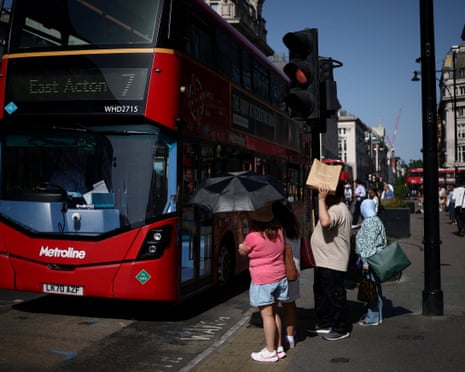
The heatwave, supercharged by the climate crisis, drove the temperature to 36.1C at Gosport in Hampshire on Wednesday, beating the previous record of 35.6C set in Southampton in 1976.
Heatwaves are now more severe and more likely because of the carbon pollution from burning fossil fuels, with scientists estimating the current extreme temperatures across Europe are between 2C and 4C higher as a result.
Many thousands of people are likely to have died prematurely in the heat, but the statistical analysis required to determine the number takes time to complete. The UK Health Security Agency found that more than 10,000 people died in Britain owing to summer heatwaves between 2020 and 2024.













.png)





.jpg)



 English (US) ·
  French (CA) ·