

 7 months ago
88
7 months ago
88

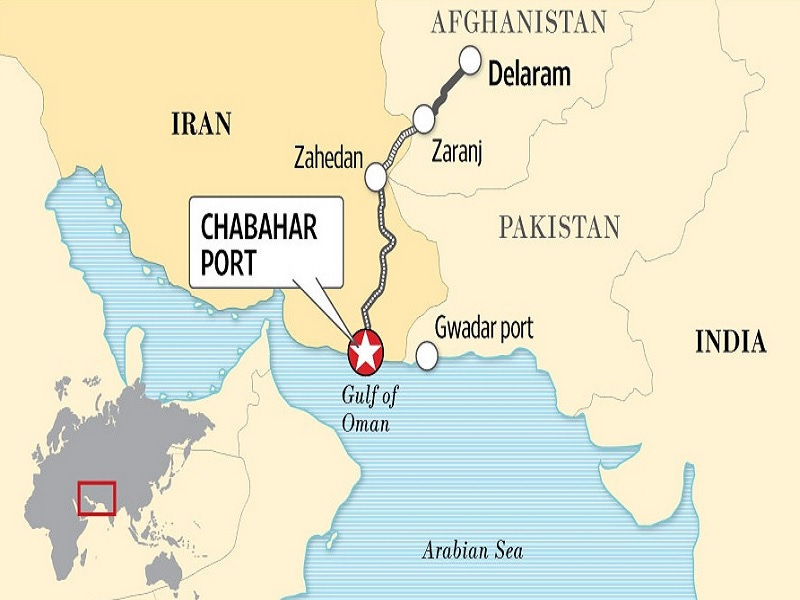
India’s Ministry of External Affairs recently confirmed that the US will waive sanctions for six months on those who operate Iran’s Chabahar Port, which their country plans to invest $370 million into as part of last year’s 10-year deal, after rescinding its long-running waiver on this activity in late September. That revocation was assessed here at the time as a means of punishing India for refusing to dump Russian arms and energy under US pressure. It was originally given to aid Indian trade with Afghanistan via Iran.
The intervening month saw Trump impose his second administration’s first-ever sanctions on Russia as the latest US escalation over the Ukrainian Conflict, which is meant to weaponize energy geopolitics as part of the intensified proxy war of attrition that he now plans to wage against Russia. India was vulnerable to this form of pressure, hence why its top buyer confirmed that they’ll comply, thus resulting in expectations that its imports will be greatly reduced by late November-early December.
Trump believes that this is already happening, however, and suggested that it could facilitate their difficult trade talks to the point where he might even visit India sometime soon to finalize the details. That could prospectively be sometime next month, perhaps after Putin’s planned visit to India in early December, in connection with the Quad Summit that India was supposed to host this year but which hasn’t yet been confirmed due to its tensions with the US over trade (and Pakistan to an extent).
.
.
Regardless of whether – and if so, when – Trump visits India, the aforementioned sequence of events over the past month contextualizes his decision to waive the Chabahar sanctions by six months. Bilateral ties remain chilly after all that transpired over the summer, especially Trump’s boasts about mediating the Indo-Pak ceasefire and then punitively tariffing India for refusing to dump Russian oil, but they crucially haven’t worsened. This in turn creates an opportunity for normalizing and improving them.
It’s amidst this sensitive moment that he decided to waive those sanctions, most likely as a goodwill gesture for continuing their trade talks and to hint that he expects clarity on the future of their ties within the next half-year tops. His move can also be interpreted as a reward for India’s reduction – whether already occurring or credibly expected – of Russian oil imports. Temporarily relieving concerns about US-imposed costs to Indian-Afghan trade via Iran is another benefit that Delhi derives from this.
While it’s uncertain whether Trump is aware of the following grand strategic calculus, US policymakers might intend to restore part of their failed Eurasian balancing act through a series of comprehensive strategic compromises with India. In exchange for India opening more of is agricultural market to US exports and sharply reducing oil imports from Russia, the US could return to favoring India over Pakistan (including through regular Chabahar sanctions waivers) and thus alleviate part of their security dilemma.
Time is of the essence though since events in the region could soon overtake their negotiations. The collapse of the Afghan-Pakistani peace talks might spiral into war, which Pakistan could exploit to cement its new status as the US’ regional favorite by promising to return US troops to Bagram Airbase like Trump wants if American military and intelligence aid results in the Taliban’s overthrow. It remains to be seen what’ll happen, but in any case, the outcome will determine South Asian geopolitics for years to come.
*
Click the share button below to email/forward this article. Follow us on Instagram and X and subscribe to our Telegram Channel. Feel free to repost Global Research articles with proper attribution.
This article was originally published on the author’s Substack.
Andrew Korybko is an American Moscow-based political analyst specializing in the relationship between the US strategy in Afro-Eurasia, China’s One Belt One Road global vision of New Silk Road connectivity, and Hybrid Warfare. He is a regular contributor to Global Research.
Featured image: President Donald J. Trump and Indian Prime Minister Narendra Modi participate in a formal handshake at Hyderabad House Tuesday, Feb. 25, 2020, in New Delhi, India. (Official White House Photo by Andrea Hanks)
Global Research is a reader-funded media. We do not accept any funding from corporations or governments. Help us stay afloat. Click the image below to make a one-time or recurring donation.






.png)

.jpg)

 English (US) ·
  French (CA) ·